
History
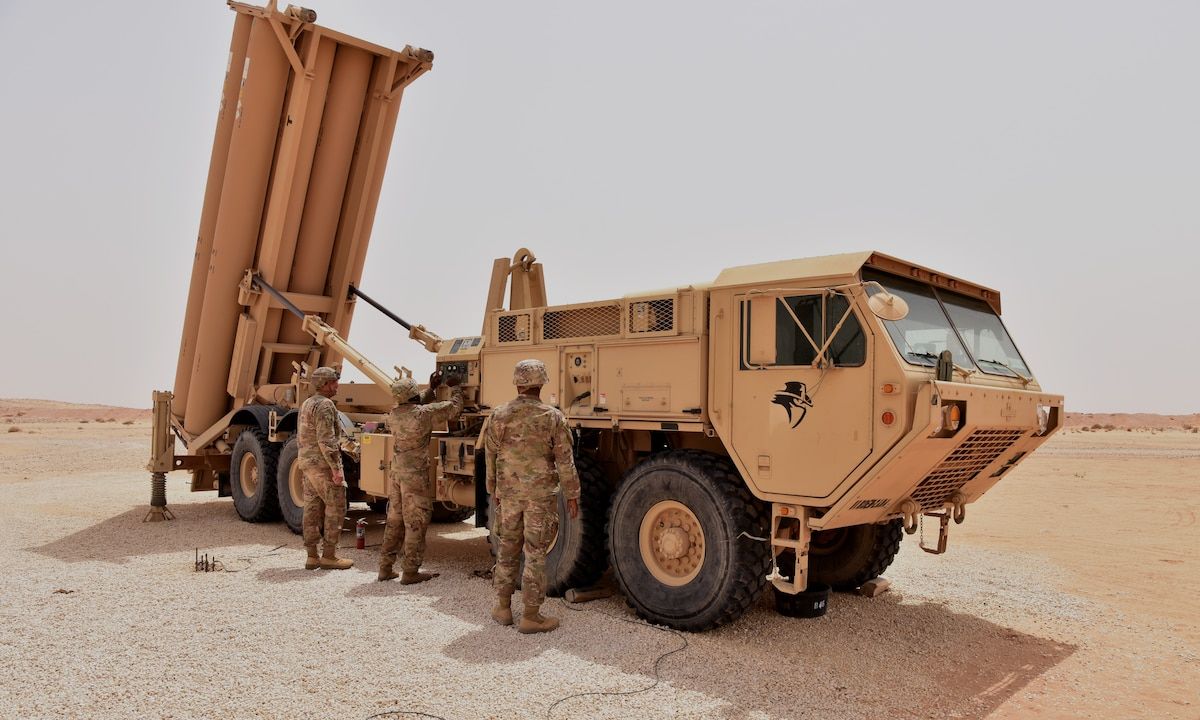
The Lockheed Martin THAAD Configuration 3 launcher is a modernized mobile launcher for the Terminal High Altitude Area Defense system. It carries THAAD interceptors and operates as part of a network that includes radar, fire-control, and communications equipment.
Configuration 3, also called C3, introduces updated launcher hardware associated with THAAD System Build 5.0. Public information about the exact changes remains limited, but reports describe improvements in communications, sensor integration, targeting-data exchange, and interoperability.
In August 2026, the U.S. Missile Defense Agency awarded Lockheed Martin a $211.4 million contract modification to manufacture Configuration 3 launchers for the United Arab Emirates. Production was scheduled from August 2026 through January 2031.
THAAD development
The United States selected Lockheed as the prime contractor for THAAD development in 1992. The first flight test took place in April 1995, and the program recorded its first successful target interceptions in June and August 1999. An engineering and manufacturing development contract followed in 2000.
Testing of the complete tactical system, including its interceptor, launcher, radar, and fire-control equipment, began in 2006. The first U.S. Army THAAD battery was activated in May 2008. A general history of the system and its testing is available in the THAAD overview.
UAE procurement
The United Arab Emirates agreed to purchase THAAD in December 2011 and became the system's first international customer. Its original acquisition included nine launchers and two AN/TPY-2 radars. Lockheed Martin delivered the country's first THAAD battery in October 2015.
UAE-operated THAAD equipment conducted the system's first operational interceptions in January 2022. The interceptors engaged ballistic missiles launched toward Abu Dhabi during attacks by the Houthi movement in Yemen. This operational history concerns the UAE's earlier THAAD equipment rather than the later Configuration 3 launchers.
Configuration 3 program
THAAD System Build 4.0 Global entered the Missile Defense Agency's baseline architecture in August 2023. System Build 5.0, incorporating Configuration 3 hardware and mission-assurance updates, was expected to enter the baseline in July 2026. The contract report identifies Configuration 3 as an updated version of the launcher hardware.
On 12 August 2026, the Missile Defense Agency awarded Lockheed Martin the $211.4 million contract modification for new UAE launchers. The modification increased the total value of the underlying 2019 contract to approximately $1.05 billion. UAE Foreign Military Sales funds covered the modification, and the publicly released information did not disclose the number of launchers ordered.
Lockheed Martin Space in Sunnyvale, California, is responsible for manufacturing the launchers. Work was scheduled to continue through January 2031. A separate procurement account confirms the planned delivery of additional C3 launchers but notes that detailed technical information was not included in the contracting announcement.
Design
Launcher layout
The Configuration 3 launcher is based on a heavy tactical truck platform. Its mobile arrangement allows the launcher to travel with the other components of a THAAD battery and deploy away from fixed missile-defense installations. THAAD equipment can also be transported between operational areas by air, land, or sea.
Each launcher can carry up to eight THAAD interceptor canisters. The launcher provides transport, positioning, and launch support for the interceptors, but it does not independently detect or track targets. Those functions depend on the battery's radar and command elements.
System integration
A typical THAAD battery combines truck-mounted launchers with an AN/TPY-2 radar, fire-control and communications equipment, interceptor missiles, and supporting vehicles. The radar detects and tracks ballistic threats. Fire-control equipment processes this information and directs an engagement before the selected launcher releases an interceptor.
Configuration 3 is described as a combined hardware and software modernization of the launcher and the associated fire-control architecture. According to a C3 program report, the changes are intended to improve sensor integration, targeting-data exchange, interceptor management, communications, and interoperability across a wider missile-defense network. Detailed component-level specifications have not been publicly disclosed.
Interceptor role
The launcher carries interceptors intended to engage short-, medium-, and intermediate-range ballistic missiles during the terminal phase of flight. THAAD can conduct engagements at high altitude, both inside and outside the atmosphere.
The interceptor uses hit-to-kill technology. It destroys a target through the kinetic energy of a direct impact rather than through an explosive warhead. The interceptor's performance figures describe the missile and the complete THAAD system, not the Configuration 3 launcher itself.
Program status
The Configuration 3 launcher was placed under production contract for the United Arab Emirates in August 2026. Manufacturing was scheduled to run from August 2026 through January 2031. Neither the number of launchers nor a delivery schedule for individual units was publicly identified.
The UAE is the confirmed recipient under the Foreign Military Sales case. The new launchers are intended to expand its existing THAAD capability and operate within a layered defense network that also includes AN/TPY-2 radars and Patriot missile-defense equipment. The available sources do not confirm that a Configuration 3 launcher had entered operational service at the time of the contract announcement.
Specifications (THAAD Configuration 3 launcher)
General characteristics
- Type: Mobile ballistic-missile-defense launcher
- Manufacturer: Lockheed Martin Space
- Platform: Heavy tactical truck
- Interceptor capacity: Up to eight THAAD interceptors
- Associated system: Terminal High Altitude Area Defense
- Associated radar: AN/TPY-2
- Configuration: Configuration 3 hardware associated with THAAD System Build 5.0
- Confirmed customer: United Arab Emirates
- Production schedule: August 2026 to January 2031, as planned when the contract was announced
Functions
- Primary role: Transporting, positioning, and launching THAAD interceptors
- Targeting support: Receives engagement information through the THAAD radar, fire-control, and communications network
- Engagement environment: Supports terminal-phase ballistic-missile interceptions inside or outside the atmosphere
- Mobility: Ground-mobile and transportable between operational areas by air, land, or sea as part of the wider THAAD system
Related equipment
- AN/TPY-2: Transportable X-band radar used to detect and track ballistic-missile threats for THAAD.
- THAAD interceptor: Hit-to-kill missile carried and fired by the launcher.
- Patriot: Missile-defense system used for shorter-range and lower-altitude engagements within layered defense architectures.
- Aegis Ballistic Missile Defense: Naval missile-defense system capable of exchanging information within broader integrated defense networks.
 Argentina
 Armenia
 Australia
 Austria
 Austria-Hungary
 Belgium
 Brazil
 United Kingdom
 Brunei
 Bulgaria
 Canada
 Chile
Chile China
China Colonial America
 Colombia
 Confederate States
 Croatia
 Czech
Czech Denmark
 Egypt
Egypt Finland
 France
 Georgia
 Germany
 German Imperial
 Greece
 Holland
 Hungary
 India
India Indonesia
 Iran
Iran Iraq
Iraq Ireland
 Israel
 Italy
Italy Japan
Japan Japan (1940)
 Jordan
 Kingdom of Italy
 Malaysia
 Mexico
 Myanmar
 Nazi Germany
 Netherlands
 New Zealand
 North Korea
 Norway
 Pakistan
 Peru
Peru Philippines
 Poland
 Portugal
 Prussia
 Romania
 Russia
 Saudi Arabia
 Serbia
 Singapore
 Slovakia
 Slovenia
 South Africa
 South Korea
 Soviet Union
 Spain
Spain Sweden
 Switzerland
 Syria
Syria Taiwan
 Thailand
 Turkey
 UAE
UAE Ukraine
 Vietnam
 Yugoslavia