
History
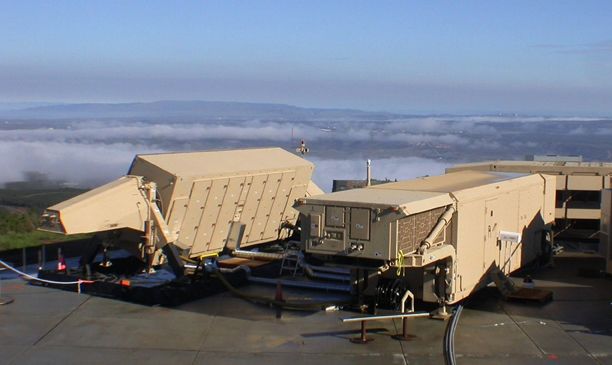
The Raytheon AN/TPY-2 is a mobile and transportable X-band phased-array radar developed in the United States for ballistic-missile defence. It serves as the principal radar of the Terminal High Altitude Area Defense system and can also operate independently as a forward-based sensor.
The radar detects, tracks, and classifies ballistic-missile threats. It supplies targeting and situational-awareness data to THAAD and the wider Ballistic Missile Defense System.
Development of THAAD began in 1992. The first system flight occurred on 21 April 1995, with the program's principal segments integrated. The development configuration included the radar, launchers, interceptors, and battle-management system.
THAAD achieved its first successful intercept on 10 June 1999 during Flight Test 10. A second intercept followed on 2 August 1999. The program entered Engineering and Manufacturing Development after a Milestone II decision in June 2000. A contemporary BMDO fact sheet described the radar as an X-band sensor supporting surveillance, threat identification, classification, attack assessment, and fire control.
The first operational THAAD battery entered service in 2008. The Army and Missile Defense Agency subsequently introduced revised radar hardware and software to replace obsolete components and improve reliability.
In 2015, the Army Test and Evaluation Command conducted a reliability-growth test of THAAD Configuration 2 at McGregor Range, New Mexico. The test accumulated 922 operating hours across nine operational periods. Testing showed general reliability growth but also identified issues involving the radar-to-operator interface and other system components.
During the same year, AN/TPY-2 radars participated in distributed ground tests and ballistic-missile tracking exercises. A forward-based radar tracked targets during the September and October 2015 FTO-02 events, in which THAAD engaged short- and medium-range target missiles. The official 2015 operational-test report identified Raytheon as the radar contractor.
Reporting in 2026 described a U.S. requirement for a new generation of highly mobile air-defence radars following the loss of radar installations during attacks. The stated objective was to reduce vulnerability through mobility comparable to the road-mobile sensor architecture of the Russian S-300 and S-400 families. No designation, prototype date, or confirmed relationship to a specific AN/TPY-2 replacement was identified, so this requirement remains separate from the established AN/TPY-2 configurations.
Design
The AN/TPY-2 uses an electronically steered phased-array antenna operating in the X-band. Electronic beam steering allows the radar to search for targets and update tracks without mechanically rotating the antenna for each observation.
The system is divided among transportable equipment units. These include the antenna, electronic equipment, cooling equipment, and a prime power unit. This distributed arrangement permits the radar to be moved between prepared operating locations while providing the electrical power and thermal management required by the array.
In THAAD Terminal Mode, the radar searches for and tracks ballistic missiles approaching the defended area. It supplies data to THAAD Fire Control and Communications, which coordinates launch decisions and interceptor engagements. The radar also provides a communications link supporting interceptors in flight.
In Forward-Based Mode, the radar is positioned closer to potential missile-launch regions. It detects threats earlier in their flight and sends track, classification, and situational-awareness data through Command and Control, Battle Management, and Communications. Other missile-defence elements can use this information even when the radar is not assigned to a THAAD firing battery.
The 2000 THAAD objective configuration specified an antenna array of approximately 10 square metres. Later descriptions identify the operational antenna as an active electronically scanned array containing solid-state transmit-and-receive modules.
Operational history
The United States Army operates AN/TPY-2 radars in both THAAD Terminal Mode and Forward-Based Mode. By 2015, forward-based examples were deployed in Japan, Israel, Turkey, and the area assigned to U.S. Central Command.
Forward-based radars have been connected to the wider missile-defence network through C2BMC. During 2015 testing, the network tasked and managed deployed sensors, exchanged radar data between operational areas, and exercised the provision of early tracking information to other defensive systems.
AN/TPY-2 also supports layered defence. THAAD can receive external target cues, while information produced by its radar can assist other elements of the ballistic-missile defence architecture. This allows sensors and interceptors in different locations to contribute to the same engagement picture.
Variants
- Terminal Mode: The configuration assigned to a THAAD battery. It performs surveillance, target acquisition, precision tracking, classification, and fire-control support for terminal engagements.
- Forward-Based Mode: A mobile or transportable configuration deployed as an early-warning sensor. It sends regional and strategic ballistic-missile threat data to the wider defence network through C2BMC.
- Configuration 2: A revised hardware and software configuration tested in 2015 to address component obsolescence and improve system reliability.
Operators
- United States: The U.S. Army operates AN/TPY-2 radars with THAAD batteries and as forward-based sensors. U.S.-operated radars have also been deployed outside the continental United States.
- United Arab Emirates: Operates THAAD batteries equipped with AN/TPY-2 radars.
Specifications (AN/TPY-2)
General characteristics
- Manufacturer: Raytheon Company
- Type: Mobile and transportable ballistic-missile defence radar
- Antenna: Active electronically scanned phased array
- Frequency band: X-band
- Objective array area: Approximately 10 m²
Functions
- Terminal Mode: Surveillance, acquisition, tracking, classification, fire-control support, and in-flight interceptor communications
- Forward-Based Mode: Early detection, tracking, classification, attack assessment, and transmission of sensor data to C2BMC
- Primary target class: Ballistic missiles
- Network role: Supplies regional and strategic threat data to THAAD and other elements of the Ballistic Missile Defense System
Related equipment
- THAAD: The land-based missile-defence system that uses AN/TPY-2 in Terminal Mode.
- Patriot: A lower-tier air and missile defence system intended to complement THAAD in a layered architecture.
- Aegis Ballistic Missile Defense: A sea- and land-based missile-defence system capable of exchanging sensor and engagement data within the wider network.
- S-300 and S-400: Russian road-mobile air-defence families cited in discussions of radar mobility and survivability.
 Argentina
 Armenia
 Australia
 Austria
 Austria-Hungary
 Belgium
 Brazil
 United Kingdom
 Brunei
 Bulgaria
 Canada
 Chile
Chile China
China Colonial America
 Colombia
 Confederate States
 Croatia
 Czech
Czech Denmark
 Egypt
Egypt Finland
 France
 Georgia
 Germany
 German Imperial
 Greece
 Holland
 Hungary
 India
India Indonesia
 Iran
Iran Iraq
Iraq Ireland
 Israel
 Italy
Italy Japan
Japan Japan (1940)
 Jordan
 Kingdom of Italy
 Malaysia
 Mexico
 Myanmar
 Nazi Germany
 Netherlands
 New Zealand
 North Korea
 Norway
 Pakistan
 Peru
Peru Philippines
 Poland
 Portugal
 Prussia
 Romania
 Russia
 Saudi Arabia
 Serbia
 Singapore
 Slovakia
 Slovenia
 South Africa
 South Korea
 Soviet Union
 Spain
Spain Sweden
 Switzerland
 Syria
Syria Taiwan
 Thailand
 Turkey
 UAE
UAE Ukraine
 Vietnam
 Yugoslavia