
History
Freyja is a planned European ballistic-missile defense system led by Ukraine and centered on the Fire Point FP-7X interceptor. It is intended to combine Ukrainian missile and launcher technology with European radars, seekers, command systems, data links, and industrial capacity.
The system is being developed as a modular and distributed architecture rather than a fixed battery supplied by one manufacturer. Its purpose is to provide a scalable complement to systems such as Patriot and SAMP/T while expanding the number of interceptors available for sustained defensive operations.
Freyja remains a development program. Its complete engagement chain has not demonstrated an interception of a ballistic target, and its published performance and production figures are program goals rather than verified operational capabilities.
Formation of the coalition
Ukraine promoted a multinational effort after prolonged Russian missile attacks demonstrated the limited availability and high cost of interceptors capable of engaging ballistic threats. On 18 June 2026, Ukraine and Germany signed agreements concerning anti-ballistic capabilities and interceptor development within a wider European approach.
The Integrated Anti-Ballistic Missile Coalition was established at a meeting in Paris on 13 July 2026. Its ten founding states were Ukraine, Denmark, France, Germany, Italy, the Netherlands, Norway, Spain, Sweden, and the United Kingdom. The coalition selected Freyja as its principal development project.
Ukraine was designated the system-integrator nation, while Fire Point became the proposed technical integrator, prime contractor, and design authority. A program overview identified a steering committee as the coalition body responsible for priorities, development phases, risk management, expansion, and dispute resolution.
Development and testing
Fire Point adapted its ground-launched FP-7 missile architecture into the faster FP-7X surface-to-air interceptor. A controlled maneuvering flight was reported in June 2026. By the end of July, the company said that the interceptor had completed at least five tests. These trials represented development of the missile subsystem and did not demonstrate a complete ballistic-missile engagement by Freyja.
During August 2026, Fire Point began integrating the FP-7X with European surveillance and tracking radars, seekers, and command technology. The company identified seeker availability, accuracy, and integration as major technical uncertainties. Its first international integration phase was also reported during this period.
Fire Point conditionally targeted completion of the first FP-7X interceptors by the end of 2026. The schedule depended on partners delivering seekers, a real-time data link, and command-and-control equipment. Ukraine planned a minimum viable Freyja prototype for the first half of 2027, followed by an attempted ballistic-target interception around July 2027. These remained planned milestones as of August 2026.
Design
Open system architecture
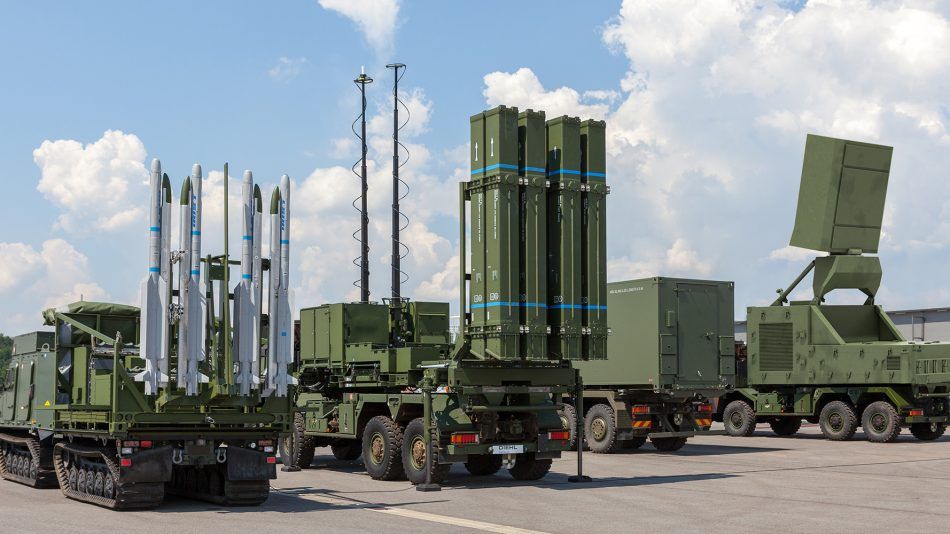
Freyja is designed to connect compatible equipment from several countries through common interfaces and data standards. A participating state could select different surveillance radars, tracking sensors, or command equipment without replacing the entire system. The distributed arrangement is intended to reduce dependence on one supplier or one sensor node.
The proposed engagement process consists of detection, tracking, target discrimination, and interception. Early-warning or surveillance sensors detect an incoming missile and provide trajectory data. A command center evaluates the threat, predicts an interception point, selects a launcher, and transmits firing instructions. After launch, the interceptor receives updated target information before its seeker assumes terminal guidance.
The broader concept has also been described as a multilayered network in which several sensors and engagement opportunities could be combined. However, the publicly described FP-7X is primarily associated with lower-tier interception during the later portion of a ballistic missile's flight. A detailed technical overview emphasized that the final sensor network and battery configuration had not been established.
Radars and command system
Freyja is expected to accept information from surveillance and precision-tracking radars supplied by different manufacturers. Systems discussed for the program include the Hensoldt TRML-4D, Weibel Scientific GFTR-2100/48, Thales Ground Master 400, Leonardo Kronos Land, and Saab Giraffe 4A.
Fire Point and Hensoldt signed a memorandum in June 2026 concerning radar production, testing, delivery, and integration. The TRML-4D was assigned a central role in early plans, but its ability to support Freyja's complete ballistic-missile engagement chain still required testing. Kongsberg Defence & Aerospace was associated with development of the command center and the integration of sensors and weapons. Sener was linked to data-link equipment.
Freyja requires rapid and accurate exchanges between its sensors, command center, launcher, and interceptor. Small tracking errors or communication delays can produce a large miss distance against a high-speed ballistic target. Integration therefore includes trajectory calculation, secure data transmission, target updates, and coordination between equipment made by different companies.
Launcher and FP-7X interceptor
Ukraine is responsible for the proposed launcher and interceptor. Fire Point expects each launcher to carry four to six FP-7X missiles. The final launcher layout, mobility characteristics, reload arrangements, and battery composition have not been publicly confirmed.
The initial FP-7X configuration is planned to use a blast-fragmentation warhead. It would detonate near the target and project fragments through the lethal volume rather than requiring a direct collision. Fire Point has discussed a later hit-to-kill configuration, but this remains a proposed development rather than a demonstrated variant.
Terminal guidance is expected to use an imaging infrared seeker. Fire Point reported work with two European companies and one Ukrainian supplier, while integration of a Diehl Defence option was publicly confirmed. A radio-frequency seeker has also been considered as part of the guidance architecture. The final seeker selection had not been announced.
The interceptor must receive tracking updates during flight and acquire the incoming target during the terminal phase. Integrating the seeker requires attention to sensor accuracy, electrical demand, data processing, mass, maneuverability, and resistance to the severe conditions of a high-speed interception.
Program status
As of August 2026, Freyja was an unqualified development system. Individual FP-7X flight tests had occurred, but the radar, command center, launcher, data link, seeker, and interceptor had not completed a publicly confirmed end-to-end ballistic interception.
Fire Point targeted an initial manufacturing capacity of at least 2,000 interceptors per year. It also sought a serial-production unit cost below €1 million. Earlier reporting cited a developer estimate near US$700,000 per interceptor. These figures exclude the complete cost of radars, command posts, launchers, training, logistics, maintenance, and the number of missiles required for each successful engagement.
The program aims to compress a development process normally measured in decades into a few years. According to a development schedule, the first integrated prototype was planned for the first half of 2027 and the first ballistic-target interception for approximately July 2027. The schedule depended on timely component delivery, successful integration, financing, government approvals, and realistic testing.
Freyja is intended to complement rather than replace Patriot. A larger supply of lower-cost interceptors could allow participating states to reserve scarce PAC-3 MSE missiles for the most demanding threats. The practical value of this approach will depend on Freyja's eventual engagement envelope, probability of kill, reliability, and production rate, none of which had been operationally established.
Specifications (planned Freyja configuration)
System characteristics
- Type: Modular, land-based ballistic-missile defense system
- Development authority: Ukraine as system-integrator nation
- Prime contractor and technical integrator: Fire Point
- Primary interceptor: Fire Point FP-7X
- Architecture: Open and distributed sensor, command, launcher, and interceptor network
- Primary mission: Detection, tracking, discrimination, and interception of ballistic threats
Planned engagement system
- Reported interception altitude: Approximately 20-25 km (12-16 mi)
- Launcher capacity: Four to six FP-7X interceptors
- Terminal guidance: Imaging infrared seeker planned; radio-frequency seeker under consideration
- Initial warhead: Blast-fragmentation
- Later warhead concept: Proposed hit-to-kill configuration
- Candidate radar systems: Hensoldt TRML-4D, Weibel Scientific GFTR-2100/48, Thales Ground Master 400, Leonardo Kronos Land, and Saab Giraffe 4A
- Command-and-control contributor: Kongsberg Defence & Aerospace
- Data-link contributor: Sener
Program targets
- First integrated prototype: Planned for the first half of 2027
- First ballistic-target interception: Targeted for approximately July 2027
- Annual interceptor production: Target of at least 2,000 missiles
- Target serial unit cost: Below €1 million per interceptor
Related equipment
- FP-7: Fire Point ground-launched missile architecture from which the FP-7X interceptor is being developed.
- Patriot PAC-3 MSE: Operational hit-to-kill ballistic-missile interceptor that Freyja is intended to complement rather than replace.
- SAMP/T: Franco-Italian air and missile defense system using Aster-family interceptors.
- THAAD: United States system intended for higher-altitude terminal interception of ballistic missiles.
 Argentina
 Armenia
 Australia
 Austria
 Austria-Hungary
 Belgium
 Brazil
 United Kingdom
 United States
 Brunei
 Bulgaria
 Canada
 Chile
Chile China
China Colonial America
 Colombia
 Confederate States
 Croatia
 Czech
Czech Denmark
 Egypt
Egypt Finland
 France
 Georgia
 Germany
 German Imperial
 Greece
 Holland
 Hungary
 India
India Indonesia
 Iran
Iran Iraq
Iraq Ireland
 Israel
 Italy
Italy Japan
Japan Japan (1940)
 Jordan
 Kingdom of Italy
 Malaysia
 Mexico
 Myanmar
 Nazi Germany
 Netherlands
 New Zealand
 North Korea
 Norway
 Pakistan
 Peru
Peru Philippines
 Poland
 Portugal
 Prussia
 Romania
 Russia
 Saudi Arabia
 Serbia
 Singapore
 Slovakia
 Slovenia
 South Africa
 South Korea
 Soviet Union
 Spain
Spain Sweden
 Switzerland
 Syria
Syria Taiwan
 Thailand
 Turkey
 UAE
UAE Vietnam
 Yugoslavia