
History
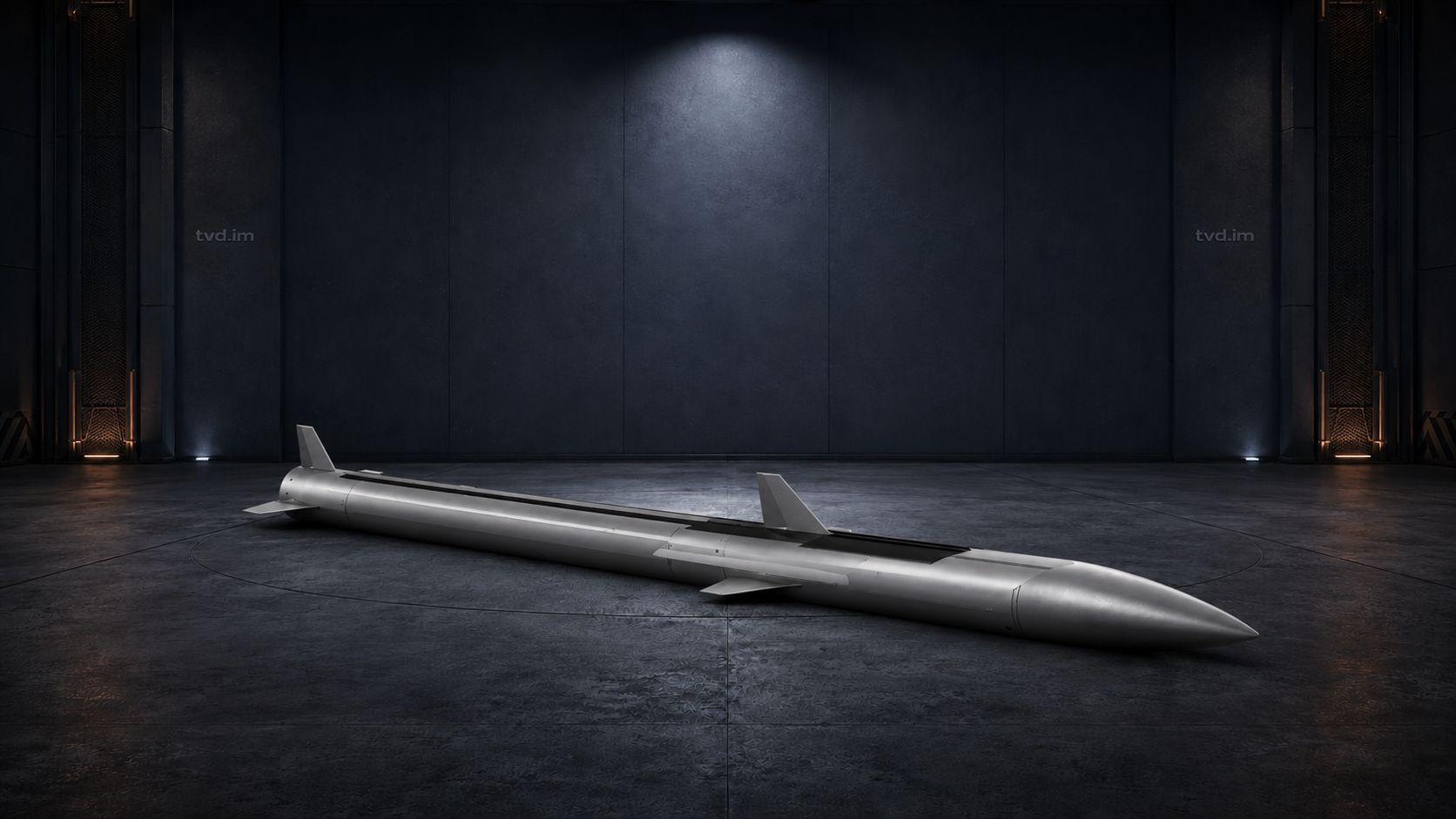
The Destinus Vorexon is a concept-stage, ground-launched interceptor missile intended to defend critical sites against artillery rockets and other selected aerial threats. Destinus publicly presented the system at the Farnborough International Airshow in July 2026.
Vorexon is being developed as a selective point-defence weapon rather than a system for protecting an entire battlefield. Its proposed fire-control network would identify projectiles expected to strike priority assets and engage only those posing a direct threat.
The current design targets a maximum speed above Mach 2 and an engagement range beyond 20 km (12.4 mi). These figures remain development objectives and have not yet been demonstrated through operational testing.
Destinus developed the concept in response to the difficulty and cost of intercepting large numbers of comparatively inexpensive artillery rockets. Proposed protected sites include command posts, air-defence radars and missile batteries, ammunition stores, bridges, and logistics hubs. The system is intended to complement existing air-defence and counter-battery networks rather than replace them.
The company presented Vorexon as an integrated interceptor architecture with external sensors, fire-control equipment, canister launchers, and guided missiles. The official Destinus product page describes it as a high-speed interceptor against artillery rockets and supersonic targets.
Destinus scheduled a major development milestone and initial flight testing for 2027. Operational testing was also reported as a goal for that year. Serial production is planned to begin in 2028, subject to successful development and testing. No launch customer or confirmed operator had been announced when the concept was presented.
Design
System architecture
Vorexon is designed to operate within an integrated sensor and fire-control network. External radars would detect and track incoming projectiles, calculate their predicted impact points, and identify those threatening a defended site. This selective engagement method is intended to conserve interceptors and improve the economic balance between the attacking projectile and the defensive weapon.
The effective engagement envelope would depend on the type and trajectory of the target, radar track quality, sensor coverage, and the geometry of the interception. Warning times against fast artillery rockets may be measured in tens of seconds, making rapid detection, classification, and engagement decisions essential to the proposed system.
Guidance
The planned medium-range configuration uses radar-provided trajectory corrections during the middle portion of flight. A proposed active radar seeker would then acquire the target and guide the missile during the terminal phase. Target selection and authorization to launch remain under operator command, while terminal homing is intended to be autonomous after seeker acquisition.
A short-range configuration is also planned for autonomous point defence. It would be launched toward a designated sector and use its onboard seeker for terminal guidance, reducing its dependence on a dedicated fire-control radar. This arrangement is intended to support dispersed protection of individual high-value locations.
Launcher
The interceptor is housed in an integrated transport and launch canister. Destinus proposes multi-round launchers that can be installed on wheeled or tracked vehicles or operated from fixed positions. A multi-round arrangement would provide several ready-to-fire missiles and allow launch units to be distributed around protected assets.
Targets and warhead
Vorexon is primarily optimized for point defence against artillery rockets and selected artillery shells. Destinus also identifies supersonic targets as part of the intended threat set. Reported secondary targets include selected subsonic threats such as cruise missiles and glide bombs, although these capabilities remain proposed.
Published reporting from the system's Farnborough presentation gives a planned warhead mass of 8 kg (17.6 lb). The warhead type, fuzing method, propulsion system, missile dimensions, launch weight, and maneuverability limits have not been disclosed.
Program status
Vorexon remains under development. The figures published for its speed, range, seeker, target set, and deployment options describe the intended system rather than verified operational performance.
Flight and operational testing are planned for 2027, followed by serial production from 2028 if the development program proceeds as scheduled. Destinus has reported discussions with several European countries, including Ukraine, but prospective interest does not constitute an order or operational adoption.
Variants
- Short-range configuration: Proposed autonomous point-defence version using sector-directed launch and autonomous terminal homing, with reduced dependence on a dedicated fire-control radar.
- Medium-range configuration: Proposed networked version using external radar data for midcourse corrections before an autonomous active-radar terminal phase.
Specifications (Vorexon concept configuration)
General characteristics
- Type: Ground-launched point-defence interceptor missile
- Development status: Concept-stage system under development
- Warhead mass: 8 kg (17.6 lb), as reported during the Farnborough presentation
- Launcher: Mobile or fixed multi-round canister launcher
Performance
- Maximum speed: More than Mach 2, planned
- Maximum engagement range: More than 20 km (12.4 mi), planned
Guidance
- Midcourse guidance: External radar updates in the proposed medium-range configuration
- Terminal guidance: Planned active radar seeker with autonomous terminal homing
- Engagement control: Target selection and launch authorization under operator command
Intended targets
- Primary targets: Artillery rockets, selected artillery shells, and supersonic aerial threats
- Proposed secondary targets: Selected cruise missiles and glide bombs
 Argentina
 Armenia
 Australia
 Austria
 Austria-Hungary
 Belgium
 Brazil
 United Kingdom
 United States
 Brunei
 Bulgaria
 Canada
 Chile
Chile China
China Colonial America
 Colombia
 Confederate States
 Croatia
 Czech
Czech Denmark
 Egypt
Egypt Finland
 France
 Georgia
 Germany
 German Imperial
 Greece
 Holland
 Hungary
 India
India Indonesia
 Iran
Iran Iraq
Iraq Ireland
 Israel
 Italy
Italy Japan
Japan Japan (1940)
 Jordan
 Kingdom of Italy
 Malaysia
 Mexico
 Myanmar
 Nazi Germany
 New Zealand
 North Korea
 Norway
 Pakistan
 Peru
Peru Philippines
 Poland
 Portugal
 Prussia
 Romania
 Russia
 Saudi Arabia
 Serbia
 Singapore
 Slovakia
 Slovenia
 South Africa
 South Korea
 Soviet Union
 Spain
Spain Sweden
 Switzerland
 Syria
Syria Taiwan
 Thailand
 Turkey
 UAE
UAE Ukraine
 Vietnam
 Yugoslavia