
History
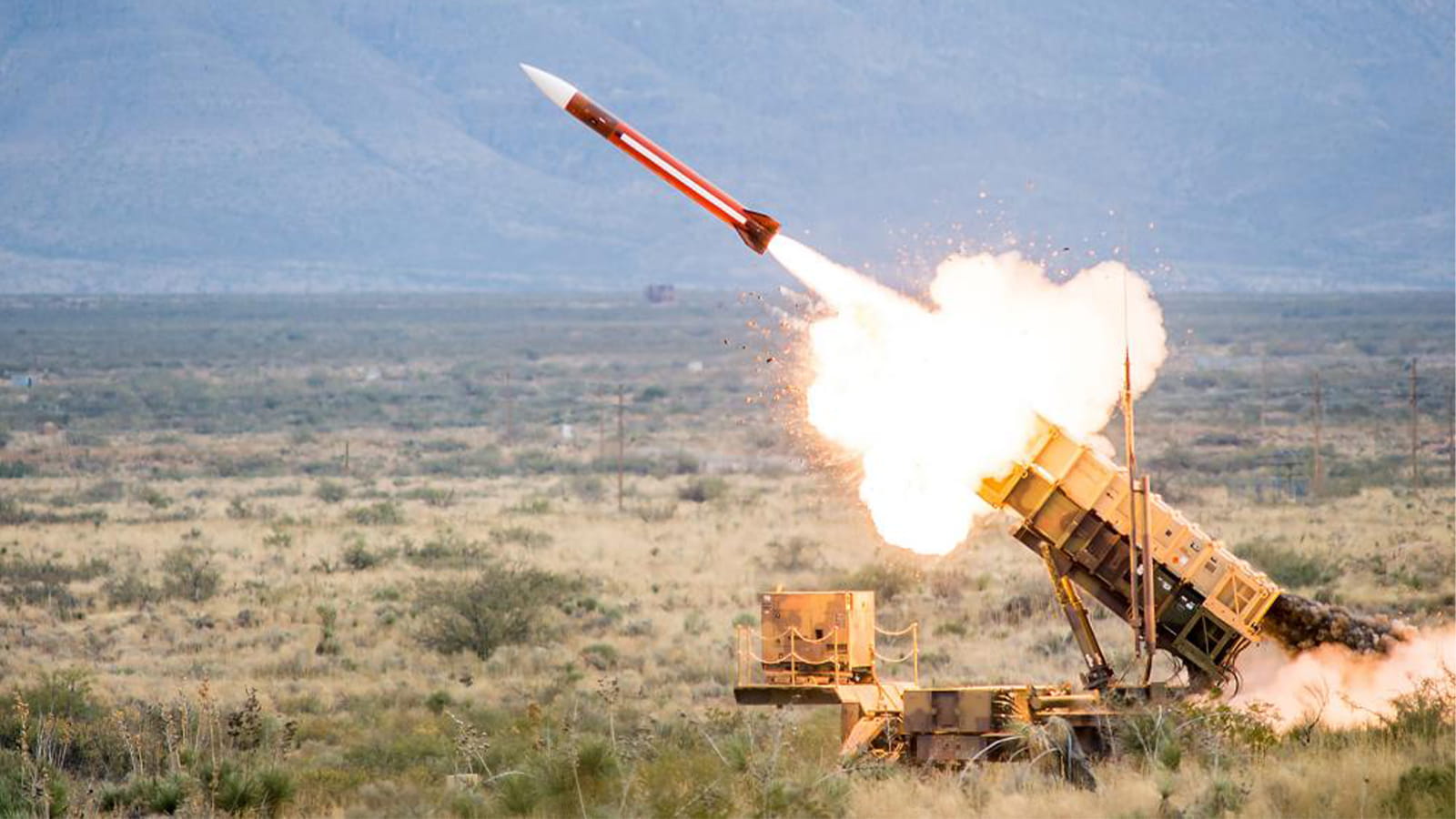
The Raytheon PAC-2 Guidance Enhanced Missile-Tactical, usually called GEM-T, is a surface-to-air interceptor for the MIM-104 Patriot air and missile defense system. It is designed to engage aircraft, cruise missiles, and tactical ballistic missiles.
GEM-T is an improved member of the PAC-2 family. Unlike the smaller PAC-3 interceptor, which destroys its target through direct impact, GEM-T uses a conventional high-explosive fragmentation warhead with a proximity fuze.
The missile remains in production for the United States and international customers. In 2026, the United States placed its first new domestic GEM-T production order in more than 30 years.
Development
The original MIM-104C PAC-2 missile was developed after tests raised doubts about the ability of earlier Patriot missiles to destroy tactical ballistic missiles reliably. Testing began in 1987, and PAC-2 reached U.S. Army units in 1990. Its warhead and fuze were optimized for engagements with fast ballistic targets, while retaining the ability to attack aircraft.
Further improvements during the 1990s produced the Guidance Enhanced Missile family. The original GEM introduced a faster proximity fuze and a low-noise seeker intended to reduce interference and improve detection of targets with a small radar cross-section.
The later GEM+ program produced two specialized versions. GEM-C was optimized for cruise missiles, while GEM-T was configured for tactical ballistic missiles. Both received redesigned forward sections for improved performance against low-altitude targets with small radar signatures. The GEM+ family entered service in November 2002. A detailed account of this development is available in the MIM-104 Patriot history.
Production
Raytheon is the principal manufacturer of GEM-T. In April 2024, its reported production rate was approximately 20 missiles per month, equivalent to about 240 missiles per year.
In November 2024, MBDA Deutschland began constructing a GEM-T production facility at Schrobenhausen, Germany. The approximately 6,000-square-meter building was scheduled for completion in September 2026, with production planned to begin before the end of that year. Initial serial deliveries under European orders were expected in 2028. The facility is owned by COMLOG, a joint venture between Raytheon and MBDA Deutschland.
In April 2026, Raytheon announced a contract valued at $3.7 billion to supply GEM-T interceptors for Ukraine. The company stated that part of the production was expected to take place at the new German facility. Details were published by RTX.
During the second quarter of the 2026 financial year, Raytheon reported more than $5 billion in GEM-T orders, mainly for international customers. The company also disclosed its first domestic production order for the missile in more than three decades. The available report associated this order with a $441.6 million U.S. Army contract awarded in April 2026, although Raytheon did not publicly confirm that connection.
Design
Missile configuration
GEM-T is a ground-launched, single-stage missile powered by a solid-propellant rocket motor. It is carried and launched from the Patriot system's mobile launching station. A standard Patriot launcher can carry four PAC-2-family missile canisters.
The interceptor uses a conventional high-explosive fragmentation warhead. The proximity fuze initiates the warhead near the target, producing fragments intended to damage or destroy it. This operating principle differs from the direct-impact method used by PAC-3 interceptors.
Guidance and fuze
The GEM-T upgrade concentrates on the seeker, downlink, and fuze. Its low-noise front end increases seeker sensitivity, improving acquisition and tracking. A low-noise oscillator and modified downlink provide a higher signal-to-interference ratio, which assists the missile when engaging small airborne threats and cruise missiles in cluttered conditions.
A modernized digital fuze increases sensitivity against high-speed tactical ballistic missile targets and replaces obsolete components. Raytheon describes these features on its official Guidance Enhanced Missile page.
Role within Patriot
GEM-T works with Patriot radar, command-and-control equipment, and launchers. After launch, the missile exchanges guidance information with the ground system as the radar continues to track the engagement. It provides a blast-fragmentation interceptor for aircraft, cruise missiles, and tactical ballistic missiles, complementing PAC-3 missiles within a layered air-defense battery.
The Missile Defense Advocacy Alliance overview identifies the upgraded fuze and increased radar sensitivity as the principal distinctions of GEM-T within the PAC-2 family.
Operational history
Configuration-3 Patriot ground equipment, PAC-3 missiles, and GEM-T-series missiles were used during Operation Iraqi Freedom. Raytheon describes the combination as combat-proven. The Smithsonian's PAC-2 GEM+ exhibit record also states that this missile family was used during the operation.
GEM-T has remained available to U.S. forces and international Patriot customers. The 2026 domestic order marked the resumption of new U.S. production procurement after a period in which orders had primarily supported foreign customers.
Variants
- MIM-104C PAC-2: The original PAC-2 interceptor, optimized for ballistic-missile engagements and fitted with a blast-fragmentation warhead.
- MIM-104D PAC-2 GEM: An improved PAC-2 with a revised proximity fuze and a more sensitive, low-noise seeker.
- PAC-2 GEM-C: A GEM+ development optimized principally for cruise-missile targets.
- PAC-2 GEM-T: A GEM+ development optimized for tactical ballistic missiles, with an upgraded seeker, low-noise oscillator, modified downlink, and improved fuze.
Operators
- United States: Used by the U.S. Army with the Patriot system. A new domestic production order was disclosed in 2026.
Specifications (PAC-2 GEM-T)
General characteristics
- Type: Ground-launched surface-to-air interceptor
- Manufacturer: Raytheon
- Stages: One
- Propulsion: Solid-propellant rocket motor
- Launcher capacity: Four PAC-2-family missile canisters per Patriot launcher
Guidance and engagement
- Primary targets: Tactical ballistic missiles, cruise missiles, and aircraft
- Seeker features: Low-noise front end and oscillator for increased sensitivity
- Fuze: Modernized digital proximity fuze
- Warhead: Conventional high-explosive fragmentation warhead
- Engagement method: Proximity detonation and fragmentation
 Argentina
 Armenia
 Australia
 Austria
 Austria-Hungary
 Belgium
 Brazil
 United Kingdom
 Brunei
 Bulgaria
 Canada
 Chile
Chile China
China Colonial America
 Colombia
 Confederate States
 Croatia
 Czech
Czech Denmark
 Egypt
Egypt Finland
 France
 Georgia
 Germany
 German Imperial
 Greece
 Holland
 Hungary
 India
India Indonesia
 Iran
Iran Iraq
Iraq Ireland
 Israel
 Italy
Italy Japan
Japan Japan (1940)
 Jordan
 Kingdom of Italy
 Malaysia
 Mexico
 Myanmar
 Nazi Germany
 Netherlands
 New Zealand
 North Korea
 Norway
 Pakistan
 Peru
Peru Philippines
 Poland
 Portugal
 Prussia
 Romania
 Russia
 Saudi Arabia
 Serbia
 Singapore
 Slovakia
 Slovenia
 South Africa
 South Korea
 Soviet Union
 Spain
Spain Sweden
 Switzerland
 Syria
Syria Taiwan
 Thailand
 Turkey
 UAE
UAE Ukraine
 Vietnam
 Yugoslavia