
History
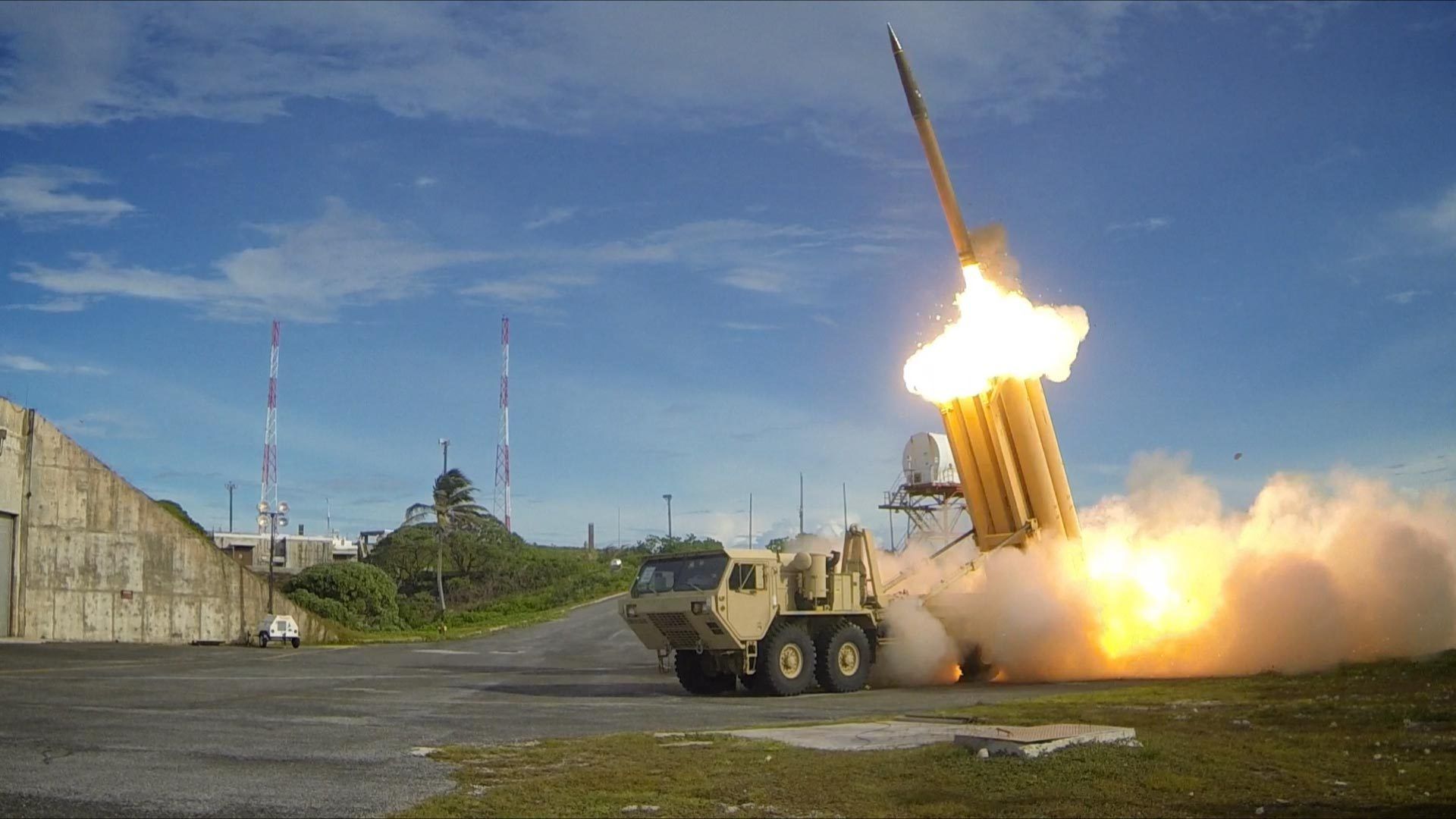
L3Harris THAAD interceptor propulsion comprises the Solid Rocket Boost Motor and the Liquid Divert and Attitude Control System. The two components propel and maneuver the interceptor used by the Terminal High Altitude Area Defense missile-defense system.
Lockheed Martin is the prime contractor for THAAD, while L3Harris supplies both propulsion components to the Missile Defense Agency. THAAD is a land-based system intended to intercept short-, medium-, and intermediate-range ballistic missiles during the terminal phase of flight.
The propulsion system supports hit-to-kill interception inside and outside Earth's atmosphere. The interceptor destroys its target through a direct collision rather than an explosive warhead.
Development and testing
A robust ground-test program for the THAAD propulsion system began in 2004. Flight testing followed in 2005. According to the L3Harris data sheet, THAAD had completed 16 successful intercept tests by August 2019.
Production
L3Harris manufactures the solid rocket boost motor in Huntsville, Alabama, and Camden, Arkansas. The company produces the Liquid Divert and Attitude Control System at its Los Angeles facility.
In 2024, Aerojet Rocketdyne, an L3Harris company, reported delivery of its 1,000th THAAD solid rocket boost motor and its 1,000th LDACS. Both components were delivered to Lockheed Martin for integration with THAAD interceptors.
In July 2026, the United States Department of Defense, L3Harris, and Lockheed Martin signed a seven-year framework agreement intended to quadruple production capacity for THAAD propulsion components. The agreement covered both the boost motor and LDACS and was expected to be finalized later in 2026. The production expansion was intended to provide stable long-term demand, support manufacturing investment, and accelerate interceptor deliveries.
Design
Solid Rocket Boost Motor
The Solid Rocket Boost Motor provides the initial thrust needed to launch and accelerate the THAAD interceptor. Its thrust-vectoring nozzle directs the booster's thrust to control the interceptor during powered flight. The motor must operate across demanding temperature, shock, and vibration conditions.
Liquid Divert and Attitude Control System
LDACS is a compact hypergolic bipropellant system used after the boost phase. Hypergolic propellants ignite when they contact each other, allowing the system to respond rapidly without a separate ignition mechanism.
Six attitude-control thrusters operate in different combinations to control roll, pitch, and yaw. They stabilize the interceptor and its seeker so that the seeker can observe and track the target. Four additional divert thrusters deliver short, forceful pulses that reposition the kinetic kill vehicle for a direct collision.
The guidance system converts seeker target data into attitude and divert commands. LDACS then performs the rapid course corrections required during the final phase of interception.
Operational role
The boost motor and LDACS perform separate but connected functions. The boost motor supplies the energy needed to reach the engagement region. LDACS provides precise orientation and lateral maneuvering as the interceptor approaches its target.
The propulsion system supports THAAD engagements against ballistic missiles in the upper atmosphere and beyond the atmosphere. It is part of the wider United States layered missile-defense architecture.
Program status
THAAD interceptor propulsion remained in production in 2026. The seven-year framework agreement announced that year was intended to expand output rather than introduce a new propulsion variant. L3Harris also reported investments in new facilities, modern manufacturing methods, workforce capacity, and its supplier network to support higher production rates.
Specifications (THAAD interceptor propulsion)
General characteristics
- Manufacturer: L3Harris Technologies, including Aerojet Rocketdyne operations
- Prime system contractor: Lockheed Martin
- Customer: United States Missile Defense Agency
- Application: THAAD hit-to-kill ballistic-missile interceptor
- Primary components: Solid Rocket Boost Motor and Liquid Divert and Attitude Control System
- Boost propulsion: Solid rocket motor with a thrust-vectoring nozzle
- Terminal-control propulsion: Hypergolic bipropellant liquid system
- Attitude-control thrusters: Six, providing roll, pitch, and yaw control
- Divert thrusters: Four, providing rapid course-correction pulses
Functions
- Boost motor: Launches and accelerates the interceptor
- Attitude control: Stabilizes the interceptor and seeker field of view
- Divert control: Positions the kill vehicle for direct impact with the target
- Engagement environment: Terminal interception inside and outside Earth's atmosphere
 Argentina
 Armenia
 Australia
 Austria
 Austria-Hungary
 Belgium
 Brazil
 United Kingdom
 Brunei
 Bulgaria
 Canada
 Chile
Chile China
China Colonial America
 Colombia
 Confederate States
 Croatia
 Czech
Czech Denmark
 Egypt
Egypt Finland
 France
 Georgia
 Germany
 German Imperial
 Greece
 Holland
 Hungary
 India
India Indonesia
 Iran
Iran Iraq
Iraq Ireland
 Israel
 Italy
Italy Japan
Japan Japan (1940)
 Jordan
 Kingdom of Italy
 Malaysia
 Mexico
 Myanmar
 Nazi Germany
 Netherlands
 New Zealand
 North Korea
 Norway
 Pakistan
 Peru
Peru Philippines
 Poland
 Portugal
 Prussia
 Romania
 Russia
 Saudi Arabia
 Serbia
 Singapore
 Slovakia
 Slovenia
 South Africa
 South Korea
 Soviet Union
 Spain
Spain Sweden
 Switzerland
 Syria
Syria Taiwan
 Thailand
 Turkey
 UAE
UAE Ukraine
 Vietnam
 Yugoslavia