
History
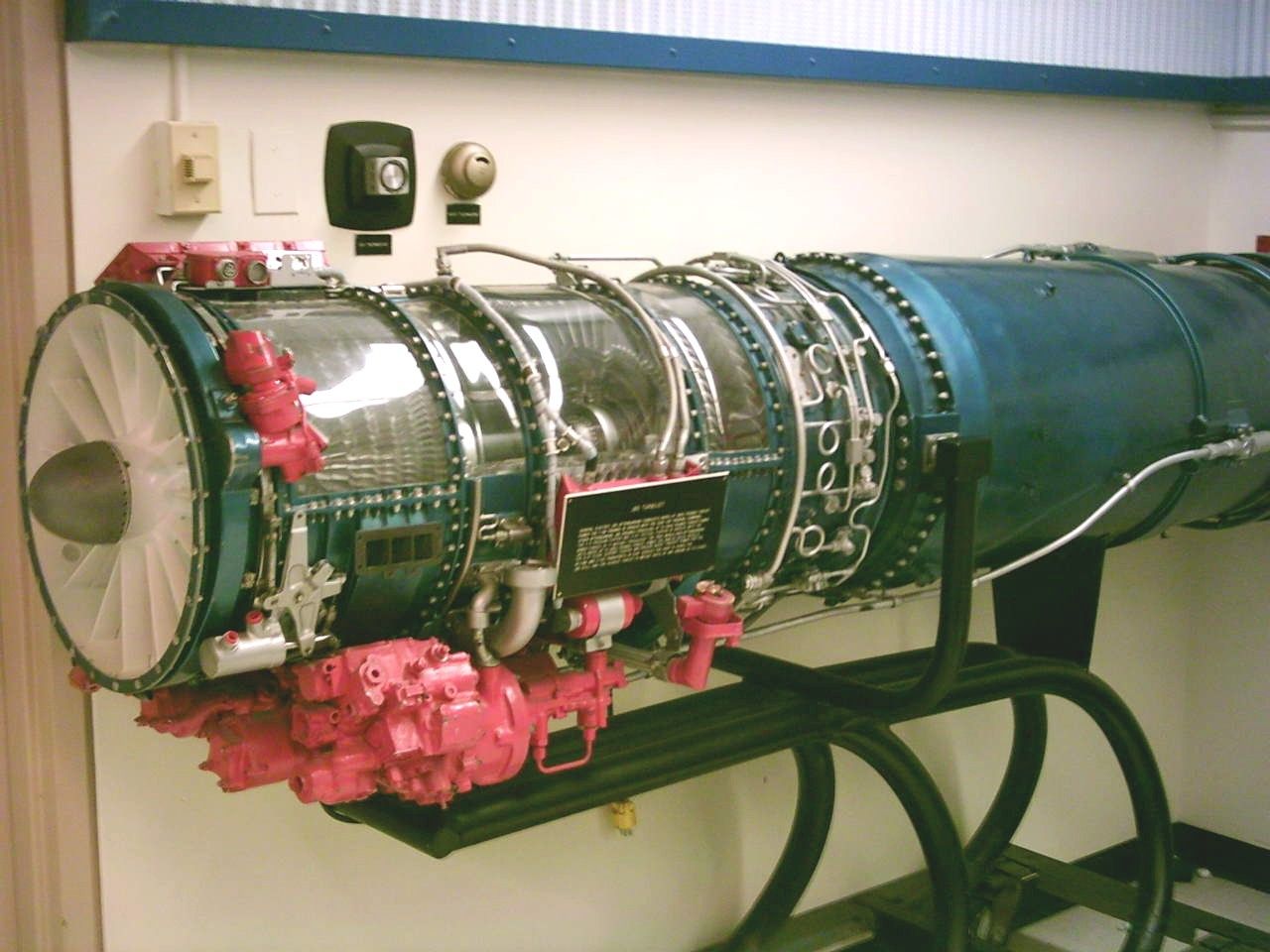
The General Electric J85 is a compact single-shaft turbojet developed in the United States for military applications. It began as a small, high thrust-to-weight engine for an air-launched missile decoy and later became a major powerplant for the Northrop T-38 Talon trainer and F-5 Freedom Fighter.
The J85 family combined a small physical size with versions offering either non-afterburning or afterburning thrust. General Electric ultimately produced more than 12,000 J85 engines and related commercial versions before production ended in 1988.
The engine has remained in service long after production ended. Sustainment programs for the T-38 fleet have included major life-extension work, maintenance contracts, replacement components, and continuing procurement of fuel-system parts.
Development
According to the National Air and Space Museum, General Electric began a design study for a high thrust-to-weight turbojet in late 1953. GE describes the engine as having been originally designed in 1954 after company leaders proposed a small turbojet in the 2,500 lbf thrust class to the U.S. Air Force. The Air Force financed development for the GAM-72 Green Quail missile decoy, which was intended for release from a Boeing B-52 bomber.
The first prototype J85 ran in January 1956. GE tested an afterburning configuration in 1957. In August 1958, a J85 powered the GAM-72 on the engine's first flight application. In September 1958, a prototype North American T-39 Sabreliner made its first flight with the first man-rated J85 engines.
Northrop subsequently selected the J85 for two related supersonic aircraft programs: the N-156F Freedom Fighter, which became the F-5, and the T-38 Talon supersonic trainer. The T-38 entered flight testing in 1959, followed by F-5 flight testing in July of that year. GE's J85 program history states that the basic engine was designed to produce about 2,950 lbf of non-afterburning thrust, while afterburning versions for the Northrop aircraft could produce up to about 5,000 lbf.
Production and life extension
The J85 was produced in multiple configurations for trainers, fighters, attack aircraft, and other applications. The National Air and Space Museum identifies the non-afterburning J85-GE-17A as a powerplant for the Cessna A-37A/B. Production ended in 1988 after more than 12,000 J85 engines had been built.
In 2001, the U.S. Air Force awarded a $601 million contract for hardware kits intended to upgrade 1,202 J85 engines used by the T-38 fleet. GE states that the kit included a redesigned compressor rotor and stator assembly, an improved high-pressure turbine, and a new afterburner liner, with the goal of extending engine service life into the 21st century.
Support continued after production ceased. In 2020, GE received a $394 million Defense Logistics Agency contract to provide J85 supplies for the U.S. Air Force and Navy. In November 2025, StandardAero announced delivery of its 1,000th serviced J85-5 engine to the U.S. Air Force under its Engine Regional Repair Center work for the T-38 fleet.
In 2026, the Defense Logistics Agency awarded Collins Engine Nozzles two contracts valued at approximately $148.3 million for J85 fuel-system parts. The procurement supports continued operation of engines used by the T-38 Talon.
Design
The J85 is a small single-shaft turbojet. The basic family is approximately 45 cm wide and 114 to 115 cm long, although dimensions and installed equipment vary by version. A representative J85-GE-17A uses an eight-stage axial-flow compressor, an annular combustor, and a two-stage axial turbine.
Afterburning versions inject additional fuel downstream of the turbine to increase thrust for high-performance aircraft. The National Air and Space Museum describes the J85 as the first U.S. small turbine engine to enter production with an afterburner. GE similarly identifies it as the first small turbojet to operate with an afterburner in this application.
The J85-21 was a later development intended for the F-5E/F. According to the J85 technical summary, it replaced the chromium-nickel-molybdenum stainless steel used in earlier compressor rotors and blades with titanium alloy, increased the inlet diameter from about 45 cm to 53 cm, and added a compressor stage for a total of nine stages. The cited configuration produced about 16 kN of dry thrust and 22 kN with afterburner.
Operational history
The J85 became closely associated with the Northrop T-38 Talon and F-5 family. The T-38 has used J85 engines for U.S. Air Force pilot training since the 1960s, while the F-5 was adopted by numerous countries. Non-afterburning J85 versions were also used on aircraft such as the Cessna A-37A/B.
The engine's longevity has required sustained maintenance and component production. StandardAero reported in 2025 that J85-5 engines for the T-38 were being serviced at its Port San Antonio facility, while its Stockton facility supported other J85 variants, including J85-21 work for the U.S. Navy and Foreign Military Sales customers.
GE stated in 2020, and StandardAero repeated in 2025, that J85-powered U.S. military aircraft were expected to remain in service through 2040 and potentially beyond. This is a projected support horizon rather than a confirmed retirement date.
Variants
- J85-5: Variant used to power the Northrop T-38 Talon and supported through continuing U.S. Air Force maintenance programs.
- J85-GE-17A: Non-afterburning version used by the Cessna A-37A/B. A preserved example is rated at 12.68 kN of thrust.
- J85-21: Later version developed for the F-5E/F with a nine-stage compressor, enlarged inlet, titanium compressor components, and up to approximately 22 kN of afterburning thrust.
Specifications (J85-GE-17A)
General characteristics
- Type: Single-shaft turbojet
- Compressor: Eight-stage axial-flow
- Combustor: Annular
- Turbine: Two-stage axial
- Weight: 181 kg (398 lb)
Performance
- Thrust: 12.68 kN (2,850 lbf)
- Rated rotational speed: 16,500 rpm at the stated thrust rating
Related equipment
The CJ610 was a non-afterburning commercial derivative of the J85 and powered early business jets including the Lear Jet Model 23. The CF700 was a related development incorporating an aft-mounted fan. These commercial derivatives extended the basic J85 design into the business aviation market.
 Argentina
 Armenia
 Australia
 Austria
 Austria-Hungary
 Belgium
 Brazil
 United Kingdom
 Brunei
 Bulgaria
 Canada
 Chile
Chile China
China Colonial America
 Colombia
 Confederate States
 Croatia
 Czech
Czech Denmark
 Egypt
Egypt Finland
 France
 Georgia
 Germany
 German Imperial
 Greece
 Holland
 Hungary
 India
India Indonesia
 Iran
Iran Iraq
Iraq Ireland
 Israel
 Italy
Italy Japan
Japan Japan (1940)
 Jordan
 Kingdom of Italy
 Malaysia
 Mexico
 Myanmar
 Nazi Germany
 Netherlands
 New Zealand
 North Korea
 Norway
 Pakistan
 Peru
Peru Philippines
 Poland
 Portugal
 Prussia
 Romania
 Russia
 Saudi Arabia
 Serbia
 Singapore
 Slovakia
 Slovenia
 South Africa
 South Korea
 Soviet Union
 Spain
Spain Sweden
 Switzerland
 Syria
Syria Taiwan
 Thailand
 Turkey
 UAE
UAE Ukraine
 Vietnam
 Yugoslavia