
History
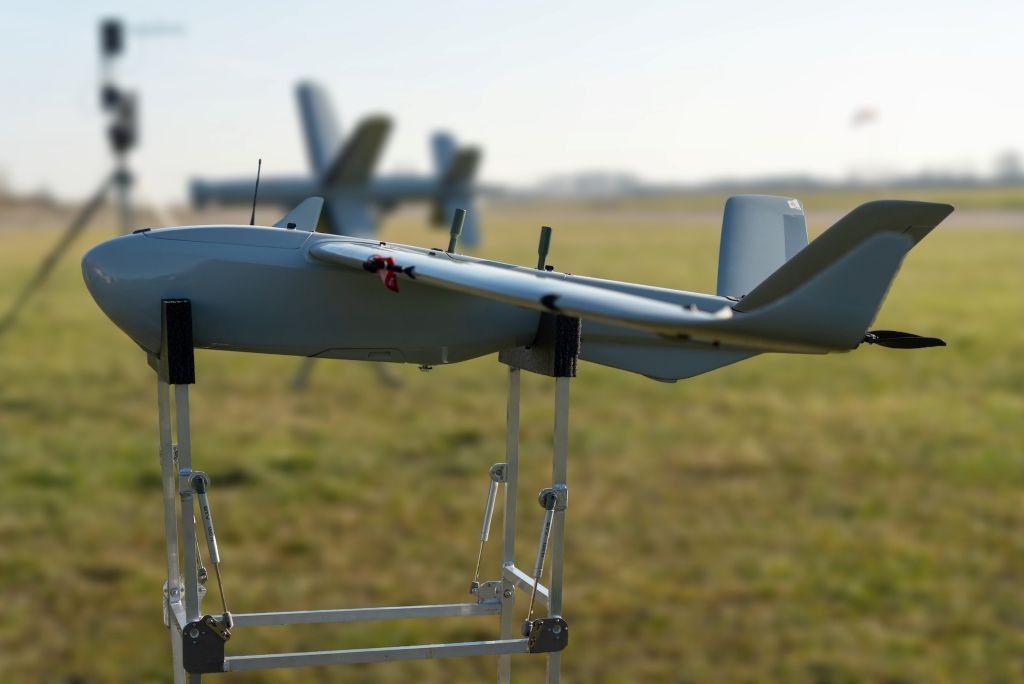
The Stork (Leleka in Ukrainian) reconnaissance drone was developed by Ukrainian manufacturer DeViRo, which has built drones since 2014. The design saw wide use by Ukraine's military during Russia's full-scale invasion beginning in 2022 and is described as battle-tested. Co-owners of DeViRo founded U&C UAS in the Czech Republic in July 2022 to expand production. The company began serial production of Stork and Mace drones at its plant in Kolín, east of Prague, in 2024, and reports a capacity of about 500 drones per month across two production sites.
In May 2026, U&C UAS announced a contract to supply ISR drones to U.S. Army units in Europe for scouting and base protection, delivered in partnership with ATP Gov. The company did not disclose the specific model, quantities, contract value, or delivery schedule. On 16 October 2026, soldiers of the 1st Battalion, 4th Infantry Regiment assembled and launched a Stork LR during Combined Resolve 27-01 at the Hohenfels Training Area in Bavaria, Germany. The battalion serves as the resident opposing force at the Joint Multinational Readiness Center, operated by the 7th Army Training Command to prepare formations for large-scale combat. In April 2026, Russia's defence ministry listed the Kolín plant among European firms it described as potential targets because of their drone production for Ukraine.
Specifications
The Stork LR is a fixed-wing electric unmanned aerial system designed for aerial reconnaissance, artillery fire adjustment, loitering munition guidance, patrolling, mapping, and border security. The system is fully adapted for operation in electronic warfare environments and without GPS.
- Wingspan: 3.4 m (11 ft)
- Takeoff weight: 14 kg (31 lb)
- Endurance: up to 5 h 30 min
- Cruise speed: up to 19 m/s (68 km/h)
- Maximum flight altitude: 4,500 m (14,800 ft)
- Tactical range: up to 135 km (84 mi)
- Launch: pneumatic catapult
- Recovery: belly landing
Navigation is provided by a jam-resistant satellite navigation receiver; when interference exceeds the receiver's resistance, the autopilot's intelligent algorithms detect signal loss or spoofing and automatically switch to inertial navigation. Communication uses encrypted data links, and a MESH network architecture enables multiple UAVs to operate under a single ground control station, with each aircraft capable of relaying signals for others or coordinating loitering munitions. The sensor payload is a multi-sensor day/night vision module with gyroscopic stabilization on the pitch and yaw axes, electronic stabilization on the roll axis, automatic target acquisition and tracking, and extended Detection, Recognition, Identification (DRI) capabilities.
Variants
The Stork 1000 is a larger variant with a takeoff weight of 23.5 kg, endurance of up to 8 hours, and a communication range of up to 75 km. In addition to day and night operation modules, it features a separate thermal imaging module.
Operators
Ukraine — U&C UAS states its drones are used by most Ukrainian brigades.
United States — U.S. Army units in Europe under the May 2026 ISR and base-protection contract; the Stork LR was operated by the 1st Battalion, 4th Infantry Regiment as the opposing force during Combined Resolve 27-01.
India — U&C UAS signed a supply deal in 2026 with plans for technology transfer and joint production.
 Argentina
 Armenia
 Australia
 Austria
 Austria-Hungary
 Belgium
 Brazil
 United Kingdom
 United States
 Brunei
 Bulgaria
 Canada
 Chile
 China
 Colonial America
 Colombia
 Confederate States
 Croatia
 Czech
 Denmark
 Egypt
 Finland
 France
 Georgia
 Germany
 German Imperial
 Greece
 Holland
 Hungary
 India
 Indonesia
 Iran
 Iraq
 Ireland
 Israel
 Italy
 Japan
 Japan (1940)
 Jordan
 Kingdom of Italy
 Malaysia
 Mexico
 Myanmar
 Nazi Germany
 Netherlands
 New Zealand
 North Korea
 Norway
 Pakistan
 Peru
 Philippines
 Poland
 Portugal
 Prussia
 Romania

 Russia
 Saudi Arabia
 Serbia
 Singapore
 Slovakia
 Slovenia
 South Africa
 South Korea
 Soviet Union
 Spain
 Sweden
 Switzerland
 Syria
 Taiwan
 Thailand
 Turkey
 UAE
 Vietnam
 Yugoslavia