
History
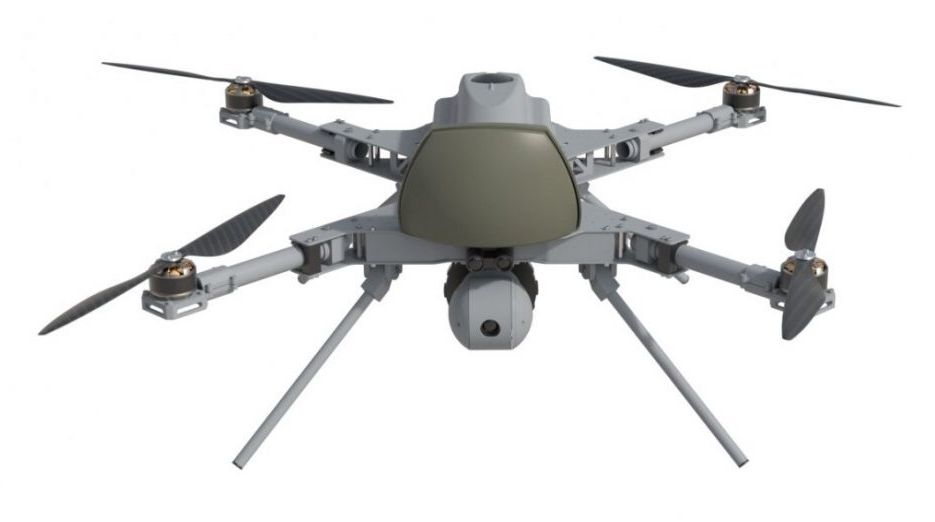
The Kargu is a Turkish portable quadrotor loitering munition produced by Savunma Teknolojileri Mühendislik ve Ticaret A.Ş. (STM). The name Kargu means "mountain observation tower" in Turkish, reflecting the platform's initial design as an airborne surveillance and sentry tool for asymmetric warfare or counter-insurgency.
The Kargu was used by the Turkish Armed Forces in Syria and Libya. In 2020, a Kargu 2 was deployed against forces in Libya; the UN Panel of Experts on Libya reported in March 2021 that the system was used "to attack targets without requiring data connectivity between the operator and the munition: in effect, a true 'fire, forget and find' capability." The report did not confirm that human beings were killed by the system while operating without human supervision.
The Kargu was also reportedly used by Azerbaijan during the 2020 Nagorno-Karabakh conflict, although this has not been verified by Azerbaijani authorities.
On 21 October 2026, the armed wing of Ansar Allah (the Houthis) released footage showing the recovery of at least two Kargu loitering munitions following attacks on Saudi-backed forces east of Raghwan in Yemen's Marib governorate. This marked the first recorded use of the Kargu in Yemen. One recovered unit still carried its directional fragmentation warhead and a compact antenna component labelled as a product of Taoglas, an Irish company. A second unit appeared configured to carry an armour-piercing warhead, although that warhead was not visible in the footage.
Design
The Kargu is a portable quadrotor system comprising a rotary-wing attack drone and a ground control unit, deployable and operable by a single soldier in both autonomous and manual modes. The platform uses domestically developed real-time image processing and machine learning algorithms for automatic target recognition against static or moving targets. STM states the system includes a facial recognition capability for seeking out specific individuals.
STM describes the system as operating according to "the man in the loop principle," a characterization that stands in contrast to the autonomous operation described in the UN Panel of Experts report on Libya. STM advertises a swarm capability in which up to 30 Kargu units operate together under a single ground station, autonomously identifying and tracking targets; promotional footage shows Kargu 2 units in formation, but the autonomous target-selection and coordinated-attack capability has not been publicly demonstrated by STM.
The system supports day and night operations, in-flight mission abort, and emergency self-destruction.
Operators
- Turkey — 500 operational
- Azerbaijan — minimum 27
- Peru — unknown quantity of anti-personnel and anti-armour systems procured by Diseños Casanave International
- Houthis (Yemen) — use confirmed by recovered munitions
Specifications
Parameters below combine STM-published figures with other published values; where they differ, both are given with their stated conditions.
- Crew: 0 on board, 1 in ground station
- Length: 60 cm (2.0 ft)
- Wingspan: 60 cm (2.0 ft)
- Weight: 7,060 g (15.56 lb) or 7.7 kg with warhead fitted (STM figures give both values); 7 kg in other published material
- Range: 6.5 km with standard internal antenna (STM) or 15 km (other published material)
- Endurance: up to 30 minutes (STM) or 30 minutes with payloads (other published material)
- Payload capacity: 1.3 kg; options include an electro-optical day camera, infrared night camera, fragmentation and thermobaric munitions, and a passive wideband sensor for detecting and tracking radio-frequency transmissions
 Argentina
 Armenia
 Australia
 Austria
 Austria-Hungary
 Belgium
 Brazil
 United Kingdom
 United States
 Brunei
 Bulgaria
 Canada
 Chile
 China
 Colonial America
 Colombia
 Confederate States
 Croatia
 Czech
 Denmark
 Egypt
 Finland
 France
 Georgia
 Germany
 German Imperial
 Greece
 Holland
 Hungary
 India
 Indonesia
 Iran
 Iraq
 Ireland
 Israel
 Italy
 Japan
 Japan (1940)
 Jordan
 Kingdom of Italy
 Malaysia
 Mexico
 Myanmar
 Nazi Germany
 Netherlands
 New Zealand
 North Korea
 Norway
 Pakistan
 Peru
 Philippines
 Poland
 Portugal
 Prussia
 Romania

 Russia
 Saudi Arabia
 Serbia
 Singapore
 Slovakia
 Slovenia
 South Africa
 South Korea
 Soviet Union
 Spain
 Sweden
 Switzerland
 Syria
 Taiwan
 Thailand
 UAE
 Ukraine
 Vietnam
 Yugoslavia