
History
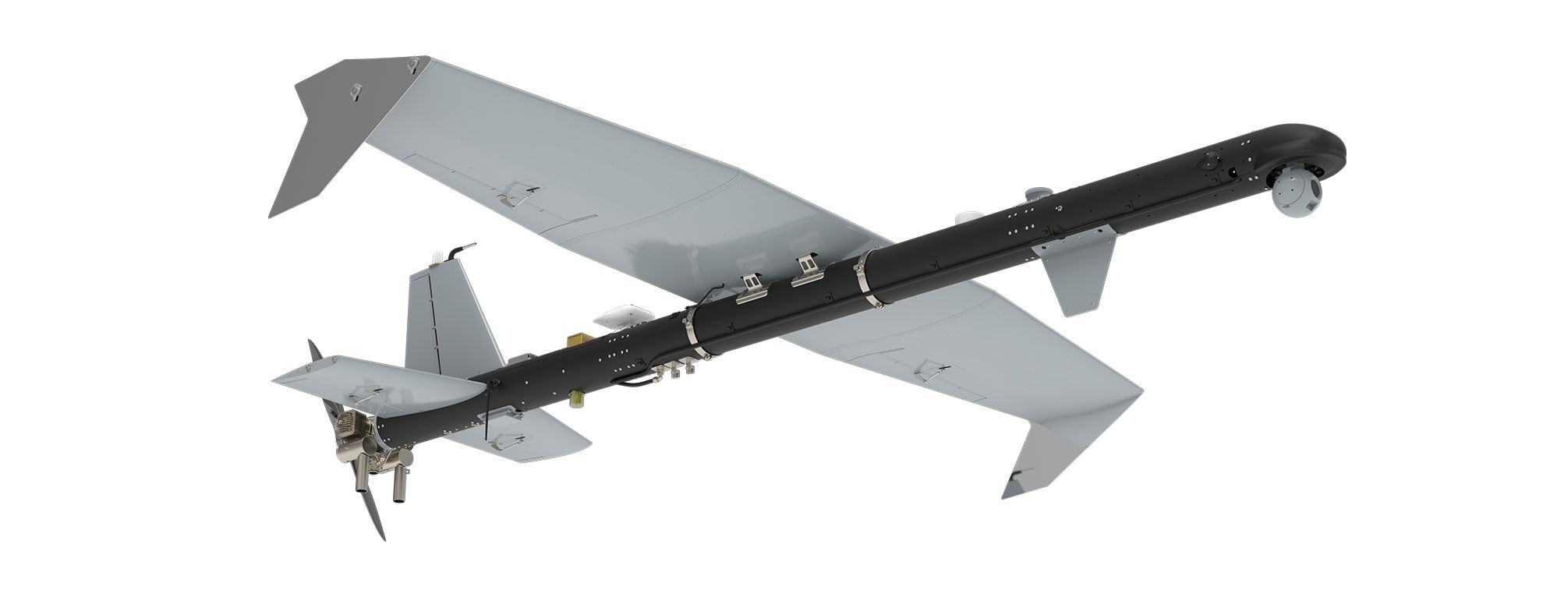
Baykar Sivrisinek is a Turkish intelligent loitering munition designed for long-endurance one-way attack missions. The system uses catapult launch, an internal-combustion engine, autonomous navigation functions, and a 20 kg warhead.
Baykar developed Sivrisinek in two configurations, Sivrisinek-UM and Sivrisinek-UMX. The UM emphasizes maximum operational range, while the UMX adds AI-assisted electro-optical guidance and expanded communications capabilities.
Sivrisinek was publicly demonstrated in 2026 in autonomous and mixed-UAV formations. Its demonstrated functions included GNSS-independent visual navigation, automatic target detection, autonomous flight, and coordinated operation with other Baykar unmanned aircraft.
The YIHA-III designation had been associated with an earlier unmanned-aircraft program before Sivrisinek's formal 2026 presentation. A Turkish-Pakistani development relationship has also been attributed to YIHA-III, while Baykar identifies Sivrisinek as a system developed by Baykar. The precise relationship between the earlier YIHA-III program and the publicly presented Sivrisinek configuration remains insufficiently documented.
On 17 April 2026, ten Sivrisinek loitering munitions participated in a demonstration at Baykar's Keşan Flight Training and Test Center. Five K2 Kamikaze UAVs initially flew several autonomous formations before the Sivrisinek aircraft joined them. The final mixed formation consisted of five K2 aircraft, ten Sivrisinek munitions, one Bayraktar TB2, one Bayraktar TB3, and one Bayraktar AKINCI.
During the demonstration, Sivrisinek aircraft used AI-supported visual navigation to operate without dependence on GNSS positioning. The aircraft also demonstrated automatic target detection and autonomous attack functions. A group of Sivrisinek munitions subsequently performed dives toward designated coordinates.
Baykar planned the system's public exhibition debut at SAHA 2026 in Istanbul in May 2026. By September 2026, Sivrisinek had also become associated with Azerbaijan. The Nakhchivan Separate Combined Arms Army was described as having received Sivrisinek systems, but no Azerbaijani government announcement confirmed the quantity or formal entry into operational inventory. Plans were also announced for production of Sivrisinek in Azerbaijan.
Design
Air vehicle and launch system
Sivrisinek is a fixed-wing loitering munition intended to remain airborne for several hours before attacking a selected target. It uses a catapult launch system and therefore does not require a runway. This arrangement allows deployment from forward positions, confined sites, and terrain where conventional aircraft operations would be impractical.
The system uses an internal-combustion engine. Both configurations cruise at approximately 102 km/h and have a maximum speed of approximately 130 km/h. The normal operational altitude is about 1,220 m, while the published service ceiling is approximately 3,050 m.
Navigation and autonomy
Sivrisinek incorporates sensor-fusion-assisted autonomous flight functions, an AI-assisted autopilot, visual navigation, and AI-supported optical guidance. Visual positioning is intended to allow continued navigation when satellite-navigation signals are unavailable, degraded, jammed, or otherwise unreliable.
The system can be programmed before launch and is designed to reduce the level of continuous operator intervention required during a mission. Demonstrations in 2026 included GNSS-independent navigation, autonomous formation flight, automatic target detection, and automatic attack functions.
Communications and networking
Sivrisinek supports digital data and video links. An optional anti-jamming system is listed for the platform. The UMX configuration has expanded communications capability and can use Bayraktar TB2, TB3, or AKINCI unmanned aircraft as communications relays.
Multiple Sivrisinek aircraft are intended to operate cooperatively. During swarm demonstrations, unmanned aircraft maintained coordinated flight and shared mission information. The system is designed so detected targets can be distributed among participating aircraft.
Guidance and warhead
Both Sivrisinek configurations carry a 20 kg warhead. The UMX additionally incorporates an AI-assisted electro-optical camera for guidance and target identification. This provides an optical terminal-guidance capability in addition to the navigation and autonomous-flight functions of the aircraft.
Program status
By September 2026, Sivrisinek had progressed through public flight demonstrations involving autonomous navigation, swarm operations, target detection, and attack profiles. Baykar offered two defined configurations with published performance data.
Azerbaijan was linked to both acquisition and planned local production of the system. The Nakhchivan Separate Combined Arms Army was associated with receipt of Sivrisinek munitions, although the available evidence did not establish the number delivered or confirm a formal Azerbaijani declaration of operational service entry.
Variants
- Sivrisinek-UM: Long-range configuration with a published operational range of 1,000 km, endurance exceeding nine hours, a maximum takeoff weight of 76 kg, and fire-and-forget communications capability beyond 10 km.
- Sivrisinek-UMX: Enhanced configuration with AI-assisted electro-optical guidance, expanded data connectivity, relay communications through compatible Baykar UAVs, a published operational range of 900 km, endurance exceeding eight hours, a maximum takeoff weight of 78 kg, and fire-and-forget communications capability beyond 80 km.
Specifications (Sivrisinek-UM)
General characteristics
- Maximum takeoff weight: 76 kg
- Payload capacity: 20 kg
- Powerplant: Internal-combustion engine
- Launch method: Catapult
Performance
- Operational range: 1,000 km
- Endurance: More than 9 hours
- Cruise speed: approximately 102 km/h (55 KIAS)
- Maximum speed: approximately 130 km/h (70 KIAS)
- Operational altitude: approximately 1,220 m (4,000 ft)
- Service ceiling: approximately 3,050 m (10,000 ft)
- Fire-and-forget communication range: more than 10 km
Armament
- Warhead: 20 kg
Specifications (Sivrisinek-UMX)
General characteristics
- Maximum takeoff weight: 78 kg
- Payload capacity: 20 kg
- Sensor payload: AI-assisted electro-optical camera
- Powerplant: Internal-combustion engine
- Launch method: Catapult
Performance
- Operational range: 900 km
- Endurance: More than 8 hours
- Cruise speed: approximately 102 km/h (55 KIAS)
- Maximum speed: approximately 130 km/h (70 KIAS)
- Operational altitude: approximately 1,220 m (4,000 ft)
- Service ceiling: approximately 3,050 m (10,000 ft)
- Fire-and-forget communication range: more than 80 km
Armament
- Warhead: 20 kg
 Argentina
 Armenia
 Australia
 Austria
 Austria-Hungary
 Belgium
 Brazil
 United Kingdom
 United States
 Brunei
 Bulgaria
 Canada
 Chile
Chile China
China Colonial America
 Colombia
 Confederate States
 Croatia
 Czech
Czech Denmark
 Egypt
Egypt Finland
 France
 Georgia
 Germany
 German Imperial
 Greece
 Holland
 Hungary
 India
India Indonesia
 Iran
Iran Iraq
Iraq Ireland
 Israel
 Italy
Italy Japan
Japan Japan (1940)
 Jordan
 Kingdom of Italy
 Malaysia
 Mexico
 Myanmar
 Nazi Germany
 Netherlands
 New Zealand
 North Korea
 Norway
 Pakistan
 Peru
Peru Philippines
 Poland
 Portugal
 Prussia
 Romania
 Russia
 Saudi Arabia
 Serbia
 Singapore
 Slovakia
 Slovenia
 South Africa
 South Korea
 Soviet Union
 Spain
Spain Sweden
 Switzerland
 Syria
Syria Taiwan
 Thailand
 UAE
UAE Ukraine
 Vietnam
 Yugoslavia