History
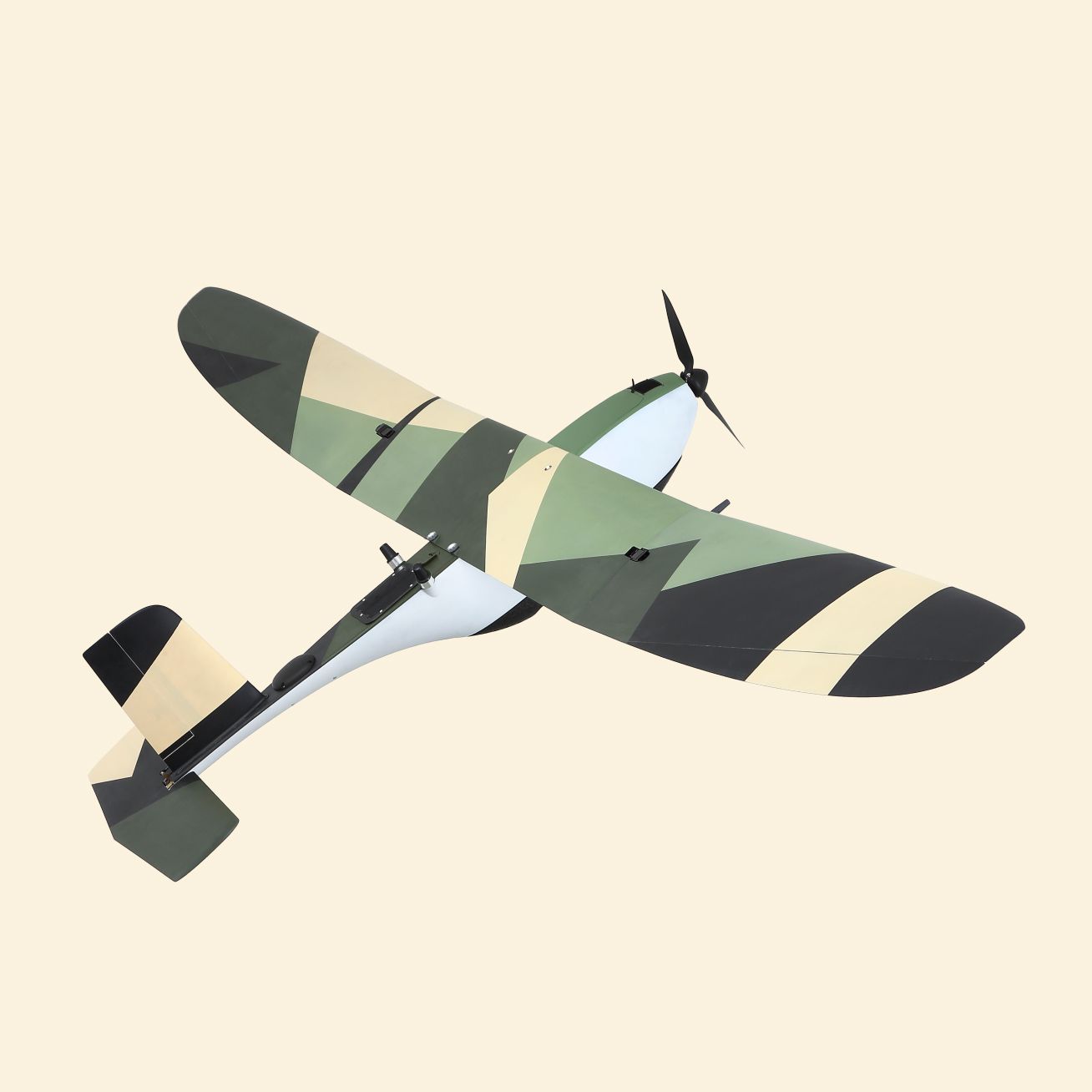
FORECASTER is a modular fixed-wing reconnaissance and ISTAR unmanned aerial vehicle developed by Lithuanian company Unmanned Defense Systems (UDS). It is designed to detect, identify, locate, and track targets while providing intelligence and targeting information to fire-support units.
The aircraft was physically demonstrated by September 2026 and was reported to have undergone testing in Ukraine. UDS stated that experience from contemporary warfare and the combat use of unmanned aircraft in Ukraine influenced development of the system.
FORECASTER forms part of the UDS SwarmC2 ecosystem. The system supports coordinated reconnaissance, automated mission functions, and information exchange with other command-and-control systems.
Development and testing
FORECASTER was developed as a small endurance platform intended to perform intelligence, surveillance, target acquisition, and reconnaissance missions normally associated with larger unmanned aircraft. During the MSPO exhibition in Poland on 9 September 2026, the aircraft was presented alongside the UDS AVENGER 5 loitering munition. A company representative stated that both systems had been tested in Ukraine.
The September 2026 description gave FORECASTER a maximum flight endurance of 4.5 hours, a maximum speed of 26 m/s, and a maximum takeoff mass of 7 kg. These figures closely correspond to the current UDS FORECASTER product page, which lists 270 minutes of endurance, 26 m/s maximum speed, and a maximum weight below 7 kg depending on configuration.
A separate BAVOVNA profile lists different figures of 240 minutes endurance, 22 m/s maximum speed, and 5.3 kg maximum weight depending on battery configuration. It also lists slightly lower cruise speeds. These figures differ from the current UDS data and the September 2026 presentation, indicating that published specifications have not remained identical across configurations or source versions.
Design
FORECASTER is a fixed-wing aircraft with a wingspan of 3.3 m and a fuselage length of 1.2 m. The September 2026 presentation described a maximum takeoff mass of 7 kg, while UDS states that maximum weight is below 7 kg depending on flight configuration.
The aircraft is intended for low-altitude reconnaissance and target acquisition. UDS describes automatic and manual control modes, including automatic object tracking. The platform can scan areas, locate detected objects geographically, monitor environmental changes, perform mapping, provide real-time surveillance, and support correction of fire units.
Navigation and communications
FORECASTER supports autonomous waypoint navigation and automatic return. It is also designed to continue flight when satellite navigation is unavailable. UDS describes dead-reckoning capability for navigation in denied environments and offers a high-power dual-band radio with automatic frequency selection. A redundant backup radio is also listed as an option.
The manufacturer gives a radio line-of-sight range of 60 km. FORECASTER is integrated with the proprietary SwarmC2 mission-control system, which supports multi-point route planning, altitude selection, terrain consideration, moving-target tracking, and synchronized observation by multiple aircraft. The system is also described as supporting automated target-information transfer and fire-correction functions.
UDS states that FORECASTER can integrate with SitaWare HQ and ATAK. Within the wider SwarmC2 architecture, unmanned aircraft can coordinate flight paths and formations, avoid collisions, retask during missions, and support automatic mission continuity when one aircraft must be replaced.
Sensors and onboard processing
The reconnaissance payload is based on selectable modular electro-optical and infrared gimbals. The configuration shown in September 2026 used a stabilized electro-optical station with daylight and thermal-imaging cameras with 1280×720 resolution and combined 40× magnification.
The baseline configuration described by UDS includes a GPU-powered edge-computing module. According to the manufacturer, this module supports SwarmC2 functions, object recognition, autonomous coordination, and additional AI-assisted pilot functions. UDS also states that newer FORECASTER platforms can be equipped with counter-UAS detection instruments intended to improve survivability.
Ground control system
FORECASTER uses a proprietary modular ground-control system. UDS describes the baseline equipment as including a modular ground station and a military-grade rugged tablet. The ground station can automatically track the aircraft and is designed for integration with the wider SwarmC2 and battle-management environment.
Modularity
UDS describes FORECASTER as a modular platform whose payload configuration can be changed for different missions. The manufacturer also states that the design permits integration of different warheads. No specific armed FORECASTER configuration, warhead type, or operational weapon employment is defined in the available material, so the aircraft is treated here primarily according to its documented reconnaissance and ISTAR role.
Program status
By September 2026, FORECASTER had been presented publicly at MSPO in Poland and had reportedly undergone testing in Ukraine. The available material confirms a physical and flight-capable system but does not establish a production quantity, formal military adoption, or operational service entry.
Specifications (FORECASTER, September 2026 configuration)
General characteristics
- Type: Fixed-wing reconnaissance and ISTAR unmanned aerial vehicle
- Length: 1.2 m
- Wingspan: 3.3 m
- Maximum takeoff mass: 7 kg as presented in September 2026; UDS describes maximum weight as below 7 kg depending on configuration
- Payload: Modular stabilized electro-optical and infrared gimbal
- Daylight and thermal camera resolution: 1280×720
- Optical system magnification: Combined 40×
Performance
- Endurance: Up to 270 minutes
- Cruise speed for maximum endurance: 14 m/s
- Cruise speed for maximum range: 16 m/s
- Maximum speed: 26 m/s
- Practical ceiling: 5,000 m
- Radio line-of-sight range: 60 km
- Wind resistance: 14 m/s
Mission systems
- Control: Automatic or manual, including automatic object tracking
- Navigation: Autonomous waypoint navigation, automatic return, and dead reckoning for navigation in denied environments
- Communications: Dual-band radio with automatic frequency selection; redundant backup radio available as an option
- Mission-control system: UDS SwarmC2
- External integration: SitaWare HQ and ATAK
 Argentina
 Armenia
 Australia
 Austria
 Austria-Hungary
 Belgium
 Brazil
 United Kingdom
 United States
 Brunei
 Bulgaria
 Canada
 Chile
Chile China
China Colonial America
 Colombia
 Confederate States
 Croatia
 Czech
Czech Denmark
 Egypt
Egypt Finland
 France
 Georgia
 Germany
 German Imperial
 Greece
 Holland
 Hungary
 India
India Indonesia
 Iran
Iran Iraq
Iraq Ireland
 Israel
 Italy
Italy Japan
Japan Japan (1940)
 Jordan
 Kingdom of Italy
 Malaysia
 Mexico
 Myanmar
 Nazi Germany
 Netherlands
 New Zealand
 North Korea
 Norway
 Pakistan
 Peru
Peru Philippines
 Poland
 Portugal
 Prussia
 Romania
 Russia
 Saudi Arabia
 Serbia
 Singapore
 Slovakia
 Slovenia
 South Africa
 South Korea
 Soviet Union
 Spain
Spain Sweden
 Switzerland
 Syria
Syria Taiwan
 Thailand
 Turkey
 UAE
UAE Ukraine
 Vietnam
 Yugoslavia