
History
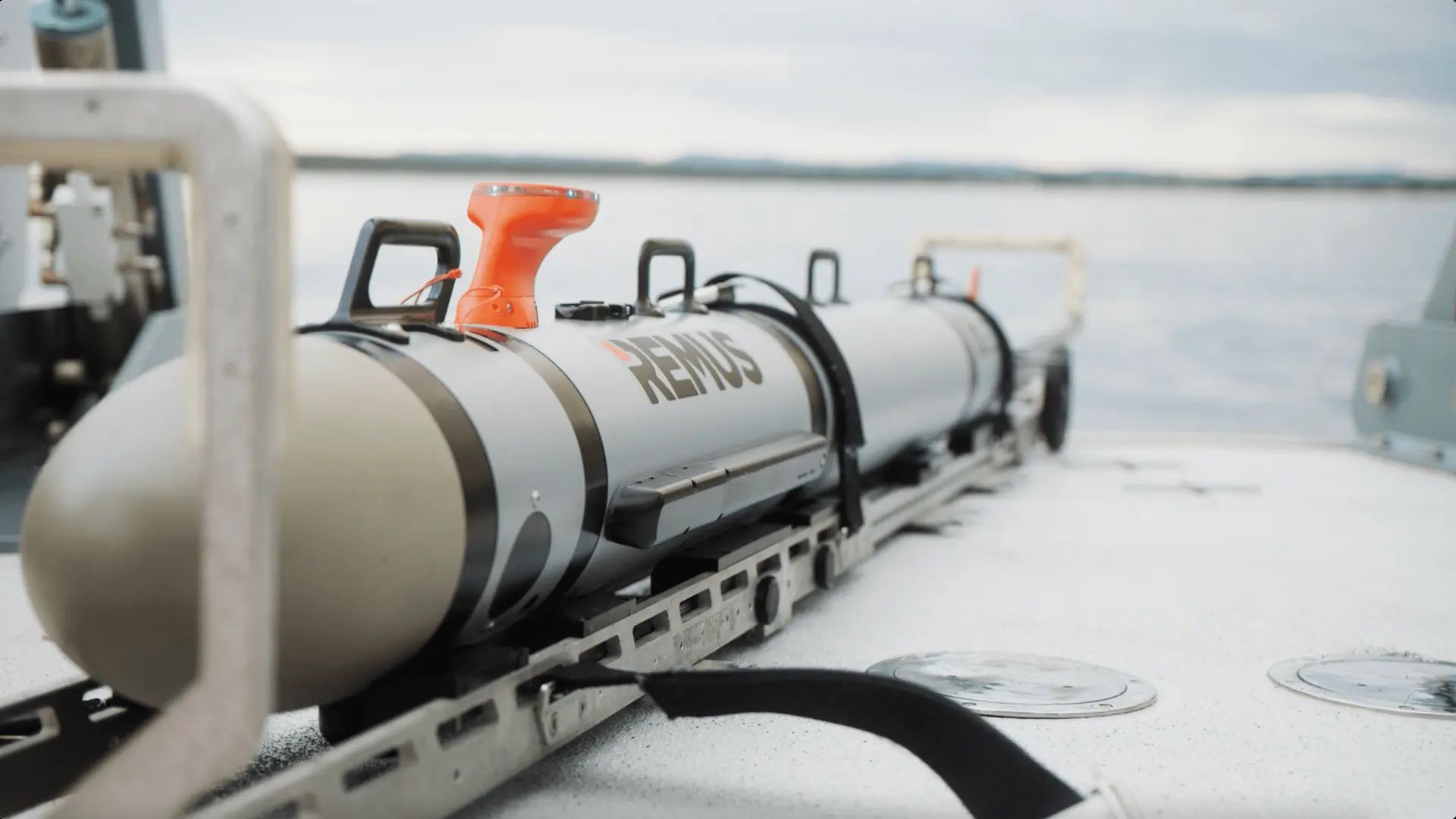
The HII Lionfish is a small unmanned undersea vehicle developed for the United States Navy. It is based on HII's commercial REMUS 300 platform and is intended for mine countermeasures and other undersea warfare missions.
Lionfish combines a modular payload architecture with autonomous operation. The Navy can adapt the vehicle for intelligence, surveillance and reconnaissance, anti-submarine warfare, electronic warfare, and mine countermeasures.
The program is the U.S. Navy's first transition of an Other Transaction Authority prototype project into full-scale production. HII also describes Lionfish as the first cyber-compliant unmanned underwater vehicle produced for the Navy.
Development and selection
The Navy began the competition that led to Lionfish in 2019. More than 30 proposals were considered before the program selected two prototype participants for practical demonstrations evaluated by sailors. The effort involved the Navy's Program Executive Office for Unmanned and Small Combatants, the Expeditionary Missions program office, the Defense Innovation Unit, and the Naval Information Warfare Center Pacific.
HII's REMUS 300 was selected for the Lionfish program in early 2022. It became the Navy's next-generation small unmanned undersea vehicle and a replacement for the REMUS 100-based Mk 18 Mod 1 Swordfish used for mine hunting and seabed classification.
In September 2023, HII received a five-year production agreement with a potential value exceeding $347 million. The program can expand to as many as 200 Lionfish vehicles. The agreement also covers engineering services and support equipment.
Production
HII delivered the first two Lionfish vehicles to the Navy in April 2025. These vehicles formed part of an initial group of nine systems. Assembly took place at HII's Uncrewed Systems Center in Pocasset, Massachusetts.
By the end of 2025, HII had completed the 42nd Lionfish vehicle at Pocasset. A further $36.9 million production order was reported in May 2026, with associated work scheduled for completion by May 2027. In July 2026, HII announced another option-year production award. The manufacturer provided further program details in its official Lionfish production announcement.
Design
Lionfish uses the cylindrical REMUS 300 vehicle architecture. It is an autonomous underwater system without an onboard crew. A three-blade propeller provides propulsion, while acoustic and communication equipment supports navigation, vehicle control, and data exchange.
The platform has an open and modular architecture. Its interchangeable payload capacity allows sensors and mission equipment to be integrated without redesigning the complete vehicle. The architecture also supports later technology upgrades.
Published dimensions differ between configurations. The first-delivery configuration was reported as 2.3 m (7.5 ft) long, 190 mm (7.5 in) in diameter, and 56 kg (123 lb) in weight. Later descriptions give a configured length of approximately 3 m (10 ft) and a maximum weight of about 70 kg (154 lb). These differences reflect the modular arrangement and installed payloads.
Reported equipment includes acoustic and communication systems, a global positioning unit, and visible and infrared lights. GPS is used when the vehicle can obtain a satellite signal at or near the surface. The compact system can be handled by a two-person team without a crane.
Mission equipment
The vehicle's principal mission is mine countermeasures, allowing underwater areas to be examined without sending divers near suspected mines. Supported roles also include intelligence, surveillance and reconnaissance, anti-submarine warfare, electronic warfare, search and recovery, and environmental assessment.
Lionfish can operate independently or as part of a manned-unmanned team. HII has described cooperation with other naval platforms, including Virginia-class submarines, as a way to extend mission reach and reduce personnel exposure.
Cybersecurity
HII identifies Lionfish as the first and only cyber-compliant unmanned underwater vehicle in production for the U.S. Navy as of July 2026. Cyber compliance is intended to protect the autonomous and networked functions used during missions and data exchange.
Program status
Lionfish was in series production for the U.S. Navy in 2026. The completion of 42 vehicles by the end of 2025 and the exercise of subsequent production options showed that the program had moved beyond its prototype phase. The available program ceiling permits production of up to 200 vehicles, but this figure is a maximum rather than a confirmed final fleet size.
Public sources do not identify specific combat deployments. Production and delivery milestones are documented, while detailed fleet assignments and operational mission records have not been disclosed.
Operators
- United States Navy: First two Lionfish vehicles accepted in April 2025. HII completed the 42nd vehicle by the end of that year, and additional production was under contract in 2026.
Specifications (Lionfish, REMUS 300-based configurations)
General characteristics
- Type: Small autonomous unmanned undersea vehicle
- Length: 2.3-3 m (7.5-10 ft), depending on configuration
- Diameter: 190 mm (7.5 in) for the reported first-delivery configuration
- Weight: 56-70 kg (123-154 lb), depending on configuration
- Propulsion: Rear-mounted three-blade propeller
- Handling: Portable by a two-person team
Performance
- Maximum speed: 5 knots (9 km/h; 6 mph)
- Maximum operating depth: 305 m (1,000 ft)
- Maximum reported range: 165 km (103 mi), depending on configuration
- Maximum reported endurance: Up to 30 hours
- Recharge time: Approximately 6-18 hours, depending on configuration
Equipment and missions
- Architecture: Modular open architecture with interchangeable payload capacity
- Navigation and communications: Acoustic equipment, communication systems, and global positioning equipment
- Lighting: Visible LED and infrared lights
- Supported missions: Mine countermeasures, intelligence, surveillance and reconnaissance, anti-submarine warfare, electronic warfare, search and recovery, and environmental assessment
Related equipment
- HII REMUS 300: Commercial modular unmanned underwater vehicle used as the basis of Lionfish.
- Mk 18 Mod 1 Swordfish: Earlier U.S. Navy mine-hunting vehicle based on the smaller REMUS 100 platform.
 Argentina
 Armenia
 Australia
 Austria
 Austria-Hungary
 Belgium
 Brazil
 United Kingdom
 Brunei
 Bulgaria
 Canada
 Chile
Chile China
China Colonial America
 Colombia
 Confederate States
 Croatia
 Czech
Czech Denmark
 Egypt
Egypt Finland
 France
 Georgia
 Germany
 German Imperial
 Greece
 Holland
 Hungary
 India
India Indonesia
 Iran
Iran Iraq
Iraq Ireland
 Israel
 Italy
Italy Japan
Japan Japan (1940)
 Jordan
 Kingdom of Italy
 Malaysia
 Mexico
 Myanmar
 Nazi Germany
 Netherlands
 New Zealand
 North Korea
 Norway
 Pakistan
 Peru
Peru Philippines
 Poland
 Portugal
 Prussia
 Romania
 Russia
 Saudi Arabia
 Serbia
 Singapore
 Slovakia
 Slovenia
 South Africa
 South Korea
 Soviet Union
 Spain
Spain Sweden
 Switzerland
 Syria
Syria Taiwan
 Thailand
 Turkey
 UAE
UAE Ukraine
 Vietnam
 Yugoslavia