
History
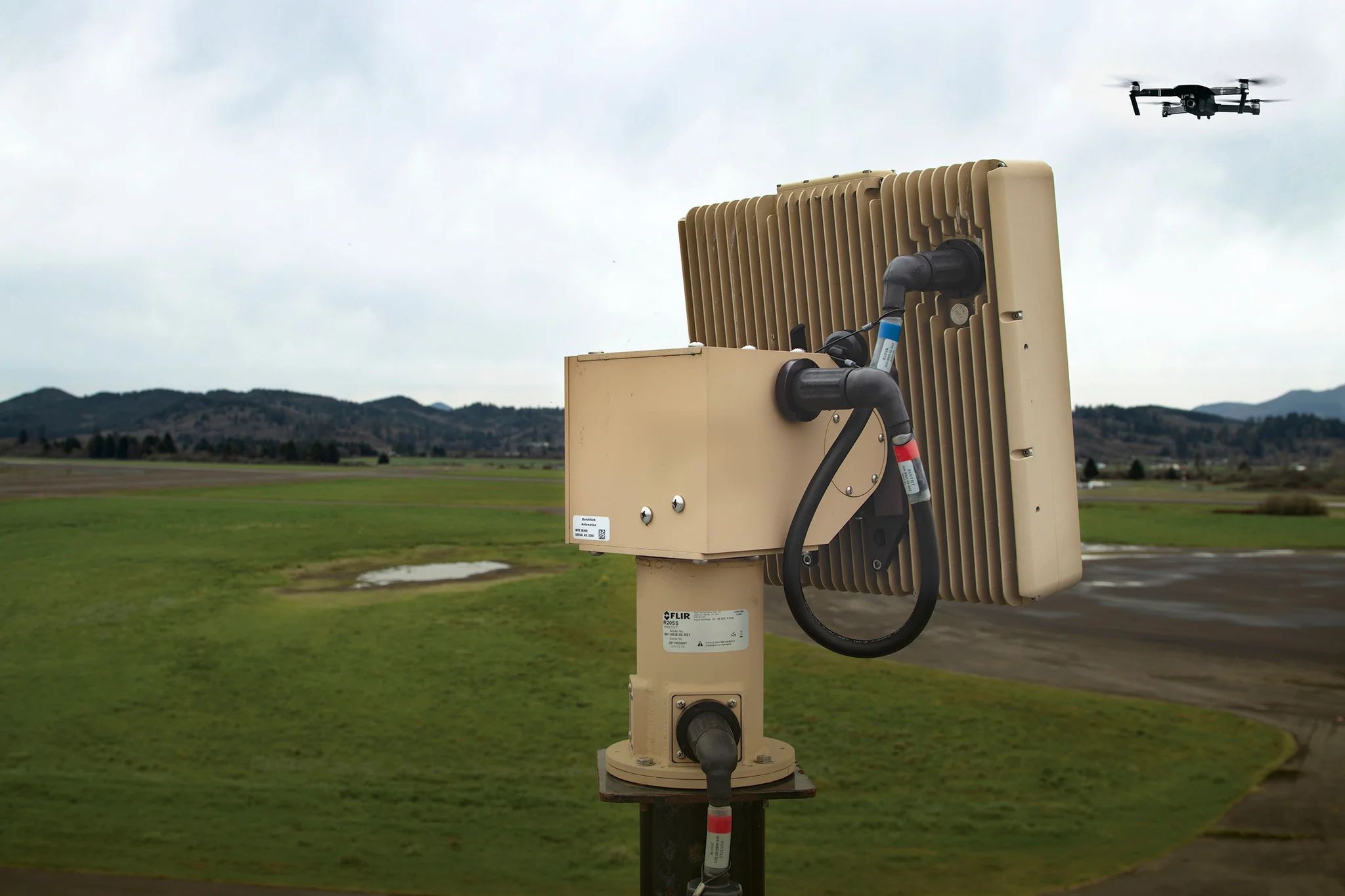
The Teledyne FLIR Ranger is a family of ground-based surveillance radars developed for border security, force protection, infrastructure monitoring, and counter-unmanned aircraft system missions. Ranger radars can operate from fixed installations or mobile sites.
The family includes compact perimeter-surveillance models and longer-range systems capable of monitoring personnel, vehicles, watercraft, and unmanned aircraft. Different variants use different radar bands, detection ranges, scan patterns, and deployment arrangements.
Teledyne FLIR Defense announced on 12 August 2026 that it had built and shipped the 3,000th Ranger radar from its engineering, production, and service facility in Laval, Quebec. The company reported that Ranger systems had been delivered to more than 40 countries.
Development and production
Radar manufacturing at the Laval facility began in 2005. The site, located near Montreal, became responsible for the design and production of the Ranger family.
The Ranger R20SS received a National Engineering Product Award from Engineers Canada in 2017. The variant was recognized for its ability to detect very slow-moving targets, including a crawling person at a reported distance of 3 km.
In 2026, Teledyne FLIR introduced software improvements that included a 360-degree Fast Scan function, higher update rates, greater elevation coverage, and AI-assisted radar processing intended to improve target classification. Details of the production milestone are available in the manufacturer announcement.
Design
Ranger radars are designed to provide continuous wide-area surveillance in daylight, darkness, and adverse weather. Depending on the variant, a radar can detect and track personnel, road vehicles, watercraft, or unmanned aircraft. The systems automatically generate tracks and can follow multiple targets moving in different directions and at different speeds.
The family is offered in fixed and mobile configurations. Smaller systems can be mounted on tripods, while other configurations can be installed on vehicles, towers, or permanent infrastructure. Optional pan-and-tilt equipment can extend the monitored azimuth and elevation sectors.
Perimeter-surveillance models
The Ranger R1, R2, and R3 are Ka-band rotating perimeter-surveillance radars. They complete one 360-degree revolution each second. Their respective maximum operating ranges are 700 m, 1,400 m, and 2,800 m. These models detect moving targets with a minimum stated velocity of 0.1 m/s and can be networked to cover larger or irregular areas.
The R1, R2, and R3 can cue pan-tilt-zoom cameras toward detected targets. This arrangement allows the radar to provide wide-area detection while an optical or thermal camera supports identification and assessment. Technical information for these models appears in the Ranger perimeter radar datasheet.
Man-portable configuration
The Ranger R6SS is an X-band electronically scanning radar intended for portable ground-surveillance missions. Its equipment set includes a lightweight radar, tripod, ruggedized tablet, cables, carrying bags, and documentation. The radar incorporates GPS, a compass, automatic target tracking, and automatic target classification.
The R6SS has a fixed electronic scan sector of 45 degrees to either side of its centerline. An optional pan-and-tilt unit provides continuous 360-degree azimuth coverage. The radar can display as many as 512 tracks simultaneously.
Operational history
Ranger radars have been supplied to customers in more than 40 countries. Teledyne FLIR has not identified all recipients or quantities in the available sources.
Reported applications include surveillance of national borders, airports, seaports, military positions, industrial facilities, and other critical infrastructure. Ranger systems are also used in counter-UAS networks to detect and track unmanned aircraft before other sensors or response systems classify and address the target.
Variants
- Ranger R1: Ka-band perimeter-surveillance radar with a maximum operating range of 700 m.
- Ranger R2: Ka-band perimeter-surveillance radar with a maximum operating range of 1,400 m.
- Ranger R3: Ka-band perimeter-surveillance radar with a maximum operating range of 2,800 m.
- Ranger R6SS: Man-portable X-band ground-surveillance radar designed to detect personnel, vehicles, boats, and unmanned aircraft.
- Ranger R6SS-U: R6SS configuration with increased vertical coverage for unmanned-aircraft detection.
- Ranger R20SS: Longer-range surveillance radar recognized by Engineers Canada for detecting and measuring very slow-moving targets.
- Ranger R20-3DX: Three-dimensional radar marketed for combined air and ground surveillance and full-perimeter counter-UAS coverage.
Specifications (Ranger R6SS)
General characteristics
- Radar type: Man-portable electronically scanning ground-surveillance radar
- Operating frequency: X-band
- Dimensions: 37 × 36 × 11 cm
- Radar weight: No more than 10 kg
- Connectivity: Ethernet
- Environmental protection: IP67
- Qualification standards: MIL-STD-810G and MIL-STD-461F
- Integrated equipment: GPS and compass
Detection and tracking
- Instrumented range: 15 km
- Minimum detection range: 10 m
- Person detection range: 6 km
- Light-vehicle detection range: 10 km
- Large-vehicle detection range: 15 km
- Target types: Personnel, unmanned aircraft, boats, and vehicles
- Displayed tracks: Up to 512 simultaneously
- Electronic scan rate: 2 Hz
- Fixed scan sector: 90 degrees, extending 45 degrees to each side
- Optional azimuth coverage: Continuous 360 degrees with pan-and-tilt equipment
- Vertical coverage: At least 4 degrees
- Minimum detectable velocity: Less than 0.1 m/s
- Range accuracy: ±2 m
- Azimuth accuracy: Better than 0.2 degrees
Power
- Operating voltage: 20–48 V DC
- Nominal power consumption: 85 W
These specifications apply specifically to the R6SS and are taken from the FLIR Ranger R6SS brochure. Other Ranger variants have different frequencies, ranges, coverage patterns, dimensions, and power requirements.
 Argentina
 Armenia
 Australia
 Austria
 Austria-Hungary
 Belgium
 Brazil
 United Kingdom
 United States
 Brunei
 Bulgaria
 Chile
Chile China
China Colonial America
 Colombia
 Confederate States
 Croatia
 Czech
Czech Denmark
 Egypt
Egypt Finland
 France
 Georgia
 Germany
 German Imperial
 Greece
 Holland
 Hungary
 India
India Indonesia
 Iran
Iran Iraq
Iraq Ireland
 Israel
 Italy
Italy Japan
Japan Japan (1940)
 Jordan
 Kingdom of Italy
 Malaysia
 Mexico
 Myanmar
 Nazi Germany
 Netherlands
 New Zealand
 North Korea
 Norway
 Pakistan
 Peru
Peru Philippines
 Poland
 Portugal
 Prussia
 Romania
 Russia
 Saudi Arabia
 Serbia
 Singapore
 Slovakia
 Slovenia
 South Africa
 South Korea
 Soviet Union
 Spain
Spain Sweden
 Switzerland
 Syria
Syria Taiwan
 Thailand
 Turkey
 UAE
UAE Ukraine
 Vietnam
 Yugoslavia