
History
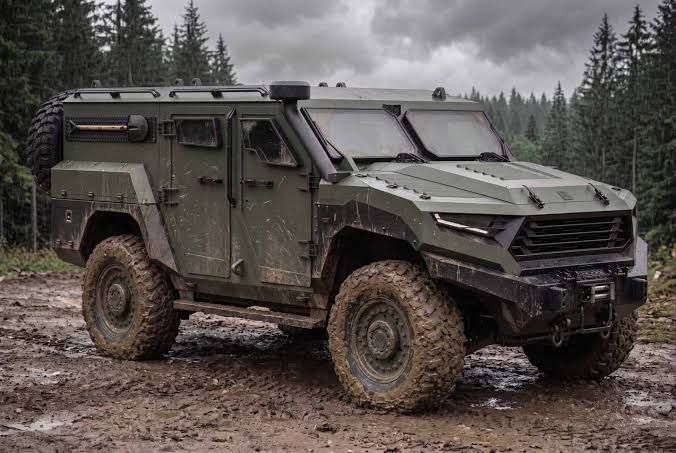
The Inguar Defence Inguar-2 is a Ukrainian armored vehicle developed as a lighter and more maneuverable complement to heavier protected vehicles. Its development reflects operational experience from the Russo-Ukrainian War and a requirement for protected mobility in logistics, rapid-response, ammunition transport, and unmanned-system support roles.
Inguar Defence began publicly discussing the project in 2026. Early plans described a modular vehicle family with a target weight of about 7 tonnes, while information released as the project approached completion gave the Inguar-2 a gross weight of 8.5 tonnes. The company planned to use experience and components developed for the larger Inguar-3 while increasing Ukrainian localization.
By August 2026, Inguar Defence reported that the program was in its final development stage and that the first pilot batch was already being produced. The vehicles from this batch had been sold to an unidentified military unit for evaluation and combat testing before series production.
Development
An April 2026 report described the Inguar-2 as a light tactical armored vehicle based on an internally developed ladder-frame platform. The initial concept called for a vehicle weighing about 7 tonnes and for modular configurations that could be adapted to different missions. Inguar Defence CEO Artem Yushchuk said the project was intended to provide greater speed and maneuverability than heavier MRAP-type vehicles. Details of this early development concept were reported by Mezha.
Most of the principal design solutions were subsequently tested through the Inguar-3 program. This allowed Inguar Defence to move directly toward a pilot batch of Inguar-2 vehicles rather than producing only a single development example.
By August 2026, the design had evolved to a stated gross weight of 8.5 tonnes. The company said the first pilot vehicles would be used to accelerate combat testing and validate the design before series production. Series manufacture was scheduled to begin in the first quarter of 2027. The updated program information was published by Militarnyi.
Early reports estimated the future vehicle price at approximately $250,000. By August 2026, Inguar Defence stated that the expected starting price would instead be about $350,000. The company attributed cost reduction relative to heavier protected vehicles to localization and production optimization while retaining imported major components where necessary.
Design
The Inguar-2 uses a chassis developed by Inguar Defence. The company stated that approximately 65 percent of the vehicle would be localized in Ukraine. Ukrainian-made content was to include the suspension and part of the drivetrain, while the engine, automatic transmission, and some electronics would remain imported.
Mobility
The vehicle has independent suspension and portal-type hub reduction gearing intended to provide high ground clearance. All differentials can be locked, and a central tire inflation system allows tire pressure to be adjusted for different surfaces. Ground clearance is 460 mm.
Inguar Defence developed the suspension and shock absorbers with sustained high-speed off-road operation in mind. The vehicle uses nitrogen-filled monotube shock absorbers with separate remote reservoirs intended to reduce overheating during demanding cross-country driving.
Power is provided by a Cummins 6.7 engine connected to an automatic ZF transmission. The maximum road speed is electronically limited to 160 km/h.
Protection
The Inguar-2 is specified with ballistic and mine protection corresponding to STANAG 4569 Level 2. The reported protection includes resistance to 7.62×39 mm projectiles, fragments, and the detonation of 6 kg of explosive beneath the vehicle.
Electrical system and commonality
The electrical architecture is designed to use a limited amount of electronics in order to simplify maintenance. Several components, including wheel rims, reduction gears, and electronic elements, are intended to be interchangeable with the Inguar-3.
Inguar Defence is also working on systems intended to improve protection against unmanned aerial vehicle threats. The company has identified active protection against FPV drones as a development objective, but such a system was still under development and had not been described as an operational feature of the Inguar-2.
Program status
As of August 2026, the Inguar-2 was in the final stage of development. Inguar Defence was producing a first pilot batch, and all vehicles in that batch had already been sold to one unidentified military unit. The manufacturer planned to provide special support conditions and free upgrades if shortcomings were discovered during operation.
The pilot batch was intended to support combat testing and final design validation. Series production was scheduled to start in the first quarter of 2027.
Variants
- Four-seat configuration: An early planned configuration mentioned during development of the modular Inguar-2 family.
- Transport configuration: An early proposed configuration using a replaceable rear transport module. The supplied material does not confirm that this configuration had entered production by August 2026.
Specifications (Inguar-2)
General characteristics
- Gross weight: 8.5 tonnes
- Ground clearance: 460 mm
- Engine: Cummins 6.7
- Transmission: ZF automatic
- Suspension: Independent, with nitrogen-filled monotube shock absorbers and remote reservoirs
- Drivetrain features: Portal hub reduction gears and locking differentials on all axles
- Tire system: Central tire inflation system
- Ukrainian localization: Approximately 65 percent
Performance
- Maximum speed: 160 km/h, electronically limited
Protection
- Protection standard: STANAG 4569 Level 2
- Reported ballistic protection: 7.62×39 mm projectiles and fragments
- Reported mine protection: Detonation of 6 kg of explosive beneath the vehicle
 Argentina
 Armenia
 Australia
 Austria
 Austria-Hungary
 Belgium
 Brazil
 United Kingdom
 United States
 Brunei
 Bulgaria
 Canada
 Chile
Chile China
China Colonial America
 Colombia
 Confederate States
 Croatia
 Czech
Czech Denmark
 Egypt
Egypt Finland
 France
 Georgia
 Germany
 German Imperial
 Greece
 Holland
 Hungary
 India
India Indonesia
 Iran
Iran Iraq
Iraq Ireland
 Israel
 Italy
Italy Japan
Japan Japan (1940)
 Jordan
 Kingdom of Italy
 Malaysia
 Mexico
 Myanmar
 Nazi Germany
 Netherlands
 New Zealand
 North Korea
 Norway
 Pakistan
 Peru
Peru Philippines
 Poland
 Portugal
 Prussia
 Romania
 Russia
 Saudi Arabia
 Serbia
 Singapore
 Slovakia
 Slovenia
 South Africa
 South Korea
 Soviet Union
 Spain
Spain Sweden
 Switzerland
 Syria
Syria Taiwan
 Thailand
 Turkey
 UAE
UAE Vietnam
 Yugoslavia