
History
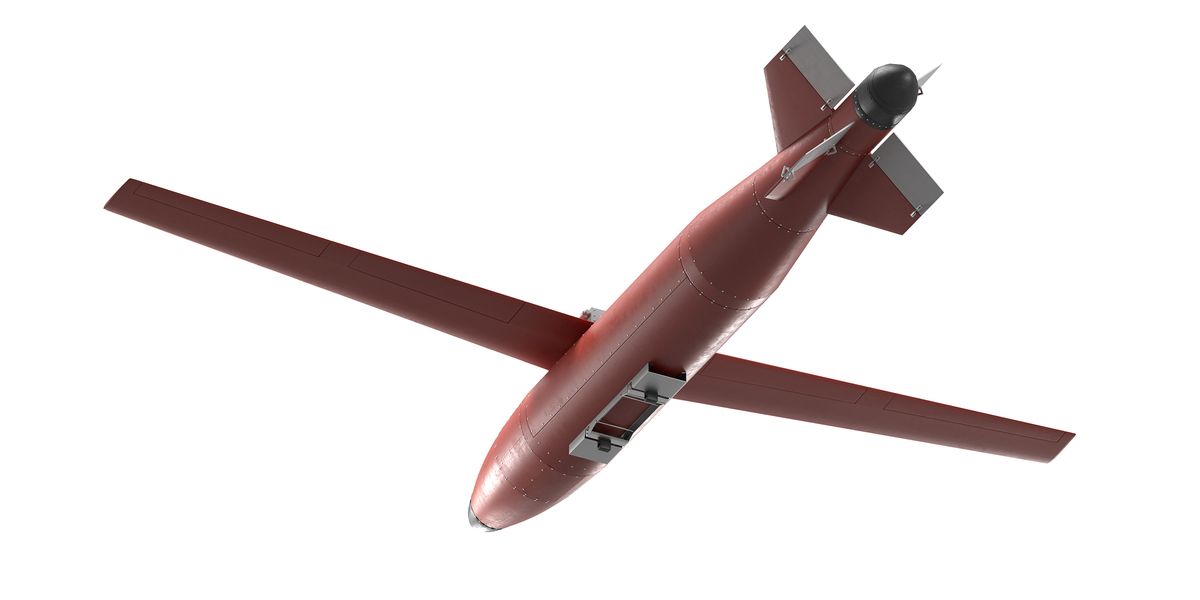
The DG Industry Vyrivniuvach is a Ukrainian guided aerial bomb developed by a participant in the Brave1 defense technology cluster. It is intended to provide Ukrainian combat aircraft with a domestically produced precision weapon for stand-off attacks.
The weapon carries a 250 kg warhead. Its stated release range is 10–130 km, depending on the altitude from which it is employed.
Development took 17 months. An experimental batch was purchased in May 2026, and Ukrainian authorities announced in August that testing had been completed and the weapon had entered official procurement.
Development and testing
Ukraine began publicly discussing the development of domestic guided aerial bombs in 2024. In September of that year, footage showed the testing of an unidentified Ukrainian aerial bomb from a Su-24M. Separate drop tests of a Ukrainian glide kit for Soviet-designed bombs were reported in June 2025, although the available information does not establish that these earlier test weapons were Vyrivniuvach prototypes.
Vyrivniuvach was developed as a new Ukrainian design rather than as a copy of a Soviet or Western system. The program was conducted within the Brave1 defense technology cluster. DG Industry has been identified as the developer.
On 18 May 2026, Ukraine announced that the weapon had passed the required tests and was ready for combat employment. The Ministry of Defense had purchased an initial experimental batch. At that stage, pilots were rehearsing combat scenarios and adapting employment procedures to battlefield conditions. Further information was reported by RBC-Ukraine.
Vyrivniuvach was publicly displayed at Eurosatory 2026 in Paris in June. Information presented at the exhibition gave a release-altitude envelope from 500 m to more than 10,000 m and a stated range from 10 km to at least 130 km. The exhibition presentation was documented by Rubryka.
Later in June, published footage reportedly showed bombs launched by a Ukrainian MiG-29 striking a Russian position. On 17 August 2026, Colonel Vladyslav Voloshyn of the Central Directorate for Innovation Activities of the Armed Forces of Ukraine stated that Vyrivniuvach had completed testing and had been officially accepted for procurement.
Design
Vyrivniuvach is an air-launched precision weapon designed to engage targets at stand-off distances. Its range varies substantially with release altitude because the weapon uses the aircraft's speed and altitude to travel toward its target.
The bomb incorporates guidance algorithms intended to improve accuracy. Its developers state that it can be employed during day or night and in different weather conditions. Preparation for a mission is reported to require no more than 30 minutes.
The weapon is intended for fortified positions, command posts, and other targets requiring a comparatively large air-delivered warhead. Its 250 kg warhead is heavier than the payloads carried by many tactical strike drones.
Aircraft integration
Vyrivniuvach is compatible with aircraft and weapon systems already used by Ukraine. A MiG-29 has been identified as a launch aircraft in reported combat footage. The developers have also stated that integration with F-16 and Mirage 2000 fighters is possible after additional certification. These Western aircraft integrations should therefore be regarded as planned capabilities rather than confirmed operational configurations.
Cost
A Brave1 representative stated that Vyrivniuvach costs approximately one third as much as an American JDAM-ER kit. No unit price has been published, so the comparison remains a manufacturer or program claim.
Operational history
Reported footage released in late June 2026 showed Ukrainian guided bombs launched from a MiG-29 striking a Russian position. The reporting identified the weapons as Vyrivniuvach bombs. Public information does not disclose the number used, the units involved, or detailed results of operational employment.
By August 2026, Ukraine had moved beyond the experimental purchase and begun official procurement for its aviation forces. The disclosed procurement status confirms acceptance of the weapon, but no production quantity or delivery schedule has been released.
Operators
- Armed Forces of Ukraine: Initial experimental batch purchased in May 2026. The weapon was officially accepted for procurement in August 2026.
Specifications (Vyrivniuvach)
General characteristics
- Type: Guided aerial bomb
- Warhead mass: 250 kg
- Preparation time: Up to 30 minutes
- Confirmed launch-aircraft type: MiG-29
- Proposed aircraft integrations: F-16 and Mirage 2000, subject to additional certification
Performance
- Stated range: 10–130 km, depending on release altitude
- Release altitude: 500 m to more than 10,000 m
- Operating conditions: Claimed day, night, and all-weather capability
Related equipment
- JDAM-ER: An American extended-range guidance kit cited as the principal cost comparison for Vyrivniuvach.
 Argentina
 Armenia
 Australia
 Austria
 Austria-Hungary
 Belgium
 Brazil
 United Kingdom
 United States
 Brunei
 Bulgaria
 Canada
 Chile
Chile China
China Colonial America
 Colombia
 Confederate States
 Croatia
 Czech
Czech Denmark
 Egypt
Egypt Finland
 France
 Georgia
 Germany
 German Imperial
 Greece
 Holland
 Hungary
 India
India Indonesia
 Iran
Iran Iraq
Iraq Ireland
 Israel
 Italy
Italy Japan
Japan Japan (1940)
 Jordan
 Kingdom of Italy
 Malaysia
 Mexico
 Myanmar
 Nazi Germany
 Netherlands
 New Zealand
 North Korea
 Norway
 Pakistan
 Peru
Peru Philippines
 Poland
 Portugal
 Prussia
 Romania
 Russia
 Saudi Arabia
 Serbia
 Singapore
 Slovakia
 Slovenia
 South Africa
 South Korea
 Soviet Union
 Spain
Spain Sweden
 Switzerland
 Syria
Syria Taiwan
 Thailand
 Turkey
 UAE
UAE Vietnam
 Yugoslavia