
History
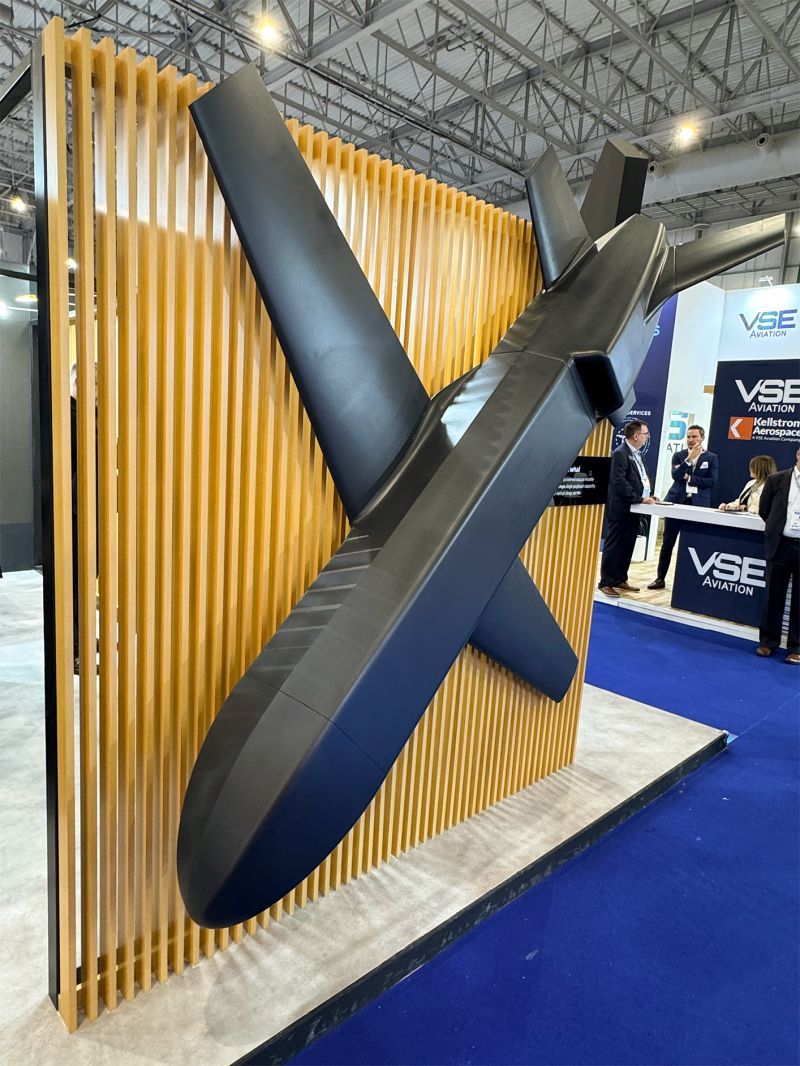
The LPP Holding Narwhal is a Czech family of ground-launched subsonic cruise missiles intended for long-range precision strike missions in environments where satellite navigation and radio communications may be disrupted. The system combines turbojet propulsion with autonomous visual navigation and a common mission-planning architecture.
The Narwhal was publicly presented at the Dubai Airshow in November 2025. At that stage, LPP described configurations carrying a 40 kg warhead to a stated range of 730 km and a 120 kg warhead to 680 km. Contemporary reporting described the missile as being in the final stage of development, with production planned for 2026.
By July 2026, LPP had expanded the project into a three-variant family following successful testing of the Narwhal 140. The revised family consists of the light Narwhal 140, an intermediate model carrying a 100 kg warhead, and the larger Narwhal 540 with a 200 kg combat payload.
Development
The first public presentation established Narwhal as a Czech-developed ground-launched cruise missile. A November 2025 report stated that the missile could fly at about 750 km/h and described two payload and range combinations. The lighter 40 kg configuration was associated with a range of 730 km, while the 120 kg configuration was associated with 680 km. Additional information on the initial presentation was published by Adria Defense.
After flight testing of the Narwhal 140, LPP announced two additional versions in 2026. Reporting based on Czech sources identified an intermediate missile with a 100 kg warhead and the Narwhal 540 with a 200 kg warhead. The two heavier versions were described as retaining approximately the same maximum speed as the baseline missile while providing a range of about 638 km. Defense Express reported that development of the enlarged variants followed successful testing of the existing missile.
LPP's published product information now describes Narwhal as a three-variant family carrying warheads from 40 to 200 kg. The manufacturer's Narwhal product page gives a maximum speed of 750 km/h and a stated range of up to 638 km for the current family description.
Design
Narwhal is a ground-launched, turbojet-powered subsonic cruise missile. The family is designed around common navigation, flight-control and mission-planning principles so that different missile sizes can use related software and operating concepts.
Guidance and mission systems
The missile uses a custom autopilot and visual navigation system intended to permit autonomous flight in GPS-denied conditions. The navigation architecture is derived from technology used in LPP's MTS autonomous aerial vehicles. The system can follow a pre-programmed mission without continuous radio control.
An optional jamming-resistant radio can provide telemetry, target adjustment and human-in-the-loop intervention when communications are available. LPP supplies the missile as an integrated package that includes the autopilot, visual navigation system, electronics, propulsion system, warhead, air vehicle and mission planner.
Propulsion and launch
The disclosed Narwhal 540 uses the ZT J160 turbojet engine. Reporting on the family gives the engine a thrust of 1,600 N. The missiles are intended for sustained subsonic flight rather than supersonic operation.
Narwhal can be launched by catapult or from a road or runway using a reusable trolley launch system. This provides a ground-launch capability without requiring an aircraft or naval vertical-launch system.
Airframe
The earlier Narwhal configuration was reported as 4 m long with a 2.6 m wingspan and a maximum takeoff weight of 260 kg. The Narwhal 540 enlarges the same general concept to a length of 4.9 m, a wingspan of 3.4 m and a maximum takeoff weight of 540 kg.
The larger airframe supports a 200 kg combat payload while retaining a maximum speed of 750 km/h and a stated range of approximately 638 km. The increased size therefore allows a substantial increase in warhead mass while preserving most of the range associated with the earlier configurations. Further technical discussion of the family expansion was published by Army Recognition.
Program status
The Narwhal 140 had completed successful flight testing before the family expansion was reported in July 2026. The intermediate 100 kg-warhead version and Narwhal 540 were described as newer developments within the same program.
Public sources do not confirm that Narwhal has entered operational service. Reports have discussed possible testing or supply to Ukraine, but no official confirmation of operational use was available in the supplied material. The program should therefore be regarded as a developing missile family rather than a confirmed operational weapon system.
Another 2026 report stated that LPP was preparing initial deliveries for an undisclosed customer and was scaling production, but detailed delivery schedules and confirmed operator information were not disclosed. That account was published by Adria Defense.
Variants
- Narwhal 140: Tested light member of the Narwhal family. Current manufacturer information places the family minimum warhead mass at 40 kg, while earlier reporting associated a 40 kg configuration with a range of 730 km.
- Intermediate Narwhal variant: Development version carrying a 100 kg warhead. The individual model designation has not been disclosed in the supplied sources. Reporting gives the heavier new variants a range of about 638 km and a maximum speed of 750 km/h.
- Narwhal 540: Enlarged variant with a maximum takeoff weight of 540 kg and a 200 kg combat payload. It measures 4.9 m in length, has a 3.4 m wingspan and uses the ZT J160 turbojet engine.
Specifications (Narwhal 540)
General characteristics
- Type: Ground-launched subsonic cruise missile
- Length: 4.9 m
- Wingspan: 3.4 m
- Maximum takeoff weight: 540 kg
- Combat payload: 200 kg
- Engine: ZT J160 turbojet
- Launch methods: Catapult or reusable trolley from roads and runways
Performance
- Maximum speed: 750 km/h
- Range: Approximately 638 km
Guidance and control
- Navigation: Autonomous visual navigation with custom autopilot
- Communications: Optional jamming-resistant radio for telemetry, target adjustment and operator intervention
- Mission control: Pre-programmed mission planning with reduced dependence on continuous external navigation or radio signals
 Argentina
 Armenia
 Australia
 Austria
 Austria-Hungary
 Belgium
 Brazil
 United Kingdom
 United States
 Brunei
 Bulgaria
 Canada
 Chile
Chile China
China Colonial America
 Colombia
 Confederate States
 Croatia
 Denmark
 Egypt
Egypt Finland
 France
 Georgia
 Germany
 German Imperial
 Greece
 Holland
 Hungary
 India
India Indonesia
 Iran
Iran Iraq
Iraq Ireland
 Israel
 Italy
Italy Japan
Japan Japan (1940)
 Jordan
 Kingdom of Italy
 Malaysia
 Mexico
 Myanmar
 Nazi Germany
 Netherlands
 New Zealand
 North Korea
 Norway
 Pakistan
 Peru
Peru Philippines
 Poland
 Portugal
 Prussia
 Romania
 Russia
 Saudi Arabia
 Serbia
 Singapore
 Slovakia
 Slovenia
 South Africa
 South Korea
 Soviet Union
 Spain
Spain Sweden
 Switzerland
 Syria
Syria Taiwan
 Thailand
 Turkey
 UAE
UAE Ukraine
 Vietnam
 Yugoslavia