
History
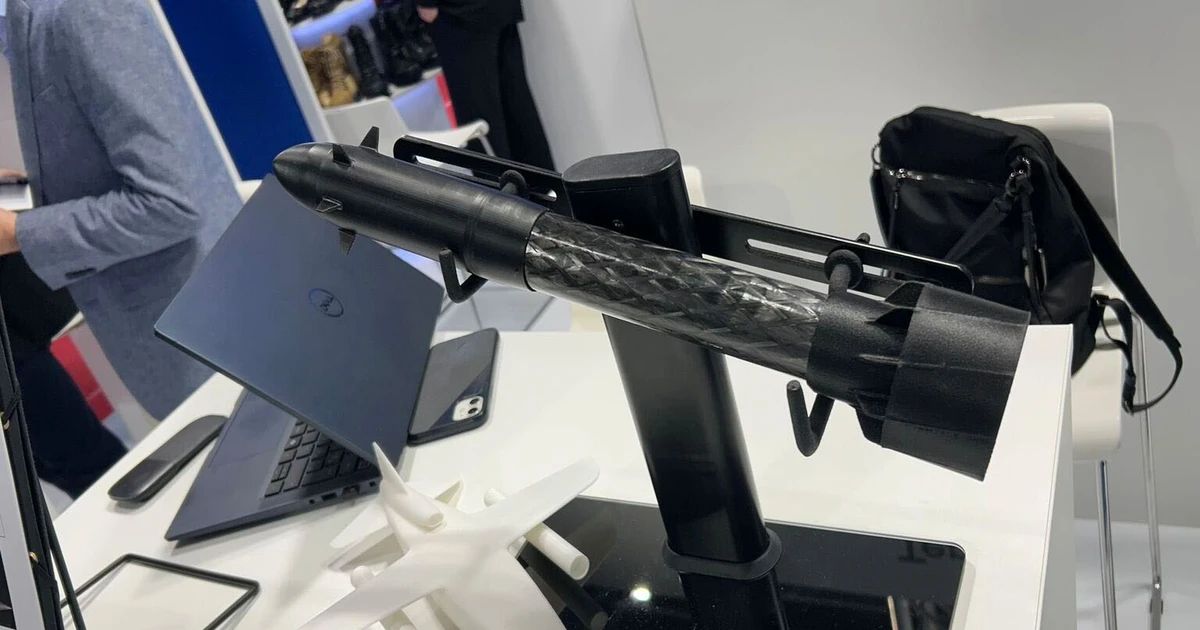
The Tempterno CP260 is a lightweight multipurpose unguided mini-missile developed by the Estonian company Tempterno Defence. It is intended to engage both aerial and ground targets and can be deployed from several types of launch platform.
The CP260 was publicly presented at the MSPO international exhibition in Poland. The missile weighs about 1 kg, has a stated maximum flight range of up to 2.5 km, and has an effective range of approximately 200 to 500 m.
Tempterno Defence states that the weapon is designed around a comparatively low cost per shot of about €1,000. It can be carried by multicopters and fixed-wing unmanned aircraft, fired from ground-based launchers, or used in a manually operated shoulder-launched configuration.
Development and testing
By September 2026, Tempterno Defence described the missile itself as ready and undergoing flight testing. The company was continuing development and testing of its family of warheads, with completion planned for late 2026 or early 2027.
The dedicated launcher is being developed by another Estonian company. At the reported stage of development, the launch platform was aimed manually with the aid of a camera. Tempterno Defence was also working on artificial-intelligence-based automation for target detection and acquisition.
The company had contacted Ukrainian enterprises regarding possible cooperation on warhead integration and software for automatic target acquisition. A contemporary report also described the CP260 as undergoing flight testing while its warhead family remained under development.
Design
The CP260 is an unguided missile intended to be used with different launch systems rather than a single dedicated platform. Its supported launch concepts include multicopters, fixed-wing unmanned aircraft, ground-based launchers, and a shoulder-fired arrangement.
Although the missile itself is described as unguided, the launcher can use a camera for manual aiming. Tempterno Defence is developing automation for target detection and acquisition, but this capability was still under development in 2026 and should not be regarded as an operational guidance system for the missile itself.
Warheads
The anti-aircraft configuration uses a proximity fuse designed to detonate without direct impact and disperse tungsten fragments near the target. For ground targets, including personnel and vehicles, Tempterno Defence is developing high-explosive, incendiary, and armor-piercing warheads.
Launch integration
The CP260 is intended to give an unmanned aircraft the ability to attack more than one target during a sortie by carrying multiple missiles. The concept differs from a one-way attack drone because the carrier aircraft can remain a reusable launch platform rather than being expended with the weapon.
Program status
As of September 2026, the CP260 missile was undergoing flight testing. Development and testing of the associated warhead family were still in progress, with completion targeted for the end of 2026 or the beginning of 2027.
Artificial-intelligence-assisted detection and automatic target acquisition were also under development. The available information does not establish that these automated functions, the complete warhead family, or a production-standard launcher had entered operational service.
Variants
- Anti-aircraft configuration: Uses a proximity fuse and a tungsten-fragment effect for engagement of aerial targets.
- Ground-target configurations: Planned warhead options include high-explosive, incendiary, and armor-piercing types for targets such as personnel and vehicles.
Specifications (Tempterno CP260)
General characteristics
- Type: Multipurpose unguided mini-missile
- Mass: About 1 kg
- Manufacturer: Tempterno Defence
- Intended targets: Aerial and ground targets
- Launch platforms: Multicopters, fixed-wing unmanned aircraft, ground-based launchers, and a manually operated shoulder-launched configuration
- Stated cost per shot: About €1,000
Performance
- Maximum flight range: Up to 2.5 km
- Effective range: Approximately 200–500 m
Warheads and aiming
- Anti-aircraft effect: Proximity-fused tungsten fragments
- Ground-target warheads: High-explosive, incendiary, and armor-piercing types under development
- Aiming: Manual aiming with a camera on the launch platform at the reported development stage; automated target detection and acquisition are under development
 Argentina
 Armenia
 Australia
 Austria
 Austria-Hungary
 Belgium
 Brazil
 United Kingdom
 United States
 Brunei
 Bulgaria
 Canada
 Chile
Chile China
China Colonial America
 Colombia
 Confederate States
 Croatia
 Czech
Czech Denmark
 Egypt
Egypt Finland
 France
 Georgia
 Germany
 German Imperial
 Greece
 Holland
 Hungary
 India
India Indonesia
 Iran
Iran Iraq
Iraq Ireland
 Israel
 Italy
Italy Japan
Japan Japan (1940)
 Jordan
 Kingdom of Italy
 Malaysia
 Mexico
 Myanmar
 Nazi Germany
 Netherlands
 New Zealand
 North Korea
 Norway
 Pakistan
 Peru
Peru Philippines
 Poland
 Portugal
 Prussia
 Romania
 Russia
 Saudi Arabia
 Serbia
 Singapore
 Slovakia
 Slovenia
 South Africa
 South Korea
 Soviet Union
 Spain
Spain Sweden
 Switzerland
 Syria
Syria Taiwan
 Thailand
 Turkey
 UAE
UAE Ukraine
 Vietnam
 Yugoslavia