
History
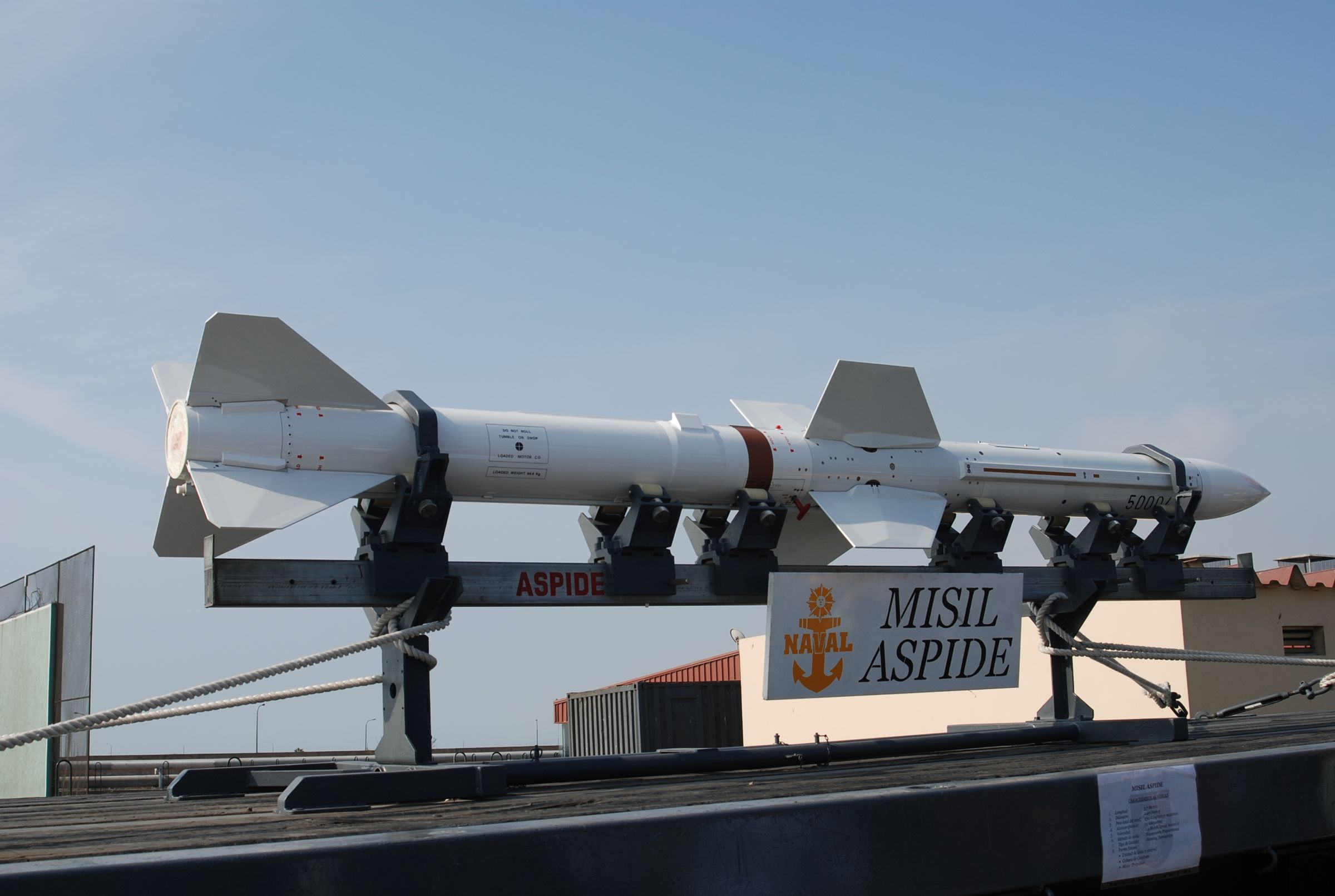
Skyguard/Aspide is an Italian-Swiss short-range ground-based air-defence system that combines the Swiss Skyguard fire-control system with Italian Aspide surface-to-air missiles. It is intended to protect military sites and critical infrastructure against aircraft, helicopters, cruise missiles, and unmanned aircraft.
The Skyguard element was developed and manufactured by Oerlikon Contraves, now Rheinmetall Air Defence, while the Aspide missile family was developed by the Italian company Selenia, whose missile activities are now associated with MBDA. The resulting integration is also associated with the Spada family of air-defence systems.
According to Deagel, the Skyguard system reached initial operational capability in 1987. The later Spada 2000 standard entered service around 2000 and introduced the improved Aspide 2000 missile.
Development and modernization
The Aspide missile was developed in Italy from the general configuration of the American AIM-7 Sparrow and was produced in air-to-air and surface-to-air forms. In the Skyguard/Aspide application, the missile is used together with the Skyguard fire-control architecture for ground-based air defence.
The system was subsequently modernized to the Spada 2000 standard with the Aspide 2000 missile. MBDA describes Aspide 2000 as an upgraded version of the baseline Aspide with an enhanced single-stage rocket motor. MBDA states that the improved propulsion increased speed, lateral acceleration, and effective range by as much as 40 percent while updated electronics improved operation in clutter and electronic-countermeasure environments.
MBDA also states that Aspide 2000 can be integrated into systems already using the baseline Aspide, including Skyguard/Aspide, through a system modification kit while retaining existing logistics support.
Ukraine
In October 2022, 19 Ukrainian servicemen trained in Zaragoza, Spain, on the Skyguard air-defence system as part of Spanish military assistance. In November 2022, Ukraine reported that Skyguard systems supplied by Spain had arrived in the country.
Spain also requested Swiss authorization for the re-export of Aspide missiles to Ukraine because the Skyguard component had been developed and manufactured by the Swiss company Oerlikon Contraves. In February 2023, Italy announced additional Skyguard systems for Ukraine as part of a military assistance package.
On 14 September 2026, the 38th Anti-Aircraft Missile Regiment named after General-Horunzhy Yuriy Tyutyunnik publicly showed a Skyguard/Aspide system being loaded and deployed on combat duty. Militarnyi described the footage as the first public appearance of this system in the Ukrainian Defense Forces.
Design
Skyguard/Aspide combines a ground-based fire-control system with launcher units carrying Aspide missiles. The Skyguard component provides the surveillance, tracking, and fire-control functions required to engage aerial targets, while the missile performs the interception.
The Italian configuration described in the available source material uses a launcher fitted with four missiles in transport-launch containers. Italian launchers are distinguished by a target-illumination radar and a television unit mounted directly on the launcher.
Aspide uses semi-active radar homing, which requires reflected radar energy from the target during the engagement. The source material reports a 33 kg high-explosive fragmentation warhead. It also reports engagement distances ranging from approximately 12 to 25 km across the described Skyguard/Aspide configurations and engagement altitudes from 15 to 6,000 m. These figures should not be treated as a single specification for every Aspide variant because the system was modernized with different missile standards.
Aspide 2000 missile
Aspide 2000 is the improved surface-to-air missile used in the modernized Spada 2000 and compatible Skyguard/Aspide configurations. MBDA specifies a missile weight of 240 kg, a length of 3.7 m, and a diameter of 234 mm. This manufacturer figure differs from the 220 kg figure reported in the Ukrainian source article, so the MBDA value is used for the missile specification below.
The improved missile uses an enhanced single-stage rocket motor and updated electronic features intended to improve guidance performance in heavy clutter and electronic-countermeasure conditions. The Ukrainian source reports a maximum missile speed of Mach 4.
Operational history
Skyguard/Aspide has been fielded as a short-range air-defence system and has undergone modernization through the integration of Aspide 2000. The available sources specifically document its transfer to Ukraine and operational deployment by the 38th Anti-Aircraft Missile Regiment.
The September 2026 public footage showed the Ukrainian system on combat duty. The available source material does not provide confirmed details of individual interceptions, expenditure rates, or combat results, so no such claims are included here.
Variants
- Skyguard/Aspide: Baseline configuration combining the Swiss Skyguard fire-control system with Italian Aspide surface-to-air missiles.
- Spada 2000: Modernized configuration using the Aspide 2000 missile, with improved missile propulsion, range, maneuver performance, and resistance to electronic countermeasures.
Operators
- Ukraine: Skyguard systems supplied by Spain were reported to have arrived in November 2022. Italy subsequently announced additional systems in February 2023. The 38th Anti-Aircraft Missile Regiment publicly displayed a Skyguard/Aspide system on combat duty in September 2026.
Specifications (Aspide 2000 missile in Skyguard/Aspide integration)
General characteristics
- Weight: 240 kg
- Length: 3.7 m
- Diameter: 234 mm
- Warhead: 33 kg high-explosive fragmentation warhead
- Guidance: Semi-active radar homing
Performance
- Maximum speed: Reported as Mach 4
- Propulsion: Enhanced single-stage rocket motor
- Performance improvement: MBDA states that effective range, missile speed, and lateral acceleration were improved by as much as 40 percent compared with the baseline Aspide missile
Launcher
- Missiles per launcher: Four missiles in transport-launch containers in the configuration described by the source
 Argentina
 Armenia
 Australia
 Austria
 Austria-Hungary
 Belgium
 Brazil
 United Kingdom
 United States
 Brunei
 Bulgaria
 Canada
 Chile
Chile China
China Colonial America
 Colombia
 Confederate States
 Croatia
 Czech
Czech Denmark
 Egypt
Egypt Finland
 France
 Georgia
 Germany
 German Imperial
 Greece
 Holland
 Hungary
 India
India Indonesia
 Iran
Iran Iraq
Iraq Ireland
 Israel
 Japan
Japan Japan (1940)
 Jordan
 Kingdom of Italy
 Malaysia
 Mexico
 Myanmar
 Nazi Germany
 Netherlands
 New Zealand
 North Korea
 Norway
 Pakistan
 Peru
Peru Philippines
 Poland
 Portugal
 Prussia
 Romania
 Russia
 Saudi Arabia
 Serbia
 Singapore
 Slovakia
 Slovenia
 South Africa
 South Korea
 Soviet Union
 Spain
Spain Sweden
 Switzerland
 Syria
Syria Taiwan
 Thailand
 Turkey
 UAE
UAE Ukraine
 Vietnam
 Yugoslavia