
History
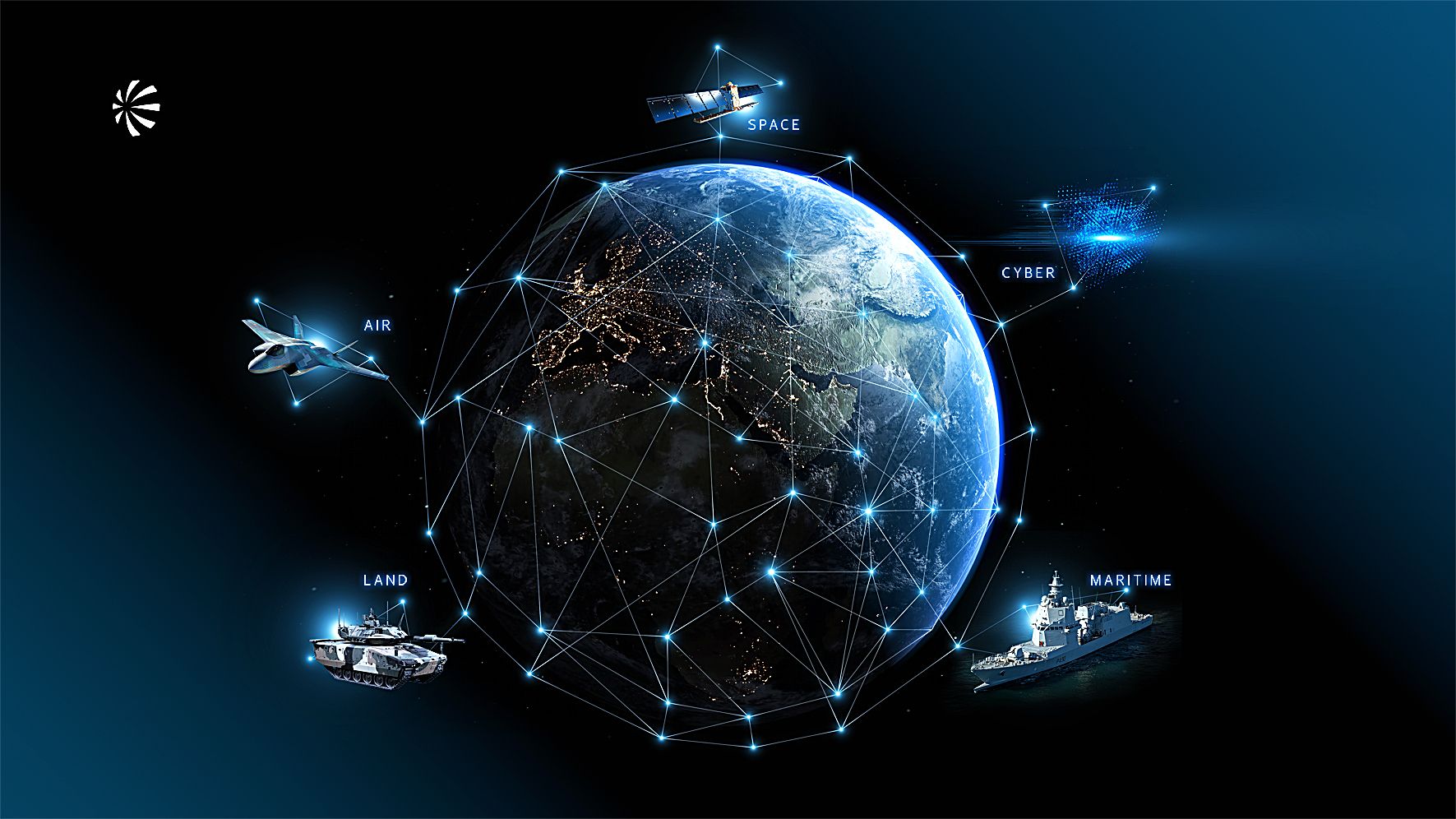
Michelangelo Dome is a multi-layer, multi-domain air and missile defence architecture developed by the Italian aerospace and defence company Leonardo. The project is intended to protect critical infrastructure, strategic sites, urban areas, and wider territories by connecting sensors, command systems, effectors, and platforms operating in space, air, on land, and at sea.
Leonardo publicly presented the project in November 2025. It was conceived in response to the growing combination of ballistic missiles, hypersonic weapons, cruise missiles, rockets, and unmanned aircraft that can attack from different directions and compress the time available for a defensive response. The company is developing the architecture with input from the Italian Ministry of Defence and armed forces.
Unlike a single missile battery, Michelangelo Dome is planned as an integration framework. Its purpose is to combine existing and future detection, tracking, command-and-control, and interception systems in a cyber-secure network. The architecture is intended to be modular and scalable so that participating countries can connect their own compatible equipment.
Development
The project brings together several areas of Leonardo's business, including radar and sensor technology, command-and-control software, artificial intelligence, space-based observation, and cooperation with missile manufacturer MBDA. Leonardo holds a 25 percent share in MBDA and has identified the company's missile and anti-missile capabilities as one of the principal layers of the future system.
Leonardo announced a staged development plan rather than a single delivery date. An initial implementation was expected before the complete architecture became operational. The company indicated that a fuller capability could begin operating from 2028, while some space elements would continue to be deployed and integrated beyond that date.
Testing
In 2026, Leonardo announced plans to conduct the first field test of the Michelangelo architecture in Ukraine before the end of the year. The proposed demonstration was described as an initial dead-zone protection capability and one vertical element of the wider program. Technical details of the equipment, interceptors, sensors, and trial scenario were not released.
Testing in Ukraine is intended to expose the architecture to an operationally demanding threat environment. However, a planned test does not establish that the complete Michelangelo Dome has entered service. As of August 2026, the system remained under development and no production configuration had been disclosed.
Design
Michelangelo Dome is structured as a system of systems. Its central function is to collect information from heterogeneous sensors, combine that information into a common operational picture, assign threats, and coordinate the most suitable response. The network is intended to connect equipment across air, maritime, land, space, cyber, and electromagnetic domains.
Sensors and tracking
The architecture is planned to use ground, airborne, maritime, and space-based sensors to detect and follow targets. Potential threats include small unmanned aircraft, rockets, cruise missiles, ballistic missiles, and hypersonic vehicles. Sensor fusion is intended to reduce gaps between individual coverage areas and provide commanders with a more complete track picture.
Leonardo also plans to connect Michelangelo with its Space Guardian Earth-observation constellation. The proposed constellation comprises 20 multisensor satellites deployed in two tranches, with the first group planned to include synthetic-aperture radar, very-high-resolution optical, and communications spacecraft. These satellites are a future component and were not operational parts of Michelangelo when the architecture was announced.
Command and control
A cyber-secure command-and-control layer is expected to process data, support threat classification, and coordinate engagement decisions. Leonardo has described artificial intelligence as a supporting technology for managing large quantities of information and shortening reaction times. Human command authority, national rules of engagement, and the exact degree of automation have not been publicly defined.
The open and modular approach is intended to allow national and NATO-compatible systems to participate without requiring every user to purchase an identical set of equipment. The practical level of interoperability will depend on interfaces, security requirements, communications links, and the components selected by each operator.
Effectors
Michelangelo is intended to coordinate different defensive effectors rather than depend on one dedicated interceptor. Leonardo has identified MBDA missile capabilities as an important part of the architecture. The company has not published a definitive list of missiles, guns, electronic-warfare systems, or directed-energy weapons assigned to the program.
This layered approach is intended to match the response to the target. A small drone, cruise missile, and ballistic missile present different detection and engagement problems, and no single interceptor is economical or effective against every class of threat.
Program status
As of August 2026, Michelangelo Dome remained a developing architecture. Leonardo reported interest or evaluation by more than 20 countries, but did not identify confirmed operators or announce a complete procurement contract. The first Ukrainian demonstration was planned for the end of 2026.
The Space Guardian constellation was scheduled to begin launching from late 2027 through 2028, with full constellation operation expected in 2029 and broader integration with other early-warning and tracking constellations beginning later. These dates are plans and may change as development, testing, procurement, and international coordination progress.
Variants
- Initial dead-zone protection capability — limited configuration planned for field demonstration in Ukraine during 2026.
- National or regional architecture — proposed large-scale configuration combining missile defence, sensors, command systems, and space assets for protection of a country or broad geographical area.
Operators
No operational user had been confirmed as of August 2026. Leonardo was developing the project with Italian defence authorities and discussing it with prospective international participants.
Specifications (Michelangelo Dome planned architecture)
General characteristics
- Type: Integrated multi-layer air and missile defence architecture.
- Domains: Space, air, land, maritime, cyber, and electromagnetic.
- Architecture: Modular, scalable, open, and interoperable system of systems.
- Primary functions: Threat detection, tracking, data fusion, command and control, engagement coordination, and neutralisation.
- Threat classes: Small unmanned aircraft, rockets, cruise missiles, ballistic missiles, and hypersonic weapons.
- Planned space layer: Leonardo Space Guardian multisensor constellation.
- Planned missile layer: Compatible MBDA missile and anti-missile capabilities.
Related equipment
- Leonardo Space Guardian — planned Earth-observation constellation intended to support detection and tracking within the architecture.
- MBDA air-defence systems — missile capabilities proposed as part of Michelangelo's engagement layer.
- European air and missile defence initiatives — national and multinational architectures with which Michelangelo may require interoperability.
 Argentina
 Armenia
 Australia
 Austria
 Austria-Hungary
 Belgium
 Brazil
 United Kingdom
 United States
 Brunei
 Bulgaria
 Canada
 Chile
Chile China
China Colonial America
 Colombia
 Confederate States
 Croatia
 Czech
Czech Denmark
 Egypt
Egypt Finland
 France
 Georgia
 Germany
 German Imperial
 Greece
 Holland
 Hungary
 India
India Indonesia
 Iran
Iran Iraq
Iraq Ireland
 Israel
 Japan
Japan Japan (1940)
 Jordan
 Kingdom of Italy
 Malaysia
 Mexico
 Myanmar
 Nazi Germany
 Netherlands
 New Zealand
 North Korea
 Norway
 Pakistan
 Peru
Peru Philippines
 Poland
 Portugal
 Prussia
 Romania
 Russia
 Saudi Arabia
 Serbia
 Singapore
 Slovakia
 Slovenia
 South Africa
 South Korea
 Soviet Union
 Spain
Spain Sweden
 Switzerland
 Syria
Syria Taiwan
 Thailand
 Turkey
 UAE
UAE Ukraine
 Vietnam
 Yugoslavia