
History
The Rafael Iron Dome and Iron Beam combination is an Israeli layered air-defense arrangement that pairs missile interceptors with a high-energy laser. Iron Dome provides the established radar, battle-management, and Tamir interceptor elements, while Iron Beam adds a lower-cost means of engaging suitable short-range threats.
Israel announced successful tests of the integrated arrangement in 2026. The trials demonstrated joint scenarios managed through the Iron Dome battle-management center, but the disclosed information did not identify the modified system as a single production model or confirm that the combined configuration had entered routine operational service.
Development of the component systems
Israel began developing Iron Dome in response to short-range rocket attacks. Rafael Advanced Defense Systems became the principal developer, with Israel Aerospace Industries contributing the EL/M-2084 radar through its Elta division and MPrest Systems developing battle-management software. The first successful Iron Dome test occurred in 2008. The system became operational around 2010–2011 and recorded its first successful combat interception of a Grad rocket in April 2011.
Iron Beam emerged from Israeli work on solid-state laser weapons. Rafael publicly unveiled the system at the Singapore Airshow in February 2014. Development continued with support from the Israeli Ministry of Defense and the United States. Elbit Systems also participated in the production program described for the later system.
Tests announced in April 2022 demonstrated laser engagements against drones, rockets, mortar bombs, and anti-tank missiles. Subsequent development produced several configurations, including mobile demonstrators and a more powerful fixed installation. A smaller 10 kW Lite Beam system was displayed in 2024, but it is a separate adaptation rather than the full Iron Beam component used in the integrated architecture.
A 2025 Council on Foreign Relations report described controlled field deployment of Israeli laser systems and reported successful engagements against drones. These fielded or experimental laser capabilities should not be treated as proof that every element of the later Iron Dome–Iron Beam combination was already operational.
Integrated testing
In July 2026, the integrated test announcement described an upgraded Iron Dome system operating jointly with Iron Beam. The Israeli Ministry of Defense stated that the trials addressed high rates and volumes of incoming fire, including concentrated saturation attacks.
Joint scenarios were controlled directly from the Iron Dome battle-management center. This arrangement was intended to let commanders or the engagement system select missile or laser interception according to the threat, available weapons, operating conditions, and cost. The ministry did not disclose the technical modifications applied to Iron Dome or the precise configuration of the laser used during the tests.
Design
System architecture
The combination links sensors, command-and-control equipment, Tamir missile launchers, and high-energy laser equipment. Iron Dome detects an incoming object, calculates its trajectory, and determines whether it threatens a protected area. The integrated battle-management center can then assign a suitable target to the missile or laser layer.
The two effectors are complementary rather than interchangeable in all conditions. Tamir missiles can engage targets beyond the practical reach of the laser and are less dependent on atmospheric transparency. Iron Beam offers a very low expenditure per engagement and does not require a missile to be consumed, but it needs electrical power, a stable track, and sufficient time for the beam to damage one point on the target.
Iron Dome missile layer
An Iron Dome battery includes an EL/M-2084 multi-mission radar, a battle-management center, and missile firing units. A launcher carries about 20 Tamir interceptors. The radar detects launches and tracks trajectories, while the control system prioritizes objects predicted to strike protected areas.
Tamir is a solid-propellant guided interceptor equipped with aerodynamic controls and a radar seeker. Published figures for the interceptor and system vary by source and configuration. The 2026 integration report described Iron Dome as covering threats at approximately 4–70 km, while other published accounts provide narrower figures for particular intercept conditions.
Iron Beam laser layer
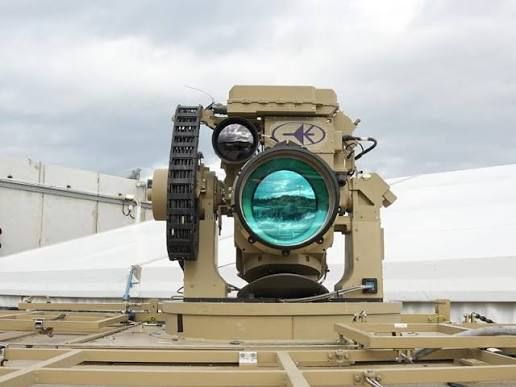
Iron Beam uses a high-energy fiber laser to concentrate energy on a vulnerable point of an airborne target until structural failure or another disabling effect occurs. Published descriptions associate the full system with a 100 kW-class beam focused on a small area at a distance of up to 10 km. The precise power and optical arrangement used in the 2026 integrated tests were not disclosed.
A commonly described Iron Beam battery comprises a radar, a command-and-control unit, and two high-energy laser units. External sensor cueing can also support target acquisition. The laser has been presented for use against drones, short-range rockets, artillery projectiles, and mortar bombs.
Engagement management
The shared control architecture is the defining feature of the tested combination. A target suitable for laser engagement can be assigned to Iron Beam, conserving Tamir missiles for targets outside the laser envelope or for conditions in which a laser engagement is unsuitable. Reported decision factors include the type and trajectory of the threat, system availability, engagement range, atmospheric conditions, and the relative cost of each option.
The laser has no conventional ammunition magazine, but it is not unlimited in an operational sense. Available electrical power, thermal management, maintenance, weather, visibility, dwell time, and the number of targets that can be illuminated in sequence constrain its effective firing capacity.
Program status
Iron Dome is an operational system with extensive combat use. Iron Beam progressed through demonstrations, field activity, and deployment claims during the first half of the 2020s. Sources differ over the exact date and status assigned to those laser deployments because some reports describe interim or mobile equipment while others refer to the full-power fixed system.
The combined architecture reached a confirmed physical and operationally recognizable milestone through the test series announced in 2026. Those trials demonstrated joint control and engagement scenarios. The announcement described the integration as a prerequisite for future operational deployments, so the tested combination should be classified as an integrated system under evaluation rather than assumed to be fully deployed across all Iron Dome batteries.
Operators
- Israel: Iron Dome is operated by the Israeli Air Force. Israel is also the developer and intended operator of the integrated Iron Dome–Iron Beam arrangement demonstrated in 2026.
Specifications (2026 tested Iron Dome–Iron Beam combination)
General characteristics
- Type: Layered ground-based missile and directed-energy air-defense system
- Principal developer: Rafael Advanced Defense Systems
- Radar associated with Iron Dome: EL/M-2084 multi-mission radar
- Battle management: Integrated scenarios controlled through the Iron Dome battle-management center
- Effectors: Tamir guided interceptors and a high-energy fiber laser
- Iron Dome launcher capacity: Approximately 20 Tamir interceptors per launcher
Engagement characteristics
- Reported Iron Dome engagement range: Approximately 4–70 km in the 2026 integration report
- Reported Iron Beam range: Up to 10 km
- Reported laser engagement time: Approximately four to five seconds after target lock
- Published full-system laser class: Approximately 100 kW; the configuration used in the 2026 tests was not disclosed
- Target set: Short-range rockets, artillery and mortar projectiles, missiles, and unmanned aerial vehicles
Cost characteristics
- Laser engagement: Reported as costing only a few US dollars in electricity per pulse or engagement, excluding acquisition, staffing, maintenance, and power-system costs
- Tamir interceptor: Reported in the 2026 source at roughly US$50,000 per missile
 Argentina
 Armenia
 Australia
 Austria
 Austria-Hungary
 Belgium
 Brazil
 United Kingdom
 United States
 Brunei
 Bulgaria
 Canada
 Chile
Chile China
China Colonial America
 Colombia
 Confederate States
 Croatia
 Czech
Czech Denmark
 Egypt
Egypt Finland
 France
 Georgia
 Germany
 German Imperial
 Greece
 Holland
 Hungary
 India
India Indonesia
 Iran
Iran Iraq
Iraq Ireland
 Italy
Italy Japan
Japan Japan (1940)
 Jordan
 Kingdom of Italy
 Malaysia
 Mexico
 Myanmar
 Nazi Germany
 Netherlands
 New Zealand
 North Korea
 Norway
 Pakistan
 Peru
Peru Philippines
 Poland
 Portugal
 Prussia
 Romania
 Russia
 Saudi Arabia
 Serbia
 Singapore
 Slovakia
 Slovenia
 South Africa
 South Korea
 Soviet Union
 Spain
Spain Sweden
 Switzerland
 Syria
Syria Taiwan
 Thailand
 Turkey
 UAE
UAE Ukraine
 Vietnam
 Yugoslavia