History
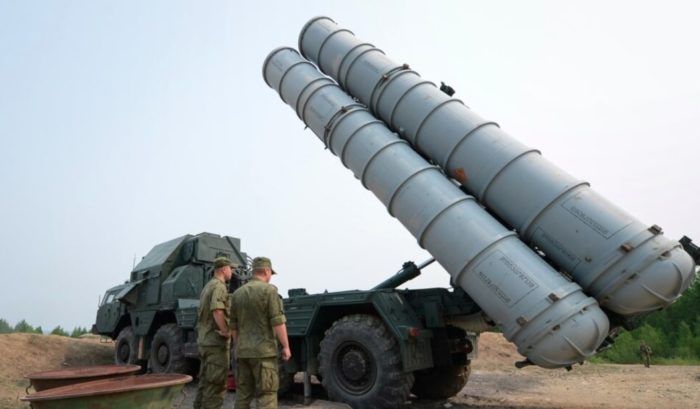
S-300 Clone is a designation for a new surface-to-air missile intended for S-300 air-defense systems in Ukrainian service. The United States approved a possible sale of missiles identified by this name to Ukraine in September 2026 as part of a broader air-defense procurement package.
The available material provides very limited confirmed technical information about the missile. It is described as a new design rather than a direct reproduction of the Soviet 5V55 missile, with enhanced performance and a different, more modern guidance principle, but detailed specifications have not been disclosed.
The procurement is planned to be financed through contributions from European partners and funds from the U.S. Foreign Military Financing program for Ukraine. Suppliers for the broader package were expected to be selected through competitive procurement.
The program may be connected with an earlier joint effort to develop replacements for Soviet-designed weapons used by Ukraine. In September 2024, U.S. Secretary of Defense Lloyd Austin stated that the United States, Ukraine, and several European companies were working on a replacement for the S-300 surface-to-air system and on a replacement for the R-27 air-to-air missile. The supplied evidence does not establish that the S-300 Clone designation was already in use for that project at the time.
Further discussion of the joint missile-development effort emerged in 2026. A production scale of approximately 100 to 200 anti-aircraft missiles per year was discussed for the wider program. The available information does not establish that this figure applies exclusively to S-300 Clone missiles.
The project also involves efforts to localize missile production in Ukraine with participation from European partners. This work is intended to reduce dependence on dwindling stocks of Soviet-era S-300 missiles, which became increasingly difficult to replace during the Russia-Ukraine war.
Design
S-300 Clone is intended for use with S-300 air-defense systems operated by Ukraine. The missile is described as a new design rather than a replica of the Soviet 5V55 family. Its external dimensions, launch mass, propulsion arrangement, warhead, seeker configuration, and exact compatibility with individual S-300 variants have not been disclosed in the supplied material.
The missile has been characterized as having enhanced performance and a more modern guidance principle than the Soviet 5V55. No supported information defines the guidance method in sufficient detail to identify it as command-guided, semi-active radar, active radar, or another specific architecture.
The development concept reflects Ukraine's need for replacement missiles compatible with existing Soviet-designed air-defense infrastructure. Before the full-scale Russian invasion in 2022, Ukraine operated approximately 25 to 30 S-300PT and S-300PS battalions in varying states of readiness. Combat losses and depletion of stored missiles increased the requirement for newly manufactured interceptors compatible with remaining systems.
Program status
As of September 2026, the S-300 Clone was associated with a U.S.-approved possible sale to Ukraine. The broader air-defense package had an estimated maximum value of up to $2.68 billion and included other missiles, launchers, radars, and related equipment.
The evidence does not confirm delivery, operational deployment, combat use, or a completed production milestone for the S-300 Clone. Its manufacturer and final production arrangement have also not been publicly identified in the supplied material.
Operators
- Ukraine: Intended recipient under a U.S.-approved possible sale announced in 2026. Delivery and operational service are not confirmed in the supplied material.
Specifications (S-300 Clone)
General characteristics
- Type: Surface-to-air missile.
- Role: Air-defense interceptor intended for S-300 systems in Ukrainian service.
- Compatibility: Intended for S-300 air-defense systems operated by Ukraine; exact supported variants have not been publicly specified in the supplied material.
- Guidance: Described as using a more modern guidance principle than the Soviet 5V55, without disclosure of the exact method.
- Status: Development and procurement program; operational service is not confirmed.
 Argentina
 Armenia
 Australia
 Austria
 Austria-Hungary
 Belgium
 Brazil
 United Kingdom
 United States
 Brunei
 Bulgaria
 Canada
 Chile
Chile China
China Colonial America
 Colombia
 Confederate States
 Croatia
 Czech
Czech Denmark
 Egypt
Egypt Finland
 France
 Georgia
 Germany
 German Imperial
 Greece
 Holland
 Hungary
 India
India Indonesia
 Iran
Iran Iraq
Iraq Ireland
 Israel
 Italy
Italy Japan
Japan Japan (1940)
 Jordan
 Kingdom of Italy
 Malaysia
 Mexico
 Myanmar
 Nazi Germany
 Netherlands
 New Zealand
 North Korea
 Norway
 Pakistan
 Peru
Peru Philippines
 Poland
 Portugal
 Prussia
 Romania
 Russia
 Saudi Arabia
 Serbia
 Singapore
 Slovakia
 Slovenia
 South Africa
 South Korea
 Soviet Union
 Spain
Spain Sweden
 Switzerland
 Syria
Syria Taiwan
 Thailand
 Turkey
 UAE
UAE Ukraine
 Vietnam
 Yugoslavia