
History
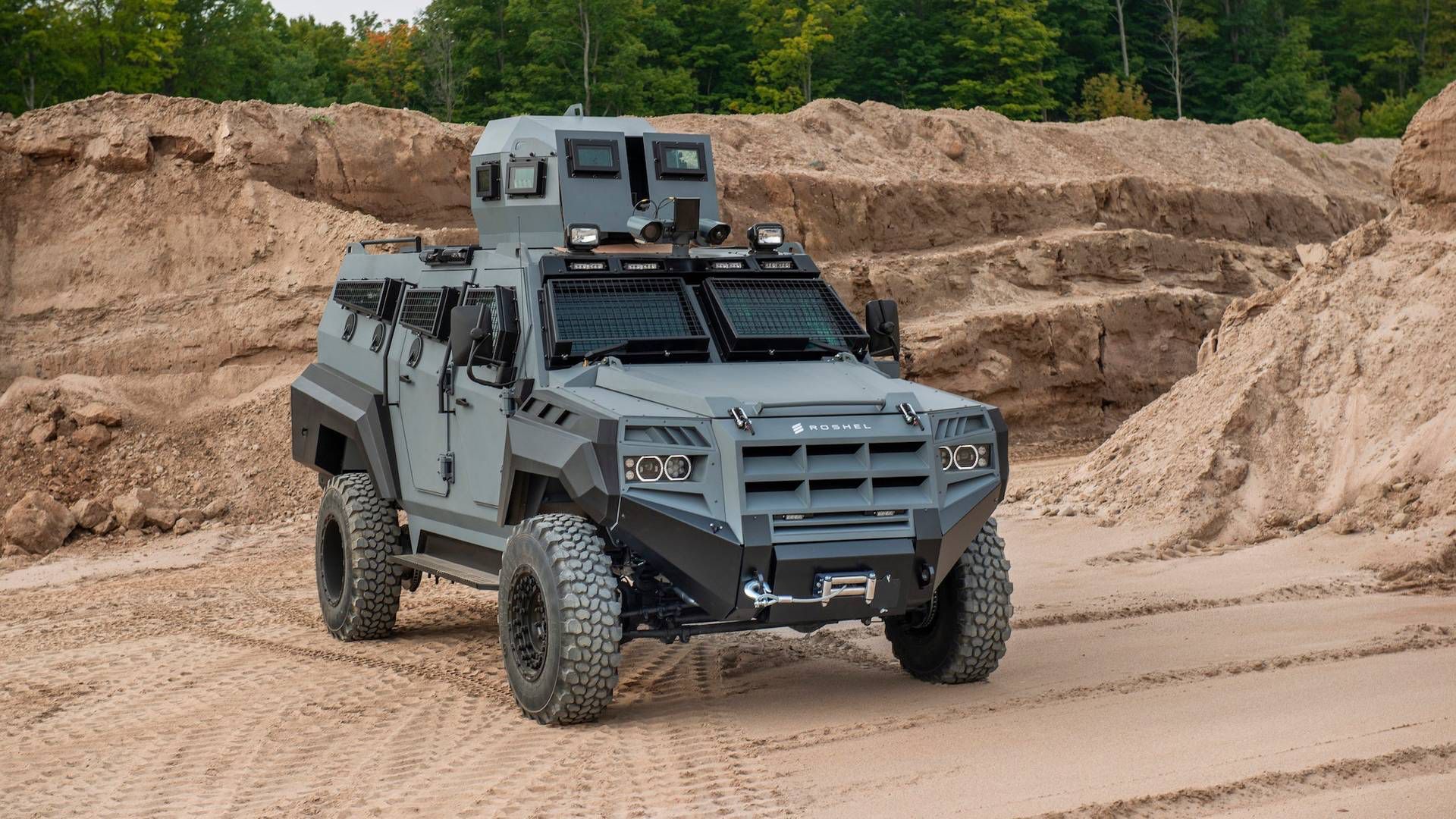
The Roshel Admiral MRAP is a Canadian mine-resistant ambush-protected armored vehicle developed by Roshel. It combines a box-shaped armored body with a V-shaped hull intended to reduce the effects of mine and improvised explosive device blasts on the occupants.
The vehicle uses four-wheel drive, high ground clearance and a 5.9 L turbocharged diesel engine for mobility on difficult terrain. Its published configuration provides seating for 9+2 occupants and an operational range of up to 545 km.
The Admiral MRAP is a distinct vehicle within Roshel's armored vehicle range. It should not be confused with the Mamba or with the separately developed Senator MRAP.
Development
Roshel previously used the Admiral name for a larger protected mobility vehicle concept that formed part of an earlier armored vehicle lineup alongside the Senator and Partisan. That earlier Admiral was intended as a modular platform for military, security and law-enforcement roles, but available evidence indicates that it remained at the concept stage and disappeared from the company's lineup after 2021.
A new vehicle carrying the Admiral MRAP designation appeared publicly in 2026. By September 2026, the vehicle had been photographed and was listed by Roshel as the Admiral MRAP. The later vehicle has a visibly different mine-protected configuration centered on a pronounced V-shaped lower hull.
The Admiral MRAP subsequently completed blast testing to STANAG 4569 AEP-55 Volume 2 Level 2a/2b standards. The testing included ballistic and blast evaluations conducted by Oregon Ballistic Laboratories.
Design
The Admiral MRAP uses a high-clearance four-wheel-drive layout and a box-shaped armored personnel compartment. The lower body incorporates a V-shaped hull. This geometry is intended to redirect blast pressure and fragments away from the crew compartment when a mine or improvised explosive device detonates beneath the vehicle.
The vehicle measures 6,135 mm in length, 2,644 mm in width and 2,800 mm in height. Its wheelbase is 3,398 mm, while ground clearance is stated as up to 550 mm. The approach angle is 45 degrees and the departure angle is 35 degrees.
Powertrain and mobility
Power is provided by a 5.9 L inline six-cylinder diesel engine producing 240 hp at 2,700 rpm. Maximum torque is approximately 809 N·m (597 lb·ft) between 1,200 and 2,100 rpm. The engine is connected to a six-speed automatic transmission and a 4x4 drivetrain.
Fuel capacity is listed as up to 230 L. The published operational range is up to 545 km.
Protection
The V-shaped hull is the central blast-protection feature of the Admiral MRAP. Its shape is intended to deflect blast energy and fragments toward the sides of the vehicle rather than directly into the occupied compartment. The Admiral MRAP has passed tests conducted to STANAG 4569 AEP-55 Volume 2 Level 2a/2b requirements.
Occupants and configuration
The published seating capacity is 9+2 occupants. Roshel presents the Admiral MRAP as a modular platform, although the available technical material does not identify specific production variants of the MRAP configuration.
Program status
The Admiral MRAP was publicly identifiable as a physical vehicle by 2026 and was listed by Roshel as part of its defense vehicle range. Published material describes the platform as intended for operations where protection against mines, explosive devices and ambushes is required. No specific operator, production quantity or service-entry date for the Admiral MRAP is established by the available evidence.
Specifications (Admiral MRAP)
General characteristics
- Type: Mine-resistant ambush-protected armored vehicle
- Drive: 4x4
- Seating capacity: 9+2
- Length: 6,135 mm
- Width: 2,644 mm
- Height: 2,800 mm
- Wheelbase: 3,398 mm
- Ground clearance: Up to 550 mm
- Approach angle: 45 degrees
- Departure angle: 35 degrees
Powerplant and mobility
- Engine: 5.9 L inline six-cylinder diesel
- Power: 240 hp at 2,700 rpm
- Torque: Approximately 809 N·m (597 lb·ft) at 1,200-2,100 rpm
- Transmission: Six-speed automatic
- Fuel capacity: Up to 230 L
- Operational range: Up to 545 km
Protection
- Hull: V-shaped blast-deflecting structure
- Blast testing: STANAG 4569 AEP-55 Volume 2 Level 2a/2b
 Argentina
 Armenia
 Australia
 Austria
 Austria-Hungary
 Belgium
 Brazil
 United Kingdom
 United States
 Brunei
 Bulgaria
 Chile
Chile China
China Colonial America
 Colombia
 Confederate States
 Croatia
 Czech
Czech Denmark
 Egypt
Egypt Finland
 France
 Georgia
 Germany
 German Imperial
 Greece
 Holland
 Hungary
 India
India Indonesia
 Iran
Iran Iraq
Iraq Ireland
 Israel
 Italy
Italy Japan
Japan Japan (1940)
 Jordan
 Kingdom of Italy
 Malaysia
 Mexico
 Myanmar
 Nazi Germany
 Netherlands
 New Zealand
 North Korea
 Norway
 Pakistan
 Peru
Peru Philippines
 Poland
 Portugal
 Prussia
 Romania
 Russia
 Saudi Arabia
 Serbia
 Singapore
 Slovakia
 Slovenia
 South Africa
 South Korea
 Soviet Union
 Spain
Spain Sweden
 Switzerland
 Syria
Syria Taiwan
 Thailand
 Turkey
 UAE
UAE Ukraine
 Vietnam
 Yugoslavia