
History
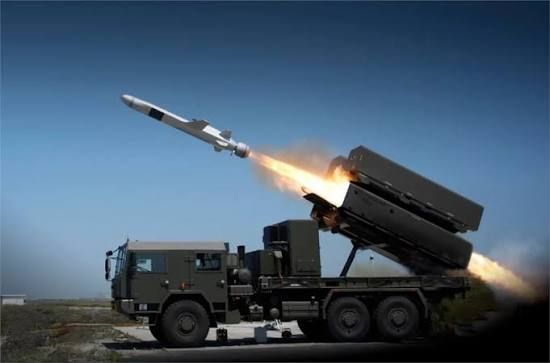
The Kongsberg Naval Strike Missile Launcher Unit is the physical launcher element used with the Naval Strike Missile anti-ship weapon system. The launcher operates as part of a wider weapon system that includes a dedicated fire-control system.
The Naval Strike Missile was developed in Norway for use from multiple platform types, including warships and land-based coastal-defense systems. This platform flexibility has resulted in several launcher installations while retaining the same missile family.
In September 2026, the U.S. Marine Corps awarded Kongsberg Defence & Aerospace a firm-fixed-price contract for full-rate production and support of Naval Strike Missile Launcher Units and their associated fire-control system. The contract has a stated potential value of up to $404.4 million.
Development and fielding
Serial production of the Naval Strike Missile began under an initial production contract signed in 2007. Land-based launcher configurations subsequently became an important part of the system. Poland completed a Naval Strike Missile coastal-defense division in 2013 that included six launcher vehicles, while the planned full division comprised 12 launchers carrying four missiles each.
The missile was also adapted to shipboard launching installations. A Naval Strike Missile was tested from the littoral combat ship USS Coronado in September 2014, and the U.S. Navy selected the missile in 2018 for its over-the-horizon anti-surface weapon requirement. The initial U.S. Navy package included encanistered missiles installed in launching mechanisms and a fire-control suite.
For the U.S. Marine Corps, the launcher became a component of the Navy/Marine Expeditionary Ship Interdiction System, or NMESIS. In this configuration, the Naval Strike Missile launcher unit is installed on an unmanned JLTV-based mobile launch platform, allowing the missile to be employed from land against maritime targets.
The September 2026 contract moved the U.S. Marine Corps launcher program into full-rate production and included continuing support for both the launcher units and the fire-control system.
Design
The Naval Strike Missile Launcher Unit is the physical launching component of the weapon system and is distinct from the missile itself. Its configuration depends on the host platform, with installations demonstrated on surface warships and land-based coastal-defense vehicles.
In U.S. Marine Corps NMESIS service, the launcher unit is integrated with an unmanned JLTV-based mobile platform. This arrangement provides a road-mobile launch capability for coastal anti-ship operations. Engagement control is provided by the associated Naval Strike Missile fire-control system procured alongside the launcher units.
The launcher is designed around the Naval Strike Missile family. The missile is a high-subsonic precision weapon intended for attacks against sea and land targets and can be launched from a variety of platforms. The launcher therefore forms one element of a broader modular weapon architecture rather than a standalone missile system.
Program status
By September 2026, the U.S. Marine Corps had placed the Naval Strike Missile Launcher Unit into full-rate production and support under its contract with Kongsberg Defence & Aerospace. The launcher supports the Marine Corps NMESIS concept, which uses mobile land-based Naval Strike Missiles for maritime interdiction.
Specifications (U.S. Marine Corps NSM Launcher Unit)
General characteristics
- Type: Mobile land-based anti-ship missile launcher
- Manufacturer: Kongsberg Defence & Aerospace
- Missile: Naval Strike Missile
- Platform integration: Unmanned JLTV-based mobile launch platform as part of NMESIS
- Fire control: Dedicated Naval Strike Missile fire-control system procured with the launcher unit
- Production status: Full-rate production for the U.S. Marine Corps under the 2026 contract
 Argentina
 Armenia
 Australia
 Austria
 Austria-Hungary
 Belgium
 Brazil
 United Kingdom
 United States
 Brunei
 Bulgaria
 Canada
 Chile
Chile China
China Colonial America
 Colombia
 Confederate States
 Croatia
 Czech
Czech Denmark
 Egypt
Egypt Finland
 France
 Georgia
 Germany
 German Imperial
 Greece
 Holland
 Hungary
 India
India Indonesia
 Iran
Iran Iraq
Iraq Ireland
 Israel
 Italy
Italy Japan
Japan Japan (1940)
 Jordan
 Kingdom of Italy
 Malaysia
 Mexico
 Myanmar
 Nazi Germany
 Netherlands
 New Zealand
 North Korea
 Pakistan
 Peru
Peru Philippines
 Poland
 Portugal
 Prussia
 Romania
 Russia
 Saudi Arabia
 Serbia
 Singapore
 Slovakia
 Slovenia
 South Africa
 South Korea
 Soviet Union
 Spain
Spain Sweden
 Switzerland
 Syria
Syria Taiwan
 Thailand
 Turkey
 UAE
UAE Ukraine
 Vietnam
 Yugoslavia