
History
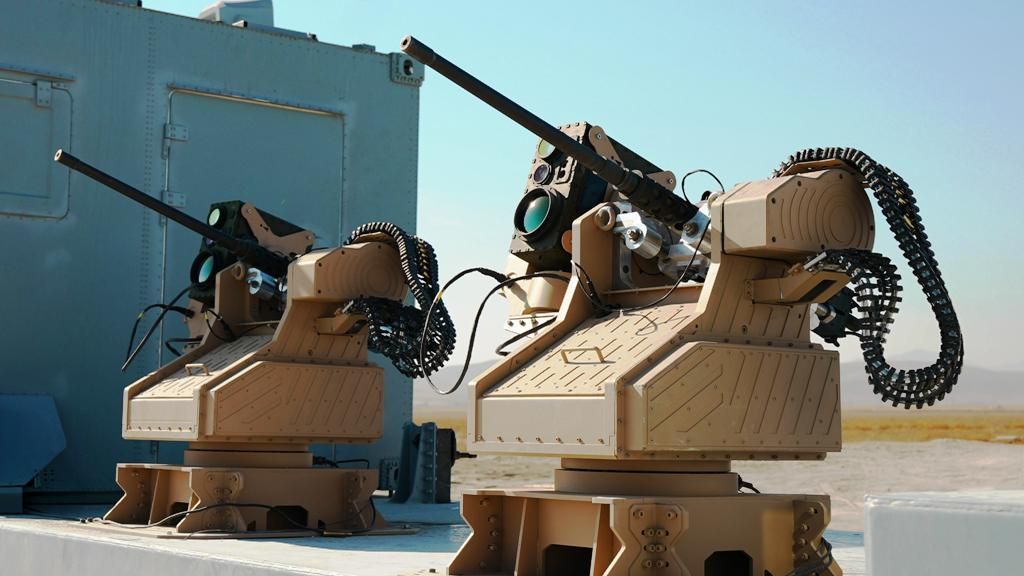
MKE TOLGA is a Turkish modular short-range air-defense and counter-unmanned aircraft system developed to counter mini- and micro-UAVs, tactical drones, smart munitions, and low-flying cruise missiles. The architecture combines radar and electro-optical detection, electronic warfare, command-and-control functions, and several kinetic effectors.
TOLGA is intended to provide layered protection for land forces, critical facilities, bases, mobile convoys, and other defended sites. Its modular design allows components to be installed at fixed positions or integrated with mobile, armored, unarmored, and naval platforms.
The first documented live-fire test of the complete TOLGA system took place at Türkiye's Karapınar Firing, Test, and Evaluation Center in November 2025. Eight scenarios were conducted against hostile drones, including a soft-kill engagement and several gun-based interceptions. All test scenarios were completed successfully, and MKE stated afterward that the infrastructure required for serial production had been completed.
During the soft-kill test, a drone approximately 3 km away was detected by the mobile radar station and defeated through disruption of its control links. Hard-kill scenarios used rotary and QCB 12.7 mm weapon systems and a 20 mm gun against fixed-wing UAVs and FPV drones with dedicated anti-drone ammunition.
In 2026, TOLGA became the basis of expanded Turkish-Polish industrial cooperation. MKE and Poland's Polska Grupa Zbrojeniowa signed a memorandum at MSPO 2026 covering integration, non-kinetic counter-drone technologies, interoperability, and potential joint work for Polish, Turkish, and export requirements. The memorandum did not constitute a Polish procurement order or a NATO acquisition decision, and no Polish purchase quantity was announced.
Design
TOLGA uses a layered architecture in which sensors, electronic warfare equipment, command-and-control functions, and multiple effectors can be combined according to the defended site and expected threat. This approach allows the system to use non-kinetic measures against suitable targets while retaining guns and other hard-kill effectors for threats that cannot be defeated electronically.
Sensors and command and control
The system includes radar, electro-optical sensors, and electronic warfare equipment. MKE states that TOLGA can detect hostile drones at distances of up to 10 km. The broader architecture includes the GÖKBÖRÜ AESA radar and electro-optical tracking equipment for target detection and tracking.
The TOLGA command-and-control unit centralizes target detection, tracking, identification, engagement decisions, and firing management. It can be operated remotely and supports manual, semi-autonomous, and fully autonomous mission modes.
Electronic warfare
A jammer provides the principal soft-kill option by disrupting radio-frequency control and communication links used by remotely operated drones. This allows selected targets to be defeated without expenditure of gun ammunition. The 2025 live-fire test demonstrated a successful soft-kill engagement against a drone at approximately 3 km.
Gun effectors and ammunition
TOLGA uses several gun calibers to create overlapping engagement zones. The 12.7 mm weapon systems have an effective anti-drone range of up to 300 m. The 20 mm weapon extends the engagement range to approximately 1,000 m, while the 35 mm system reaches approximately 3,000 m.
Dedicated anti-drone ammunition is designed to detonate at an optimized time and distance and disperse a dense cloud of metal fragments around the target. This increases the probability of damaging small UAVs without requiring a direct projectile impact. The ammunition family includes dedicated rounds for the 12.7 mm, 20 mm, and 35 mm weapon layers.
Additional effectors
The wider TOLGA architecture has also been described with a 20 kW fiber laser providing dazzling, blocking, and destructive modes, and with the electro-optically guided ENFAL interceptor missile. The available information does not establish the operational fielding scale of these elements, so they should be distinguished from the gun, sensor, jammer, and command components demonstrated during the 2025 live-fire test.
Program status
Following the November 2025 live-fire test, MKE stated that production infrastructure for TOLGA had been completed and described the system as ready for serial production. The system continued to be demonstrated internationally during 2026 as Türkiye pursued cooperation with allied defense industries.
The 2026 MKE-PGZ memorandum created a framework for integrating Turkish and Polish short-range air-defense and counter-UAS technologies. The work emphasizes kinetic and non-kinetic defenses against low-altitude threats and potential interoperability with existing national air-defense systems. No confirmed Polish fielding quantity or NATO deployment decision has been announced under the agreement.
Specifications (MKE TOLGA SHORAD/C-UAS architecture)
General characteristics
- Type: Modular short-range air-defense and counter-unmanned aircraft system
- Developer: Makine ve Kimya Endüstrisi
- Primary roles: Counter-UAS and short-range protection against low-altitude aerial threats
- Target set: Mini- and micro-UAVs, tactical drones, smart munitions, and cruise missiles
- Installation options: Fixed sites, mobile platforms, armored and unarmored vehicles, and naval platforms
- Drone detection range: Up to 10 km in the stated system configuration
- Sensors: Radar and electro-optical tracking equipment
- Soft-kill system: Radio-frequency jammer
- Command modes: Manual, semi-autonomous, and fully autonomous
Armament and effectors
- 12.7 mm systems: QCB and rotary weapon systems with dedicated anti-drone ammunition; effective range up to 300 m
- 20 mm system: Gun with fragmenting anti-drone ammunition; effective range up to 1,000 m
- 35 mm system: Gun with anti-drone fragmentation ammunition; effective range up to 3,000 m
- Laser: 20 kW fiber laser described for the broader architecture; fielding scale not established
- Missile: ENFAL electro-optically guided interceptor described for the broader architecture; fielding scale not established
 Argentina
 Armenia
 Australia
 Austria
 Austria-Hungary
 Belgium
 Brazil
 United Kingdom
 United States
 Brunei
 Bulgaria
 Canada
 Chile
Chile China
China Colonial America
 Colombia
 Confederate States
 Croatia
 Czech
Czech Denmark
 Egypt
Egypt Finland
 France
 Georgia
 Germany
 German Imperial
 Greece
 Holland
 Hungary
 India
India Indonesia
 Iran
Iran Iraq
Iraq Ireland
 Israel
 Italy
Italy Japan
Japan Japan (1940)
 Jordan
 Kingdom of Italy
 Malaysia
 Mexico
 Myanmar
 Nazi Germany
 Netherlands
 New Zealand
 North Korea
 Norway
 Pakistan
 Peru
Peru Philippines
 Poland
 Portugal
 Prussia
 Romania
 Russia
 Saudi Arabia
 Serbia
 Singapore
 Slovakia
 Slovenia
 South Africa
 South Korea
 Soviet Union
 Spain
Spain Sweden
 Switzerland
 Syria
Syria Taiwan
 Thailand
 UAE
UAE Ukraine
 Vietnam
 Yugoslavia