
History
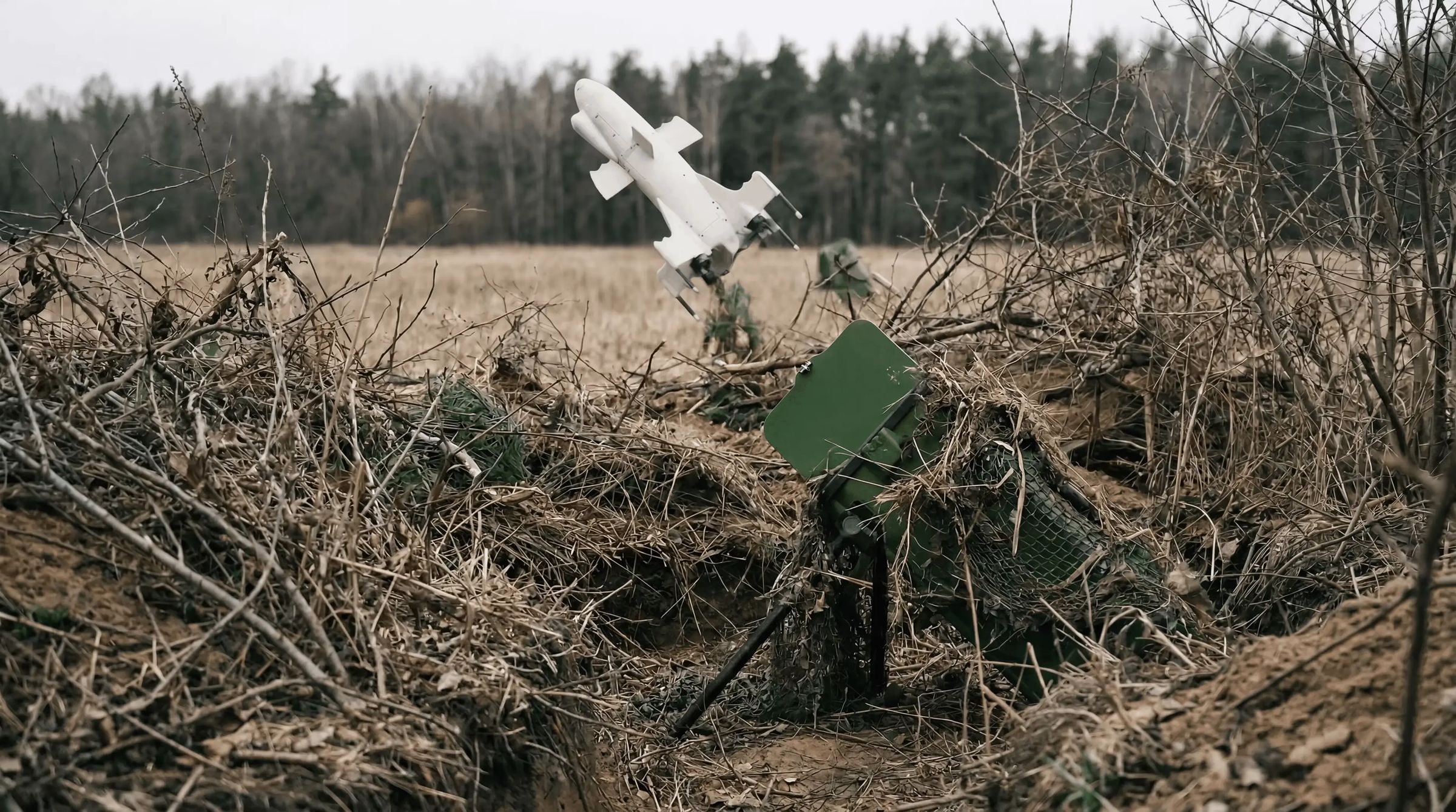
THYRA Neptor is a German counter-UAS interceptor drone developed to defeat unmanned aerial vehicles with a lightweight, autonomous airborne effector. The system combines thermal target acquisition with autonomous interception and is intended for short-range protection against reconnaissance drones and one-way attack UAVs.
Neptor has a stated maximum speed of 350 km/h (217 mph), a maximum take-off weight of 3.2 kg (7.1 lb), a payload of 0.5 kg (1.1 lb), and a stated range of up to 24 km (14.9 mi). THYRA developed the system around mobile and remotely operated deployment concepts intended to provide a scalable response to repeated drone attacks.
The system was publicly displayed at Euro Defence Expo 2026 in Essen, Germany. THYRA presented Neptor together with dedicated launch equipment and stated that development and production take place entirely in Germany.
Development
Neptor was developed as a lower-cost counter-drone interceptor intended to reduce dependence on conventional surface-to-air missiles when engaging inexpensive unmanned aircraft. Its design emphasizes high speed, autonomous terminal interception, mobility, and the ability to deploy multiple interceptors around defended forces or infrastructure.
At the 2026 exhibition, THYRA showed two launch concepts. One configuration used a man-portable launcher. An operator could designate and lock the target before launch, after which Neptor was intended to conduct the interception autonomously. A second configuration used a stationary remote launcher that could remain ready on battery power and launch from a concealed position without requiring an operator to remain beside the equipment.
Design
Neptor is an unmanned aerial interceptor that uses another aircraft as the kinetic effector against hostile drones. Its maximum take-off weight is 3.2 kg (7.1 lb), including a stated payload capacity of 0.5 kg (1.1 lb). The system is designed for rapid interception rather than prolonged surveillance or strike missions.
Target acquisition and interception
Neptor uses thermal detection for aerial target acquisition. In the man-portable configuration, the operator designates the target before launch using a lock-before-launch process. The interceptor then carries out the engagement autonomously, reducing the need for manual piloting during the terminal phase.
The stated maximum speed of 350 km/h (217 mph) is intended to provide sufficient closing speed against small unmanned aircraft. THYRA presented the system for use against reconnaissance drones and one-way attack UAVs, including threats approaching maneuver units, forward positions, and critical infrastructure.
Launch configurations
The man-portable launcher is intended for mobile units requiring a compact counter-UAS capability. The remotely operated stationary launcher is intended for fixed-site protection and can be positioned away from the operator. This arrangement supports distributed deployment around locations such as airfields, ammunition storage sites, headquarters, radar positions, and logistics facilities.
Program status
Neptor was publicly presented in Germany in 2026 as a complete counter-drone system consisting of the interceptor and dedicated launch equipment. The available information describes a developed and displayed system, but does not establish operational service, procurement quantities, combat use, or a production rate.
THYRA states that Neptor is developed and produced in Germany. The system is positioned as a lower-cost layer within counter-UAS defenses, complementing rather than replacing conventional missiles, guns, electronic warfare systems, and other air-defense effectors.
Variants
- Man-portable launch configuration: Uses an operator-designated lock-before-launch process followed by autonomous interception.
- Stationary remote-launch configuration: Uses a remotely positioned launcher that can remain ready on battery power and launch from a concealed location without an operator stationed beside it.
Specifications (Neptor)
General characteristics
- Type: Counter-UAS interceptor drone
- Maximum take-off weight: 3.2 kg (7.1 lb)
- Payload: 0.5 kg (1.1 lb)
- Target acquisition: Thermal detection
- Interception: Autonomous after target designation in the man-portable launch concept
Performance
- Maximum speed: 350 km/h (217 mph)
- Stated range: Up to 24 km (14.9 mi)
Deployment
- Launch options: Man-portable launcher or stationary remote launcher
- Intended targets: Reconnaissance drones and one-way attack UAVs
Pasted text
 Argentina
 Armenia
 Australia
 Austria
 Austria-Hungary
 Belgium
 Brazil
 United Kingdom
 United States
 Brunei
 Bulgaria
 Canada
 Chile
Chile China
China Colonial America
 Colombia
 Confederate States
 Croatia
 Czech
Czech Denmark
 Egypt
Egypt Finland
 France
 Georgia
 German Imperial
 Greece
 Holland
 Hungary
 India
India Indonesia
 Iran
Iran Iraq
Iraq Ireland
 Israel
 Italy
Italy Japan
Japan Japan (1940)
 Jordan
 Kingdom of Italy
 Malaysia
 Mexico
 Myanmar
 Nazi Germany
 Netherlands
 New Zealand
 North Korea
 Norway
 Pakistan
 Peru
Peru Philippines
 Poland
 Portugal
 Prussia
 Romania
 Russia
 Saudi Arabia
 Serbia
 Singapore
 Slovakia
 Slovenia
 South Africa
 South Korea
 Soviet Union
 Spain
Spain Sweden
 Switzerland
 Syria
Syria Taiwan
 Thailand
 Turkey
 UAE
UAE Ukraine
 Vietnam
 Yugoslavia