
History
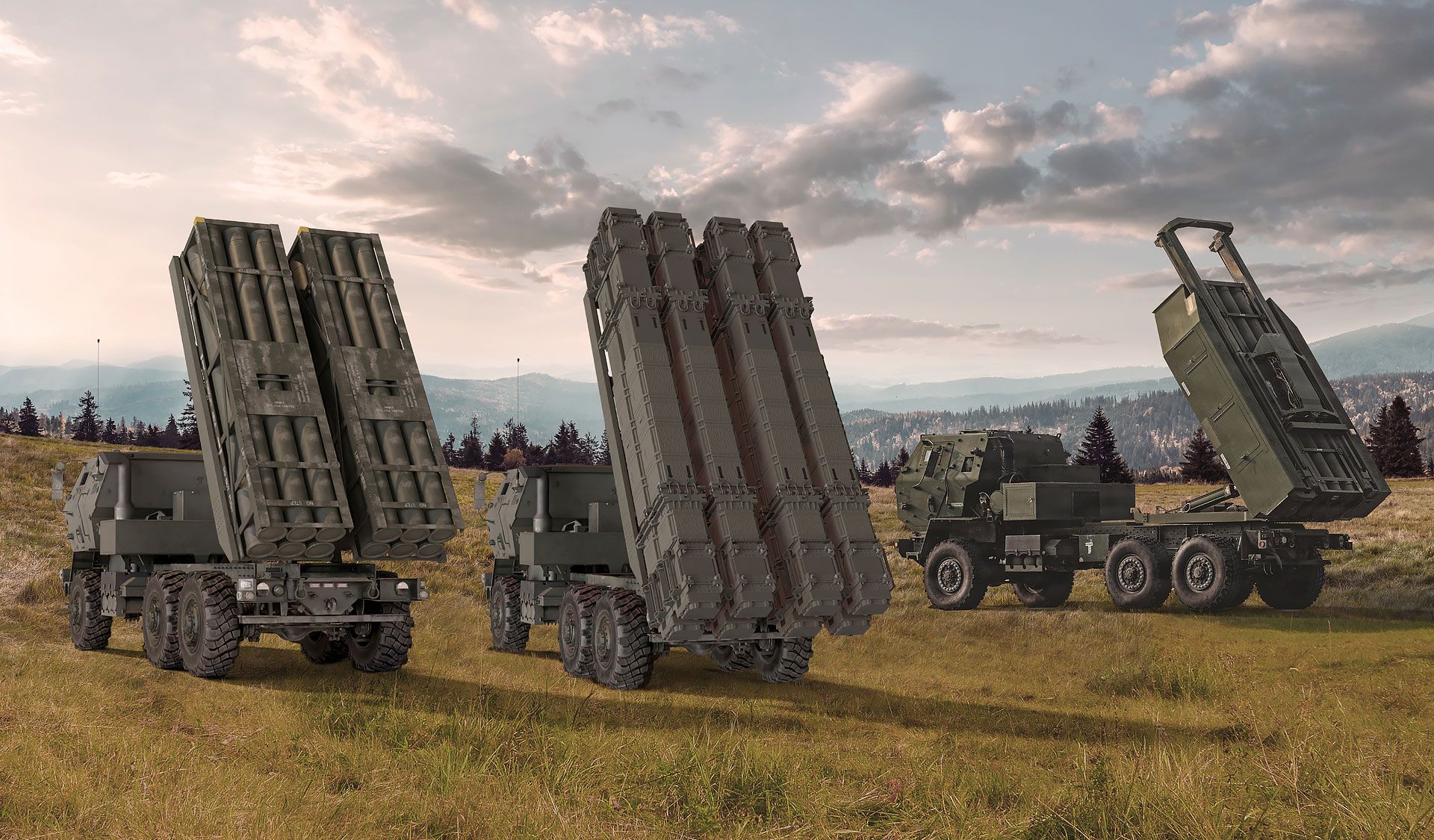
HIMARS FLEX was first unveiled on 16 June 2026 at Eurosatory in Paris by Lockheed Martin as a modular evolution of the M142 HIMARS. The system builds on the HIMARS architecture, which has accumulated more than 2.5 million operating hours worldwide. On 9 October 2026, Lockheed Martin emphasized the system's doubled firepower in a public video and unveiled PAC-3 Edge, its next-generation interceptor candidate for the U.S. Army's Future Interceptor program, specifically naming HIMARS FLEX among the platforms intended for integration. The system remains a developmental platform; Lockheed Martin has outlined PAC-3, IFPC, and future interceptor integration, but not all configurations are yet operationally fielded.
Design
HIMARS FLEX utilizes the FLEXFires technology ecosystem, a modular architecture allowing operators to configure the platform as either a single-pod baseline equivalent to the original HIMARS or a dual-pod “FLEX” loadout delivering double the offensive firepower. The system supports multiple platform options, including mobile truck-mounted configurations and containerized variants for dispersed or semi-concealed deployment. Optional autonomous capabilities are available within the FLEXFires suite, and the system integrates into joint fire-control networks for participation in wider NATO sensor and targeting architectures.
Specifications
HIMARS FLEX is built on the XM1140 chassis and is C-130 transportable, with compatibility for the larger C-17 Globemaster III for strategic airlift. The dual-pod configuration doubles offensive firepower compared to the single-pod baseline. Depending on mission configuration, the dual-pod platform can carry 12 GMLRS or ER GMLRS rockets, 4 Precision Strike Missiles (PrSM), 2 ATACMS missiles, 8 PAC-3 interceptors, or 12 or more IFPC interceptors. All offensive munitions are compatible with NATO-standard inventories, and the system can be configured for air and missile defense roles using PAC-3, IFPC, and future interceptor types.
 Argentina
 Armenia
 Australia
 Austria
 Austria-Hungary
 Belgium
 Brazil
 United Kingdom
 Brunei
 Bulgaria
 Canada
 Chile
Chile China
China Colonial America
 Colombia
 Confederate States
 Croatia
 Czech
Czech Denmark
 Egypt
Egypt Finland
 France
 Georgia
 Germany
 German Imperial
 Greece
 Holland
 Hungary
 India
India Indonesia
 Iran
Iran Iraq
Iraq Ireland
 Israel
 Italy
Italy Japan
Japan Japan (1940)
 Jordan
 Kingdom of Italy
 Malaysia
 Mexico
 Myanmar
 Nazi Germany
 Netherlands
 New Zealand
 North Korea
 Norway
 Pakistan
 Peru
Peru Philippines
 Poland
 Portugal
 Prussia
 Romania
 Russia
 Saudi Arabia
 Serbia
 Singapore
 Slovakia
 Slovenia
 South Africa
 South Korea
 Soviet Union
 Spain
Spain Sweden
 Switzerland
 Syria
Syria Taiwan
 Thailand
 Turkey
 UAE
UAE Ukraine
 Vietnam
 Yugoslavia