
History
The L3Harris Next Generation Interceptor Stage 2 Rocket Motor is a solid rocket motor developed as the second-stage propulsion system for Lockheed Martin's Next Generation Interceptor, or NGI. The interceptor is being developed for the Ground-Based Midcourse Defense architecture.
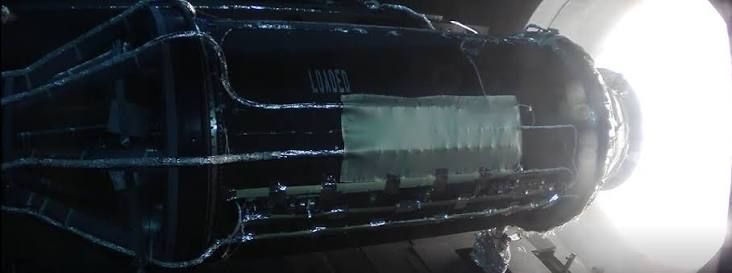
L3Harris Technologies builds the Stage 2 motor as part of its propulsion work for the NGI program. In August 2026, the motor completed a full-duration static-fire test in a high-vacuum chamber designed to reproduce conditions associated with low-Earth orbit.
The test was a development milestone rather than an operational deployment. Lockheed Martin stated that the resulting data would support the final interceptor design, integration work and progress toward Critical Design Review, while NGI fielding remained planned for 2030.
Development and testing
Lockheed Martin leads development of the Next Generation Interceptor, while L3Harris Technologies provides major propulsion and control-system elements. L3Harris produces the interceptor's Stage 1 and Stage 2 advanced large solid rocket motors. The Stage 2 motor provides propulsion during the interceptor's second stage.
A separate structural burst test was conducted on the second-stage motor case during development. According to a report on the burst test, engineers pressurized the motor case beyond expected launch conditions. The test was intended to verify the structure's ability to tolerate the loads associated with launch and powered flight.
Lockheed Martin announced the successful Stage 2 static-fire test on August 10, 2026. The company announcement stated that the test took place inside a high-vacuum chamber replicating low-Earth-orbit conditions. The motor completed a full-duration firing, and the test confirmed key performance parameters including thrust, chamber pressure and combustion stability.
The firing also evaluated the motor under the thermal and pressure stresses expected during an interceptor mission. Independent reports from the Huntsville Business Journal and Defence Industry Europe described the same high-vacuum, full-duration test and the validation of thrust, chamber pressure and combustion stability. The Lockheed Martin release was also distributed through PR Newswire.
Lockheed Martin described the successful firing as a milestone on the path to Critical Design Review. Data from the test was intended to inform the final interceptor design and support integration with the Ground-Based Midcourse Defense architecture. The company continued to describe 2030 as the planned fielding target for NGI.
Design
The Stage 2 unit is a solid rocket motor designed specifically for the second propulsion stage of the Next Generation Interceptor. L3Harris manufactures both the Stage 1 and Stage 2 advanced large solid rocket motors used by the interceptor.
The motor is designed to operate under the thermal and pressure conditions expected during the NGI mission. Its 2026 development firing was conducted in a high-vacuum environment rather than normal atmospheric conditions so that the motor could be evaluated under conditions intended to represent the environment encountered during the interceptor's later flight stages.
The static-fire program evaluated thrust, internal chamber pressure and combustion stability over a full-duration burn. These measurements provide engineering data for verification of the propulsion design and for integration of the Stage 2 motor with the rest of the interceptor.
Motor case
The second-stage motor case was also subjected to structural testing. During the reported burst test, the case was pressurized beyond expected launch conditions before failure. The test was used to evaluate structural strength and the ability of the motor architecture to withstand the stresses associated with launch and flight.
Program status
As of August 2026, the Stage 2 motor remained part of the NGI development and qualification program. Its full-duration high-vacuum static-fire test had been completed successfully, but the Next Generation Interceptor had not yet entered operational service.
The Stage 2 firing supported progress toward Critical Design Review and subsequent interceptor integration and testing. Lockheed Martin and L3Harris continued development toward the NGI program's planned fielding in 2030. The supplied sources do not provide a confirmed date for the interceptor's first flight test.
Specifications (Next Generation Interceptor Stage 2 rocket motor)
General characteristics
- Type: Solid rocket motor
- Application: Second-stage propulsion for the Next Generation Interceptor
- Manufacturer: L3Harris Technologies
- Program lead: Lockheed Martin
Development testing
- Static-fire milestone: Full-duration firing completed in 2026
- Test environment: High-vacuum chamber replicating low-Earth-orbit conditions
- Validated parameters: Thrust, chamber pressure and combustion stability
- Environmental evaluation: Thermal and pressure stresses expected during interceptor missions
 Argentina
 Armenia
 Australia
 Austria
 Austria-Hungary
 Belgium
 Brazil
 United Kingdom
 Brunei
 Bulgaria
 Canada
 Chile
Chile China
China Colonial America
 Colombia
 Confederate States
 Croatia
 Czech
Czech Denmark
 Egypt
Egypt Finland
 France
 Georgia
 Germany
 German Imperial
 Greece
 Holland
 Hungary
 India
India Indonesia
 Iran
Iran Iraq
Iraq Ireland
 Israel
 Italy
Italy Japan
Japan Japan (1940)
 Jordan
 Kingdom of Italy
 Malaysia
 Mexico
 Myanmar
 Nazi Germany
 Netherlands
 New Zealand
 North Korea
 Norway
 Pakistan
 Peru
Peru Philippines
 Poland
 Portugal
 Prussia
 Romania
 Russia
 Saudi Arabia
 Serbia
 Singapore
 Slovakia
 Slovenia
 South Africa
 South Korea
 Soviet Union
 Spain
Spain Sweden
 Switzerland
 Syria
Syria Taiwan
 Thailand
 Turkey
 UAE
UAE Ukraine
 Vietnam
 Yugoslavia