
History
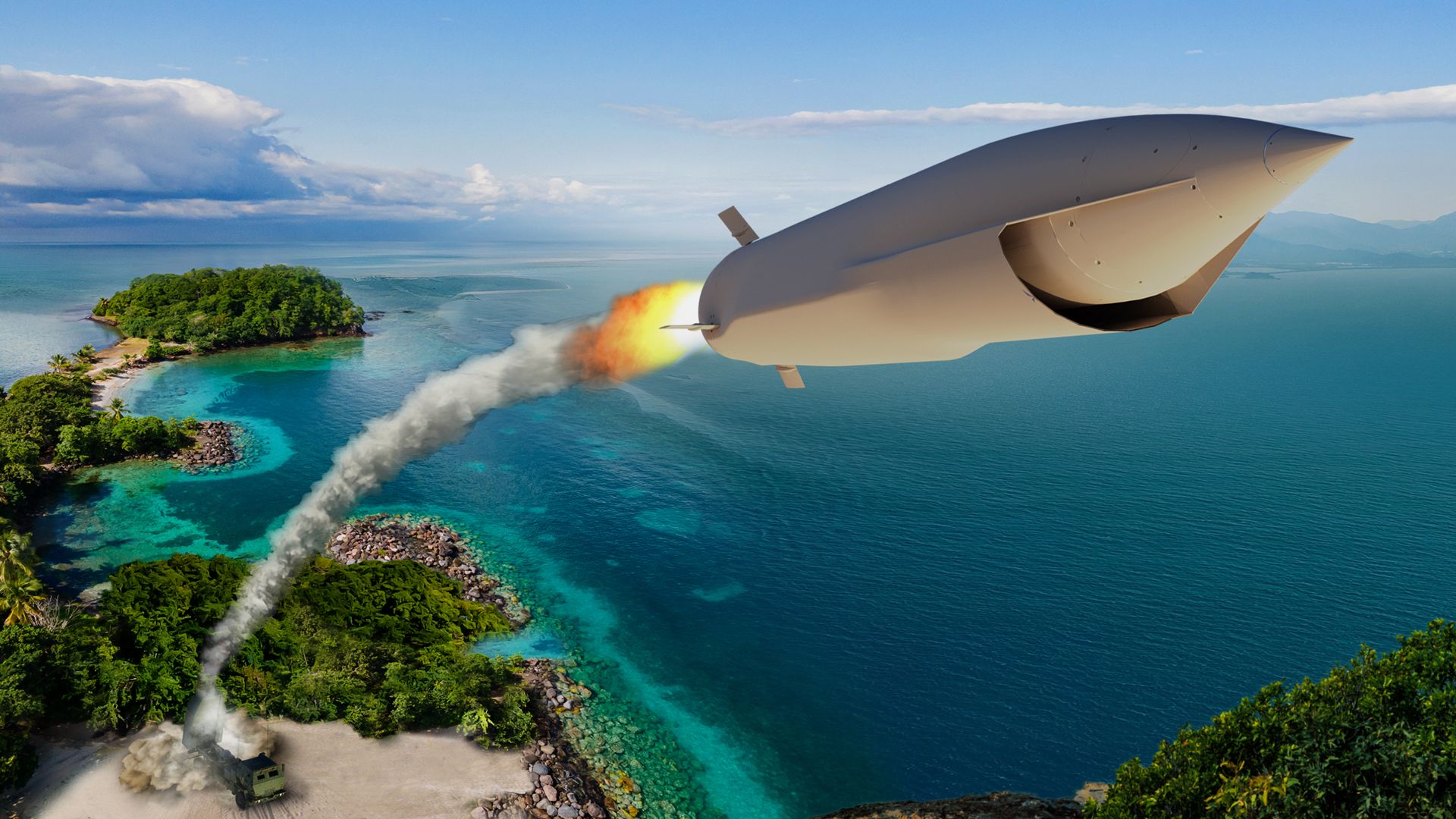
Lockheed Martin Precision Strike Missile Increment 2, commonly called PrSM Increment 2, is a U.S. Army surface-to-surface missile variant being developed to engage moving maritime and relocatable land targets. It builds on the Precision Strike Missile Increment 1 baseline while adding a multi-mode seeker for moving-target engagements.
The missile remains compatible with the M142 HIMARS and M270A2 launchers. This allows the Army to introduce maritime-strike capability through existing rocket-artillery formations rather than developing a separate coastal-defense launcher.
PrSM Increment 2 completed its first reported flight test on March 12, 2026. Lockheed Martin stated that the missile flew 350 km from a HIMARS launcher while exercising the new seeker and collecting performance data for system validation.
Development and first flight
PrSM was developed as the successor to the MGM-140 ATACMS family, with the newer missile using a smaller diameter that permits two missiles to be carried in each compatible launch pod instead of one ATACMS. Increment 2 retains the basic launcher architecture and common elements of the PrSM family while extending the target set to moving maritime and land targets.
During the first Increment 2 flight test, the missile was launched from an M142 HIMARS and traveled 350 km. According to Lockheed Martin, the test demonstrated the new multi-mode seeker and gathered performance data for continued validation. Breaking Defense reported that the program was still in technology maturation at that stage and that additional flight tests were planned during 2026.
Rapid Fielding transition
On September 3, 2026, the U.S. Army moved PrSM Increment 2 from the Major Capability Acquisition framework to the Middle Tier of Acquisition - Rapid Fielding pathway. The change was intended to accelerate delivery by carrying qualified Increment 1 hardware, software and accumulated test evidence into the Increment 2 program instead of repeating verification work for unchanged elements.
The Army cited technical maturity, production readiness and the operational threat environment as reasons for the transition. Development and verification consequently concentrate on the capabilities that differ from Increment 1, particularly seeker integration and engagement of moving targets.
Design
PrSM Increment 2 is based on the existing Precision Strike Missile architecture and is designed for launch from both M142 HIMARS and M270A2 launchers. Its smaller diameter relative to ATACMS permits two PrSM missiles in one launcher pod. A HIMARS can therefore carry two ready PrSM missiles, while an M270A2 equipped with two PrSM pods can carry four.
Guidance and seeker
The defining feature of Increment 2 is its multi-mode terminal seeker. The seeker is intended to acquire and home on moving maritime targets and relocatable land targets after launch, rather than relying only on coordinates established before launch. Military Times described the seeker as providing terminal guidance against fast-moving threats, including ships.
A secondary technical analysis published by Missile Matters describes the Increment 2 seeker as combining passive radio-frequency and imaging-infrared sensing. The supplied manufacturer excerpt confirms a multi-mode seeker but does not specify its individual sensing channels, so those details remain secondary-source reporting.
Maritime targeting
The seeker addresses only the terminal part of a long-range anti-ship engagement. At ranges of several hundred kilometers, the launching artillery unit requires external targeting information to place the missile in an area where its seeker can acquire the target. The source material describes aircraft, unmanned systems, ships, satellites and other surveillance assets as possible contributors to this sensor-to-shooter chain.
Target information must remain sufficiently current because a moving ship can travel a substantial distance between detection and missile arrival. Increment 2 is therefore intended to combine external pre-launch targeting data with autonomous terminal target acquisition and correction for movement after launch.
Range reporting
The first confirmed Increment 2 flight covered 350 km. The supplied secondary sources do not agree on the planned maximum range. Breaking Defense reports a combat reach of up to 500 km, while Missile Matters describes Increment 2 as reaching up to 1,000 km. Because the supplied Lockheed Martin material confirms the 350-km test but does not establish a definitive maximum operational range, no single maximum range is treated here as confirmed.
Program status
As of September 2026, PrSM Increment 2 was under development and had been moved to the U.S. Army Middle Tier of Acquisition - Rapid Fielding pathway. The supplied material does not establish that Increment 2 had entered operational service or been delivered to operational formations.
The Rapid Fielding approach is intended to overlap development, production preparation and operational feedback while reusing Increment 1 qualification evidence where appropriate. Further testing remains necessary for the new seeker, guidance functions and moving-target mission.
The system is being developed to give existing HIMARS and M270A2 formations an additional maritime-strike role without creating a separate missile-launcher fleet. Its practical effectiveness against ships also depends on external sensors, command networks and timely transfer of target data to the firing unit.
Specifications (PrSM Increment 2)
General characteristics
- Type: Surface-to-surface precision strike missile with moving-target and maritime-strike capability
- Developer: Lockheed Martin
- Primary customer: U.S. Army
- Compatible launchers: M142 HIMARS and M270A2
- Missiles per launch pod: Two
- Ready missiles on M142 HIMARS: Two
- Ready missiles on M270A2: Four when both launcher pods carry PrSM
Guidance and engagement
- Terminal guidance: Multi-mode seeker
- Intended target types: Moving maritime targets and relocatable land targets
- Demonstrated flight distance: 350 km during the first Increment 2 flight test on March 12, 2026
 Argentina
 Armenia
 Australia
 Austria
 Austria-Hungary
 Belgium
 Brazil
 United Kingdom
 Brunei
 Bulgaria
 Canada
 Chile
Chile China
China Colonial America
 Colombia
 Confederate States
 Croatia
 Czech
Czech Denmark
 Egypt
Egypt Finland
 France
 Georgia
 Germany
 German Imperial
 Greece
 Holland
 Hungary
 India
India Indonesia
 Iran
Iran Iraq
Iraq Ireland
 Israel
 Italy
Italy Japan
Japan Japan (1940)
 Jordan
 Kingdom of Italy
 Malaysia
 Mexico
 Myanmar
 Nazi Germany
 Netherlands
 New Zealand
 North Korea
 Norway
 Pakistan
 Peru
Peru Philippines
 Poland
 Portugal
 Prussia
 Romania
 Russia
 Saudi Arabia
 Serbia
 Singapore
 Slovakia
 Slovenia
 South Africa
 South Korea
 Soviet Union
 Spain
Spain Sweden
 Switzerland
 Syria
Syria Taiwan
 Thailand
 Turkey
 UAE
UAE Ukraine
 Vietnam
 Yugoslavia