
History
The MIM-104 Patriot entered full-rate production in September 1980, and the U.S. Army activated its first Patriot missile battalion in May 1982. The system first saw combat during the 1991 Gulf War, intercepting Iraqi Scud missiles while defending assets in Saudi Arabia, Kuwait, and Israel. The Netherlands became the first export customer, ordering four batteries in 1984.
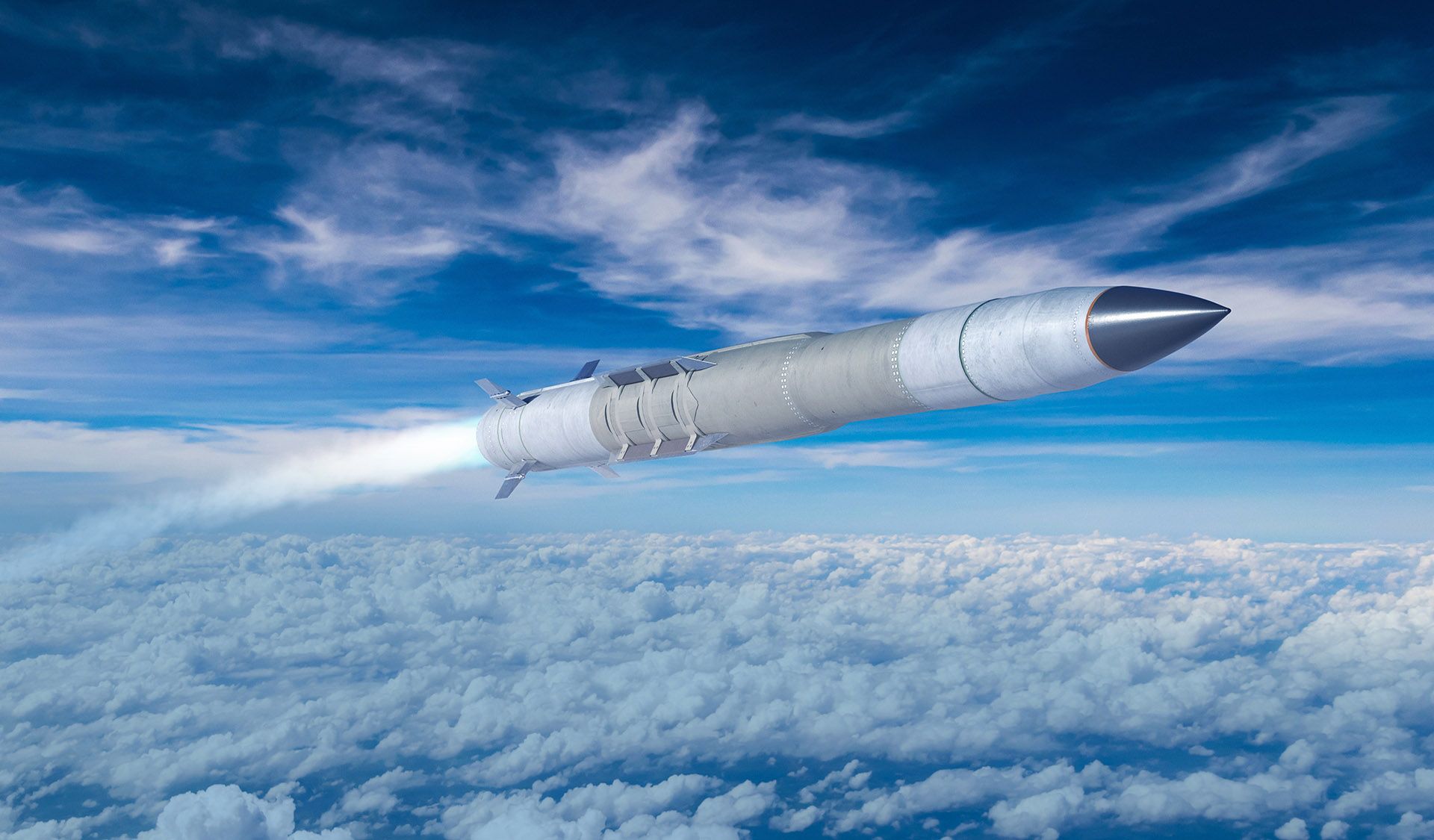
The PAC-3 is the fourth upgrade to the MIM-104 missile series. The U.S. Army accepted the first PAC-3 MSE interceptors on October 6, 2015, declared Initial Operating Capacity in August 2016, and the variant entered full-rate production in 2018. In November and August 2019, PAC-3 CRI missiles intercepted two tactical ballistic missiles and an air-breathing target at a record distance in separate tests. On June 25, 2020, a PAC-3 MSE successfully intercepted a tactical ballistic missile at White Sands Missile Range, New Mexico, verifying software and hardware component upgrades.
On October 27, 2026, the U.S. Department of War announced the selection of Poland to host a European PAC-3 Missile Maintenance Facility on the margins of NATO's Conference of National Armaments Directors meeting.
Design
The PAC-3 is a small, agile, kinetic hit-to-kill interceptor approximately one-quarter the size of its PAC-2 predecessor, allowing four missiles per canister compared to one PAC-2 and effectively quadrupling the area-coverage capacity of a Patriot launcher. One hundred eighty miniature pulse solid propellant rocket motors mounted in the forebody perform fine alignment of the interceptor to achieve hit-to-kill engagement. A Ka-band active radar seeker allows the missile to acquire its target during the terminal phase independently of the ground-station target acquisition system.
Variants
PAC-3 CRI (Cost Reduction Initiative) introduced hit-to-kill capability to the Patriot series. Appropriately modified Patriot launchers can carry 16 PAC-3 CRI interceptors.
PAC-3 MSE (Missile Segment Enhancement) achieves greater speed and maneuverability to defeat more advanced ballistic and cruise missiles. It features a larger dual-pulse solid rocket motor, larger fins, and upgraded actuators and thermal batteries. A Patriot launcher can carry 12 PAC-3 MSE missiles, or a combination of six MSE and eight CRI missiles.
Operators
PAC-3 CRI: Taiwan, Greece, Jordan, the Netherlands, Egypt, Saudi Arabia, Spain, Kuwait.
PAC-3 MSE: Romania, Poland, Sweden, Bahrain.
Both variants: Qatar, Japan, United Arab Emirates, Republic of Korea, Germany.
Specifications
Role: Area point defense; terminal-phase intercept.
Targets: Short- and medium-range ballistic missiles, cruise missiles, and air-breathing targets.
Range (against ballistic missiles): 20 km (PAC-3 CRI); 30 km (PAC-3 MSE).
Producer: Lockheed Martin.
Platform: Land-based; MIM-104 Patriot launcher.
Program Status
The planned PAC-3 Missile Maintenance Facility in Poland will perform onsite repair, refurbishment, lifecycle support, and re-certification of PAC-3 interceptors, reducing the turnaround time previously required by shipping missiles to the United States for service. Polish officials estimate the facility will cost around 1 billion zlotys (approximately $253 million) and take around a year to come online. No construction schedule, commissioning date, or precise location has been disclosed. The Pentagon and Lockheed Martin identified Germany, the Netherlands, and Sweden as competitors for the hosting role, while Polish Deputy Defense Minister Magdalena Sobkowiak-Czarnecka named Germany, the Netherlands, and Norway. Germany, the Netherlands, and Sweden will lead critical supply-chain integration for the facility.
In January 2026, Lockheed Martin announced a seven-year framework agreement intended to increase annual PAC-3 MSE production capacity from approximately 600 to 2,000 missiles. The U.S. government awarded Lockheed Martin $58.62 billion to continue accelerating PAC-3 MSE production. The initiative is linked to defense industrial commitments made at the July 2026 Ankara NATO Summit under the "NATO 3.0" framework. The facility remains a planned capability, not yet operational.
 Argentina
 Armenia
 Australia
 Austria
 Austria-Hungary
 Belgium
 Brazil
 United Kingdom
 Brunei
 Bulgaria
 Canada
 Chile
 China
 Colonial America
 Colombia
 Confederate States
 Croatia
 Czech
 Denmark
 Egypt
 Finland
 France
 Georgia
 Germany
 German Imperial
 Greece
 Holland
 Hungary
 India
 Indonesia
 Iran
 Iraq
 Ireland
 Israel
 Italy
 Japan
 Japan (1940)
 Jordan
 Kingdom of Italy
 Malaysia
 Mexico
 Myanmar
 Nazi Germany
 Netherlands
 New Zealand
 North Korea
 Norway
 Pakistan
 Peru
 Philippines
 Poland
 Portugal
 Prussia
 Romania

 Russia
 Saudi Arabia
 Serbia
 Singapore
 Slovakia
 Slovenia
 South Africa
 South Korea
 Soviet Union
 Spain
 Sweden
 Switzerland
 Syria
 Taiwan
 Thailand
 Turkey
 UAE
 Ukraine
 Vietnam
 Yugoslavia