


History
Spurred by the rapid expansion of the Japanese Empire across the Pacific in the 1930s and by concerns about its overseas holdings in that part of the world, the Dutch state launched a new shipbuilding programme at the two-man De Zeven in the second half of the resulting decade Provincial light cruiser. Cruisers remained popular as warships during this period of naval history, with all major naval powers adopting some form of ship type during the Cold War (1947-1991).
The light classification simply indicates lighter displacement and, in some cases, more compact dimensions, while retaining the armor belts and decks of her full-fledged armored cruiser cousin.
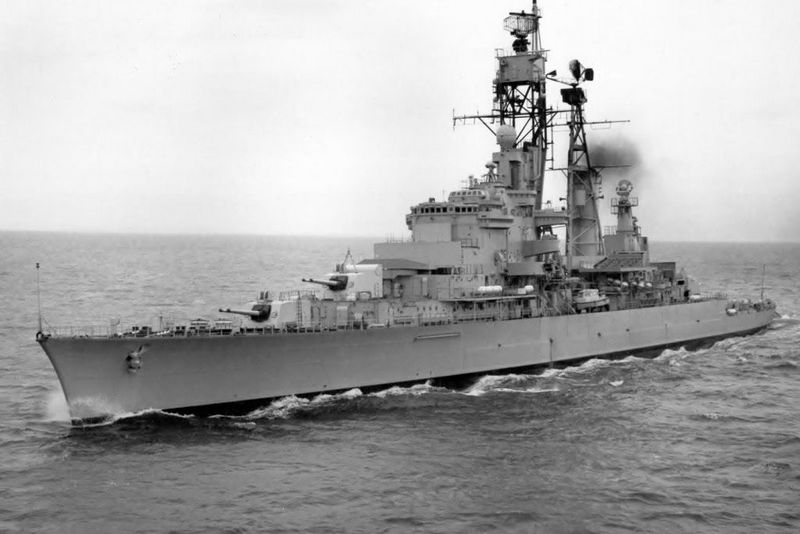
The two De Zeven Provincien class ships themselves became HNLMS De Zeven Provincien (C802) and sister ship HNLMS De Ruyter (C801). The latter battleship was laid from the Wilton-Feyenoord in Sidane on September 5, 1939, during World War II (1939-1945) with the German invasion of Poland on September 1 of the same year And opened the curtain.
She was launched on December 19, 1941, but the fall of the Netherlands in May 1940 meant that Druidt had no time to join her defense - so she would not be able to serve until long after the war, what happened on November 18, 1953 year.
This class replaces the old Tromp class, which consisted of two "Flottilla Leader" surface ships, which appeared in the mid-1930s. The De Zeven Provincien class itself was replaced by the new Tromp class frigates that arrived in the mid-1970s.
When built, the Druid had a displacement of 12,040 tons, a barrel length of 614.5 feet, a beam of 56.5 feet, and a draft of 22 feet. Power is provided by 4 Werkspoor-Yarrow 3-barrel boiler units feeding 2 De Schelde Parsons geared steam turbines rated at 85,000 hp on 2 shafts under the stern.
Top speed in ideal conditions is 32 knots and range is 8,100 miles.
There are 973 crew members on board. Armor protection ranges from 3 inches at the belt to nearly 5 inches at the conning tower. Armament includes 8 x 152mm turret main guns, 8 x 57mm anti-aircraft (AA) automatic cannons and 8 x 40mm AA guns.
All of this makes for a very traditional, no-nonsense ship with excellent speed and range, as well as long-range projectile firepower.
HNLMS De Ruyter served with the Royal Netherlands Navy until his retirement on 16 October 1972. During this time, she actively participated in several NATO naval exercises with allies. Due to budget constraints alone, she did not receive the RIM-2 Terrier surface-to-air missile (SAM) system modification given to her sister in the early 1960s.
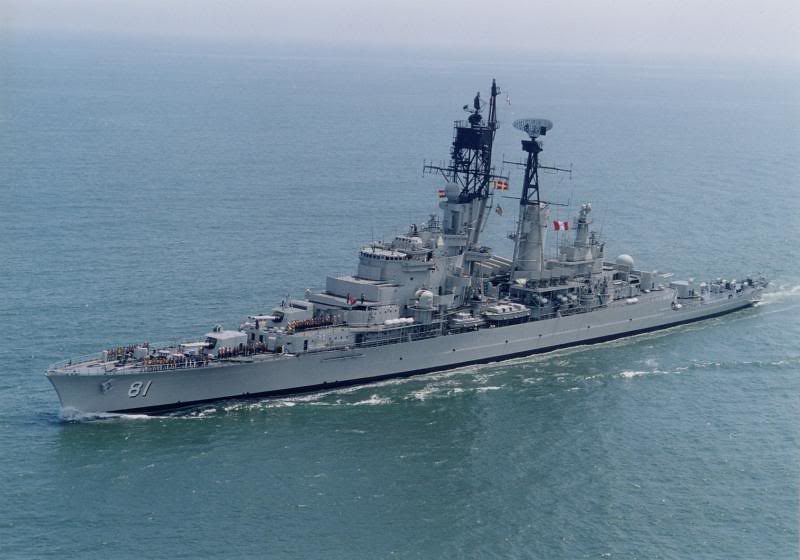
As her time in the Netherlands finally came to an end, the warship was sold to the Peruvian Navy, where she became Almirante Grau (details elsewhere on this page). Under that name and the flag of a foreign navy, she served as the last "gunboat" in naval history until she was finally abandoned on September 26, 2017.
De Ruyter's sister, De Zeven Provincien, was abandoned in 2000.
In service with the Peruvian Navy, Almirante Grau was the recipient of a major modernization program carried out by the Netherlands (Amsterdam Navy Service) between 1985 and 1988. During that time, she has adopted more advanced weapons, systems and sensors to keep her a viable front-line warship for the foreseeable future.
Specification
Basic
Roles
- Blue Water Operations
- Fleet Support
- Hunter
- direct attack
Dimensions
614.5 ft (187.30 m)
56.5 ft (17.22 m)
22 feet (6.71 m)
Weight
13,300 tons
Performance
PERFORMANCE
32 kts (37 mph)
7,039 nm (8,100 miles; 13,036 km)
ARMAMENT
8 x 6" (152mm) main guns in four twin-gunned turrets.
8 x 57mm Anti-Aircraft (AA) guns.
8 x 40mm Oerlikon AA guns.
AIR WING
None.
 Argentina
 Armenia
 Australia
 Austria
 Austria-Hungary
 Belgium
 Brazil
 United Kingdom
 United States
 Brunei
 Bulgaria
 Canada
 Chile
Chile China
China Colonial America
 Colombia
 Confederate States
 Croatia
 Czech
Czech Denmark
 Egypt
Egypt Finland
 France
 Georgia
 Germany
 German Imperial
 Greece
 Holland
 Hungary
 India
India Indonesia
 Iran
Iran Iraq
Iraq Ireland
 Israel
 Italy
Italy Japan
Japan Japan (1940)
 Jordan
 Kingdom of Italy
 Malaysia
 Mexico
 Myanmar
 Nazi Germany
 New Zealand
 North Korea
 Norway
 Pakistan
 Peru
Peru Philippines
 Poland
 Portugal
 Prussia
 Romania
 Russia
 Saudi Arabia
 Serbia
 Singapore
 Slovakia
 Slovenia
 South Africa
 South Korea
 Soviet Union
 Spain
Spain Sweden
 Switzerland
 Syria
Syria Taiwan
 Thailand
 Turkey
 UAE
UAE Ukraine
 Vietnam
 Yugoslavia