
History
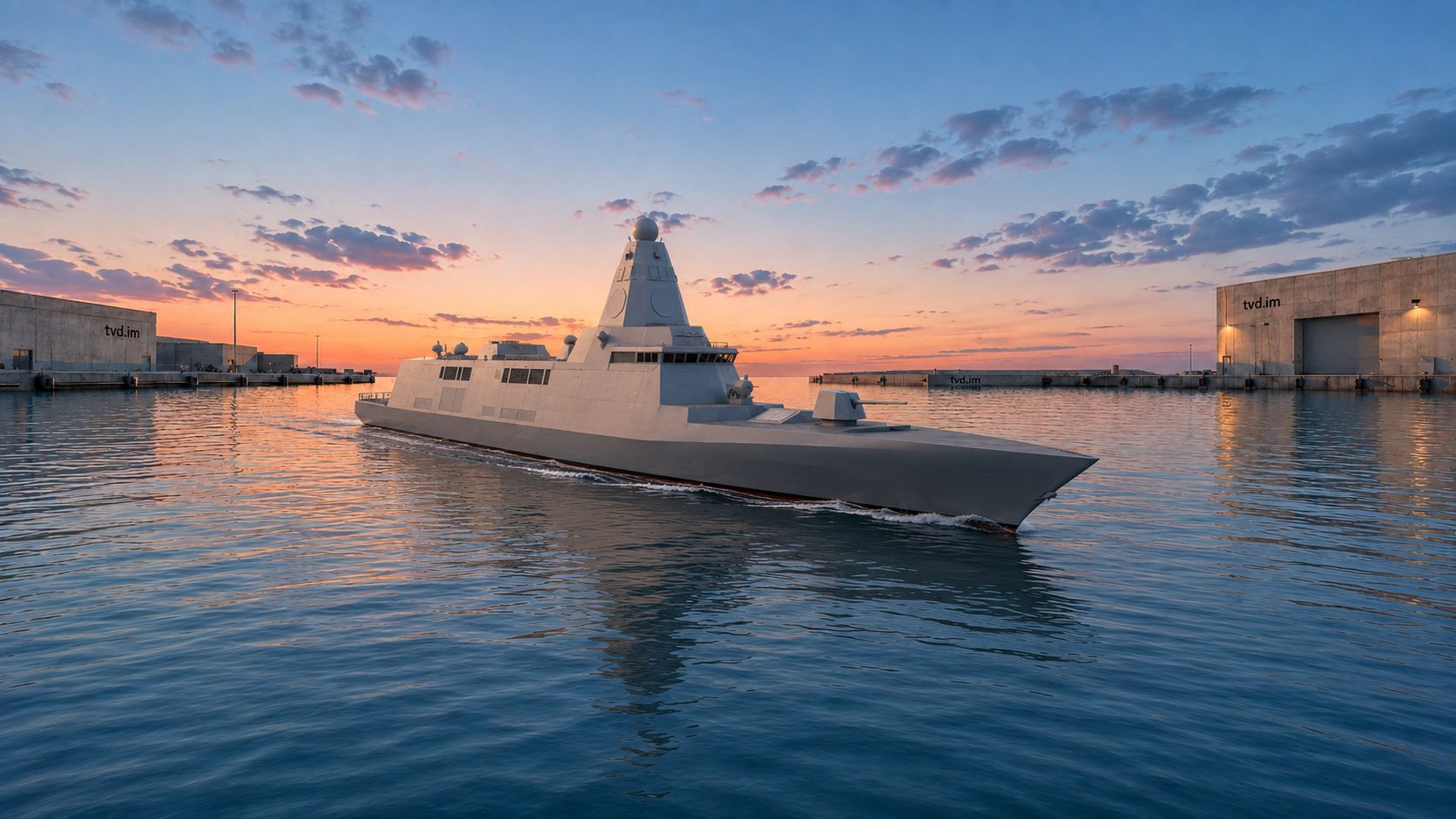
The KDDX is a planned South Korean guided-missile destroyer class for the Republic of Korea Navy. It is intended to provide air-defence, anti-surface warfare and anti-submarine warfare capabilities.
The program calls for six stealth-oriented destroyers positioned between the smaller KDX-II and larger KDX-III classes. KDDX is intended to use a high proportion of domestically developed sensors, combat systems and weapons.
Hanwha Ocean received the contract for detailed design and construction of the lead ship in July 2026. Delivery of the first vessel is scheduled for 2032, and the class is not yet operational.
Development
South Korea presented an early next-generation destroyer plan in 2009. The requirement developed into KDDX, previously known as KDX-IIA, with six ships included in defence planning by 2012. The program was subsequently delayed while priority shifted to additional KDX-III Batch II destroyers.
In December 2018, the Defense Acquisition Program Administration approved the basic strategy for KDDX. Development of the indigenous combat system, multifunction radar and sonar systems followed. HD Hyundai Heavy Industries conducted the ship's basic design work, which was completed in December 2023.
Hanwha Ocean was selected as the preferred bidder for detailed design and lead-ship construction in June 2026. On 31 July 2026, DAPA signed the main contract with the company. The agreement moved the program into detailed design and construction. A contemporary program report states that South Korea plans to deliver the first ship to the navy in 2032.
The current plan covers six vessels. Published schedules indicate that their introduction is planned between 2032 and 2036, although construction and delivery dates for the follow-on ships remain subject to future contracts.
Design
KDDX is being developed as a low-observable surface combatant in the approximately 6,000–7,000-ton class. Published displacement figures vary because detailed design remains in progress. The hull and superstructure are intended to reduce radar signature, while an integrated mast consolidates major sensors and communications equipment.
The design is expected to incorporate digital-twin methods for construction and life-cycle support. Hanwha Ocean also plans automation intended to reduce crew requirements, an internal 5G communications environment and systems supporting cooperation between crewed and uncrewed platforms.
Propulsion
An integrated electric propulsion system is planned. Electric propulsion is intended to reduce machinery noise, which is particularly relevant during anti-submarine operations. The electrical architecture may also provide capacity for future high-energy equipment, but the final machinery arrangement and performance figures have not been published.
Sensors and combat system
The ship is planned around a domestically developed combat management system. Its integrated mast is expected to carry fixed phased-array radar panels providing continuous coverage around the vessel.
The multifunction radar combines S-band and X-band functions. The S-band component is intended for longer-range air-target and ballistic-missile detection and tracking. The X-band component is intended for shorter-range air and surface surveillance. Indigenous sonar systems are also planned for anti-submarine warfare.
Armament
KDDX is expected to carry South Korean-produced missile systems in KVLS-I and KVLS-II vertical launch cells. Planned weapons support air defence, anti-ship attack and land-strike missions. Published concept models have shown different launcher arrangements, so the final number of cells has not been confirmed.
A 127 mm naval gun is included in published designs. A domestically developed close-in weapon system is also planned to provide terminal defence against approaching threats. The final armament configuration will be established during detailed design.
Survivability and counter-drone systems
The design combines reduced radar signature with integrated electronic sensors and defensive weapons. Hanwha Ocean also plans a layered counter-uncrewed-aircraft system in response to the growing threat from small aerial vehicles. Detailed equipment and performance data have not been released.
Program status
As of August 2026, the lead KDDX was in the detailed-design and construction phase. Delivery to the Republic of Korea Navy is scheduled for 2032. The program therefore has no operational record.
KDDX is intended to become a principal surface combatant of the navy's future task force. It will supplement South Korea's existing destroyers while introducing an indigenous Aegis-type combat architecture rather than relying primarily on imported systems.
Operators
- South Korea: The Republic of Korea Navy plans to operate six KDDX-class destroyers. The lead ship is scheduled for delivery in 2032.
Specifications (KDDX lead-ship design)
General characteristics
- Type: Guided-missile destroyer
- Status: Under detailed design and construction
- Displacement class: Approximately 6,000–7,000 tonnes; reported figures vary while the design is being finalized
- Propulsion: Planned integrated electric propulsion system
- Planned operator: Republic of Korea Navy
- Planned class size: Six ships
- Lead-ship delivery: Scheduled for 2032
Sensors and systems
- Radar: Indigenous dual-band S/X multifunction phased-array radar
- Mast: Integrated mast containing radar, surveillance and communications equipment
- Combat system: Domestically developed combat management system
- Underwater sensors: Indigenous sonar systems
- Additional systems: Planned layered counter-drone architecture and integrated 5G communications environment
Armament
- Naval gun: One 127 mm gun in published designs
- Vertical launch systems: Planned KVLS-I and KVLS-II cells; final cell count not confirmed
- Missiles: Planned South Korean surface-to-air, anti-ship and land-attack weapons
- Close-in defence: Planned domestically developed close-in weapon system
Related equipment
- KDX-II: South Korean destroyer class below KDDX in size and capability.
- KDX-III: Larger South Korean Aegis destroyer family that currently provides major fleet air-defence capabilities.
 Argentina
 Armenia
 Australia
 Austria
 Austria-Hungary
 Belgium
 Brazil
 United Kingdom
 United States
 Brunei
 Bulgaria
 Canada
 Chile
Chile China
China Colonial America
 Colombia
 Confederate States
 Croatia
 Czech
Czech Denmark
 Egypt
Egypt Finland
 France
 Georgia
 Germany
 German Imperial
 Greece
 Holland
 Hungary
 India
India Indonesia
 Iran
Iran Iraq
Iraq Ireland
 Israel
 Italy
Italy Japan
Japan Japan (1940)
 Jordan
 Kingdom of Italy
 Malaysia
 Mexico
 Myanmar
 Nazi Germany
 Netherlands
 New Zealand
 North Korea
 Norway
 Pakistan
 Peru
Peru Philippines
 Poland
 Portugal
 Prussia
 Romania
 Russia
 Saudi Arabia
 Serbia
 Singapore
 Slovakia
 Slovenia
 South Africa
 Soviet Union
 Spain
Spain Sweden
 Switzerland
 Syria
Syria Taiwan
 Thailand
 Turkey
 UAE
UAE Ukraine
 Vietnam
 Yugoslavia