
History
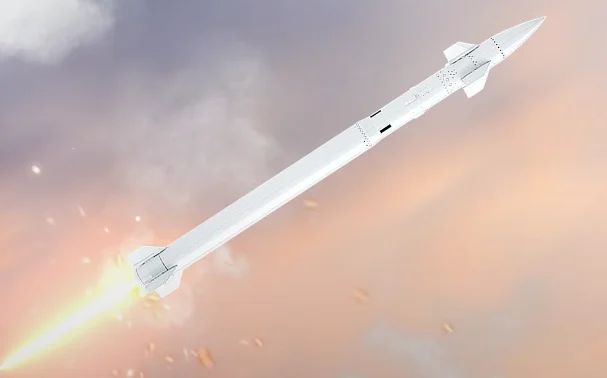
The KSAM-II, formally the Korean Ship-to-Air Missile II, is a South Korean long-range naval surface-to-air missile under development by LIG Defense & Aerospace. It is intended to defend future Republic of Korea Navy warships against aircraft, anti-ship missiles, and supersonic cruise missiles.
The missile is being developed as a domestically produced replacement for the US-made SM-2 on future KDDX destroyers and FFX Batch IV frigates. It combines ship-supplied target information with an active radar seeker for terminal guidance.
Assembly of the first flight-test missiles began in 2026. Development and qualification testing remained in progress, and the KSAM-II had not entered operational service.
Development
South Korea's Defense Acquisition Program Administration approved the requirement for a new naval surface-to-air missile in April 2017. Requirement validation and feasibility studies followed in 2021 and 2022. The Defense Acquisition Program Promotion Committee approved the system-development plan in March 2023, and DAPA issued a request for proposals on 14 July 2023.
Reports place the selection of LIG Nex1, subsequently associated with the LIG Defense & Aerospace name, in late 2023 or 2024. The system-development contract was valued at KRW 330.6 billion. The broader program, including development, testing, production, and ship integration, was estimated at approximately KRW 690 billion.
The missile draws on technology developed for the anti-aircraft version of South Korea's land-based L-SAM interceptor. This lineage supports the reuse of propulsion, flight-control, active-radar-guidance, and processing technology, although the naval missile must also withstand shipboard vibration, launch shock, humidity, salt exposure, and electromagnetic interference.
Prototype production and testing
LIG completed a dedicated assembly facility at Plant 3 in Gumi, North Gyeongsang Province, on 5 March 2026. The facility was presented to the media on 14 July, when production of the first flight-test missiles was beginning. Contemporary reports from Naval News and Asian Military Review described these rounds as prototypes intended for flight and qualification trials.
More than ten test launches were planned before the missile could enter service. Development was expected to continue through approximately 2030, while initial deployment was associated with the arrival of the first KDDX destroyer around 2032. The wider acquisition program was scheduled to continue through 2036.
Design
Configuration
The KSAM-II is approximately 6 m long and consists of three principal sections. The forward section contains the active radar seeker, guidance electronics, and onboard processing equipment. The central body contains the warhead and main propulsion unit. A booster in the rear section provides the initial thrust required for vertical launch.
The missile is designed for the Korean Vertical Launching System. One KSAM-II is planned to be carried in each assigned launch cell. Its intended launch platforms are the future KDDX destroyer and FFX Batch IV frigate.
Guidance
The KSAM-II uses a third-generation active radar seeker incorporating a reported 1 kW gallium-nitride solid-state power amplifier. Gallium nitride supports high power density within the limited space and thermal capacity of a missile nose.
The seeker is intended to improve detection and terminal tracking of small targets, including low-flying anti-ship missiles. Published information associates it with a minimum target dimension of approximately 0.3 m, compared with 1.4 m for an earlier South Korean seeker generation. This figure is not a universal detection range or guarantee because radar performance also depends on target aspect, radar cross-section, altitude, sea conditions, electronic countermeasures, and the quality of ship-supplied tracking data.
The onboard processor reportedly updates the target track and calculates a new interception solution 100 times per second. During the initial and middle portions of flight, the missile can receive target information from the ship. It then uses its own active seeker during the terminal phase. This arrangement reduces dependence on continuous terminal illumination by the launching ship, unlike the semi-active guidance used by established SM-2 variants.
Flight performance
The missile is reported to reach approximately Mach 5 and to tolerate maneuvering loads of up to 17 g. These figures describe development targets that must be confirmed through the planned flight-test and qualification program.
The stated target set consists primarily of aerodynamic threats such as aircraft, anti-ship missiles, and supersonic cruise missiles. Reports have discussed a possible ballistic-missile-interception derivative, but public sources do not establish an operational KSAM-II anti-ballistic variant.
Manufacturing
Each missile passes through approximately 20 assembly stages, requiring about three months from initial assembly to completion. The work includes structural assembly, installation of cables and electronics, propulsion integration, alignment, inspection, and functional testing. Reports indicate that about 20 personnel can participate in the final assembly process.
The Gumi building contains four principal assembly and inspection areas separated by reinforced blast-resistant walls more than 60 cm thick. Approximately 30 types of dedicated fixtures, stands, and tools are used during production. LIG has targeted a domestic content level exceeding 90 percent to give South Korea greater control over manufacturing, maintenance, component replacement, software changes, and stockpile replenishment.
Program status
As of 2026, prototype flight-test missiles were being assembled and the qualification campaign had not been completed. The Republic of Korea Navy was therefore a planned recipient rather than an operational KSAM-II user.
The missile is intended for six planned KDDX destroyers and future FFX Batch IV frigates. Its introduction is tied to the availability of these ships, their combat-management systems, radar architecture, data links, and Korean vertical-launch cells. According to Army Recognition, the lead KDDX was scheduled for delivery at the end of 2032.
Domestic production is intended to reduce reliance on foreign missile manufacturing and overseas supply decisions. It does not remove the costs of qualification, production tooling, depot maintenance, spare parts, or periodic recertification. The number of production missiles and the future magazine allocation aboard each ship had not been disclosed.
Specifications (KSAM-II)
General characteristics
- Type: Long-range naval surface-to-air missile
- Manufacturer: LIG Defense & Aerospace
- Country of origin: South Korea
- Length: Approximately 6 m
- Configuration: Forward guidance section, central warhead and propulsion section, and rear booster
- Launch method: Vertical launch
- Launcher compatibility: Korean Vertical Launching System
- Cell allocation: One missile per launch cell
Performance
- Maximum reported speed: Approximately Mach 5
- Maximum reported maneuvering load: Up to 17 g
- Intended targets: Aircraft, anti-ship missiles, and supersonic cruise missiles
Guidance and sensors
- Terminal guidance: Active radar homing
- Seeker: Third-generation active radar seeker
- Power amplifier: Reported 1 kW gallium-nitride solid-state unit
- Target-track update rate: Reportedly 100 updates per second
- Mid-course support: Ship-supplied target information and data-link updates
Production and deployment
- Prototype assembly: Began in 2026
- Assembly stages: Approximately 20
- Assembly time: Approximately three months per missile
- Localization target: More than 90 percent
- Planned platforms: KDDX destroyers and FFX Batch IV frigates
- Status: Under development and flight-test preparation as of 2026
Related equipment
- L-SAM: South Korean land-based surface-to-air missile family that provided technology for the KSAM-II development.
- SM-2: US-made naval surface-to-air missile that the KSAM-II is intended to replace on future South Korean warships.
- K-SAAM Haegung: South Korean short-range naval surface-to-air missile developed for local ship defense.
 Argentina
 Armenia
 Australia
 Austria
 Austria-Hungary
 Belgium
 Brazil
 United Kingdom
 United States
 Brunei
 Bulgaria
 Canada
 Chile
Chile China
China Colonial America
 Colombia
 Confederate States
 Croatia
 Czech
Czech Denmark
 Egypt
Egypt Finland
 France
 Georgia
 Germany
 German Imperial
 Greece
 Holland
 Hungary
 India
India Indonesia
 Iran
Iran Iraq
Iraq Ireland
 Israel
 Italy
Italy Japan
Japan Japan (1940)
 Jordan
 Kingdom of Italy
 Malaysia
 Mexico
 Myanmar
 Nazi Germany
 Netherlands
 New Zealand
 North Korea
 Norway
 Pakistan
 Peru
Peru Philippines
 Poland
 Portugal
 Prussia
 Romania
 Russia
 Saudi Arabia
 Serbia
 Singapore
 Slovakia
 Slovenia
 South Africa
 Soviet Union
 Spain
Spain Sweden
 Switzerland
 Syria
Syria Taiwan
 Thailand
 Turkey
 UAE
UAE Ukraine
 Vietnam
 Yugoslavia