
History
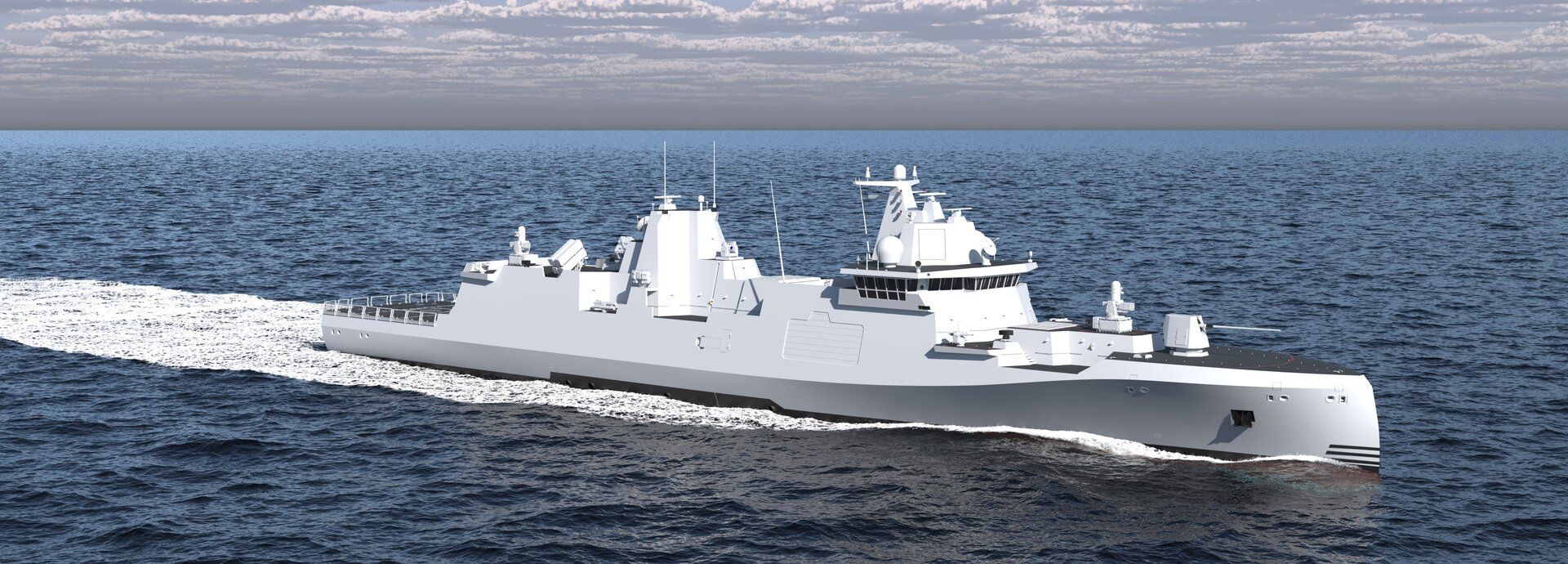
The Rheinmetall GMF 140 is a proposed guided-missile frigate designed for air and missile defence, anti-submarine warfare, long-range strike, and other naval missions. Rheinmetall Naval Systems publicly unveiled the concept on 3 August 2026.
The design combines a 140 m hull with more than 6,000 tonnes of displacement, 64 strike-length vertical launch cells, and options for US and European combat systems. It is intended for NATO and allied navies and remains a proposed platform rather than an operational warship.
Rheinmetall initially plans to offer the GMF 140 for an undisclosed procurement project in North America. The company then intends to market the design to other international customers.
The official Rheinmetall GMF 140 page presents the ship as a multi-domain platform with air-defence, ballistic-missile-defence, and anti-submarine capabilities. Contemporary reports from Janes and Breaking Defense confirmed the North American focus but did not identify a specific procurement program.
Design
Hull and crew
The GMF 140 has a proposed length of 140 m and a displacement exceeding 6,000 tonnes. Its low-signature hull is intended to reduce detectability and incorporates acoustic-management measures for anti-submarine operations. Published information gives a crew figure of 90 plus capacity for 35 additional personnel.
The digitally integrated architecture is designed to reduce crew requirements. Rheinmetall has not disclosed the propulsion arrangement, endurance, or operational range. The stated maximum speed is 30 knots.
Combat systems and radar
The design can integrate US-sourced primary radar systems in configurations intended to detect, track, and support the engagement of conventional aircraft, hypersonic weapons, and ballistic missiles. Rheinmetall has not announced a final radar selection.
The proposed combat-system architecture is centred on the AEGIS Combat System. AEGIS can be combined with Lockheed Martin Canada's CMS330 Combat Management System, allowing the integration of European sensors and weapons. The open and scalable architecture is intended to support interoperability within multinational naval formations.
Armament
The GMF 140 is designed with 64 strike-length Mk 41 Vertical Launch System cells. Depending on the customer configuration and applicable approvals, these cells could carry missiles for air defence, ballistic-missile defence, and land attack. No final missile package has been selected.
Other proposed weapons include a 127 mm main gun, anti-ship missiles, torpedo launchers, close-in weapon systems, and secondary armament. The design also provides for a laser directed-energy weapon. Computer-generated images show additional weapon arrangements, but these should be regarded as elements of the displayed concept rather than a confirmed production configuration.
Sensors and electronic warfare
The planned sensor suite includes electro-optical equipment, electronic-warfare systems, hull-mounted sonar, and a towed sonar array. Decoy systems are included for defensive operations. The final equipment fit will depend on the customer and selected combat-system configuration.
Anti-submarine warfare
Anti-submarine features include the low-signature hull, integrated acoustic management, hull-mounted sonar, and towed sonar. The frigate is also intended to deploy torpedoes and use embarked crewed or uncrewed aircraft to extend its detection and engagement reach.
Aviation and uncrewed systems
An aft flight deck and hangar are intended to support helicopters of US or European origin. Rheinmetall also proposes the operation of uncrewed aerial, surface, and underwater vehicles from the ship. The exact aviation complement has not been announced.
Program status
As of August 2026, the GMF 140 is an export-oriented design concept. Rheinmetall has not identified a launch customer, construction shipyard, contract, production schedule, planned launch year, or service-entry date. No completed vessel or physical prototype has been reported.
The initial North American opportunity remains undisclosed. Available information does not establish whether Rheinmetall is targeting a Canadian, United States, or Mexican requirement. The eventual configuration would depend on the selected radar, missiles, national equipment, industrial arrangements, and customer requirements. Further contemporary descriptions are available from Aerospace & Defence and Future Warfare Magazine.
Specifications (proposed GMF 140 configuration)
General characteristics
- Type: Proposed guided-missile frigate
- Length: 140 m
- Displacement: More than 6,000 tonnes
- Crew: 90 plus capacity for 35 additional personnel
- Maximum speed: 30 knots
Combat systems and sensors
- Combat system: AEGIS, with CMS330 integration available for European sensors and weapons
- Primary radar: US-sourced radar options, including configurations intended to support ballistic-missile tracking
- Sonar: Hull-mounted and towed sonar systems
- Other systems: Electro-optical sensors, electronic-warfare equipment, acoustic management, and decoys
Armament
- Vertical launch system: 64 strike-length Mk 41 cells
- Main gun: 127 mm gun
- Other proposed weapons: Anti-ship missiles, torpedo launchers, close-in weapon systems, secondary weapons, and provision for a laser directed-energy weapon
Aviation facilities
- Facilities: Aft flight deck and hangar
- Embarked systems: Proposed support for US or European helicopters and uncrewed aerial, surface, and underwater vehicles
 Argentina
 Armenia
 Australia
 Austria
 Austria-Hungary
 Belgium
 Brazil
 United Kingdom
 United States
 Brunei
 Bulgaria
 Canada
 Chile
Chile China
China Colonial America
 Colombia
 Confederate States
 Croatia
 Czech
Czech Denmark
 Egypt
Egypt Finland
 France
 Georgia
 German Imperial
 Greece
 Holland
 Hungary
 India
India Indonesia
 Iran
Iran Iraq
Iraq Ireland
 Israel
 Italy
Italy Japan
Japan Japan (1940)
 Jordan
 Kingdom of Italy
 Malaysia
 Mexico
 Myanmar
 Nazi Germany
 Netherlands
 New Zealand
 North Korea
 Norway
 Pakistan
 Peru
Peru Philippines
 Poland
 Portugal
 Prussia
 Romania
 Russia
 Saudi Arabia
 Serbia
 Singapore
 Slovakia
 Slovenia
 South Africa
 South Korea
 Soviet Union
 Spain
Spain Sweden
 Switzerland
 Syria
Syria Taiwan
 Thailand
 Turkey
 UAE
UAE Ukraine
 Vietnam
 Yugoslavia