
History
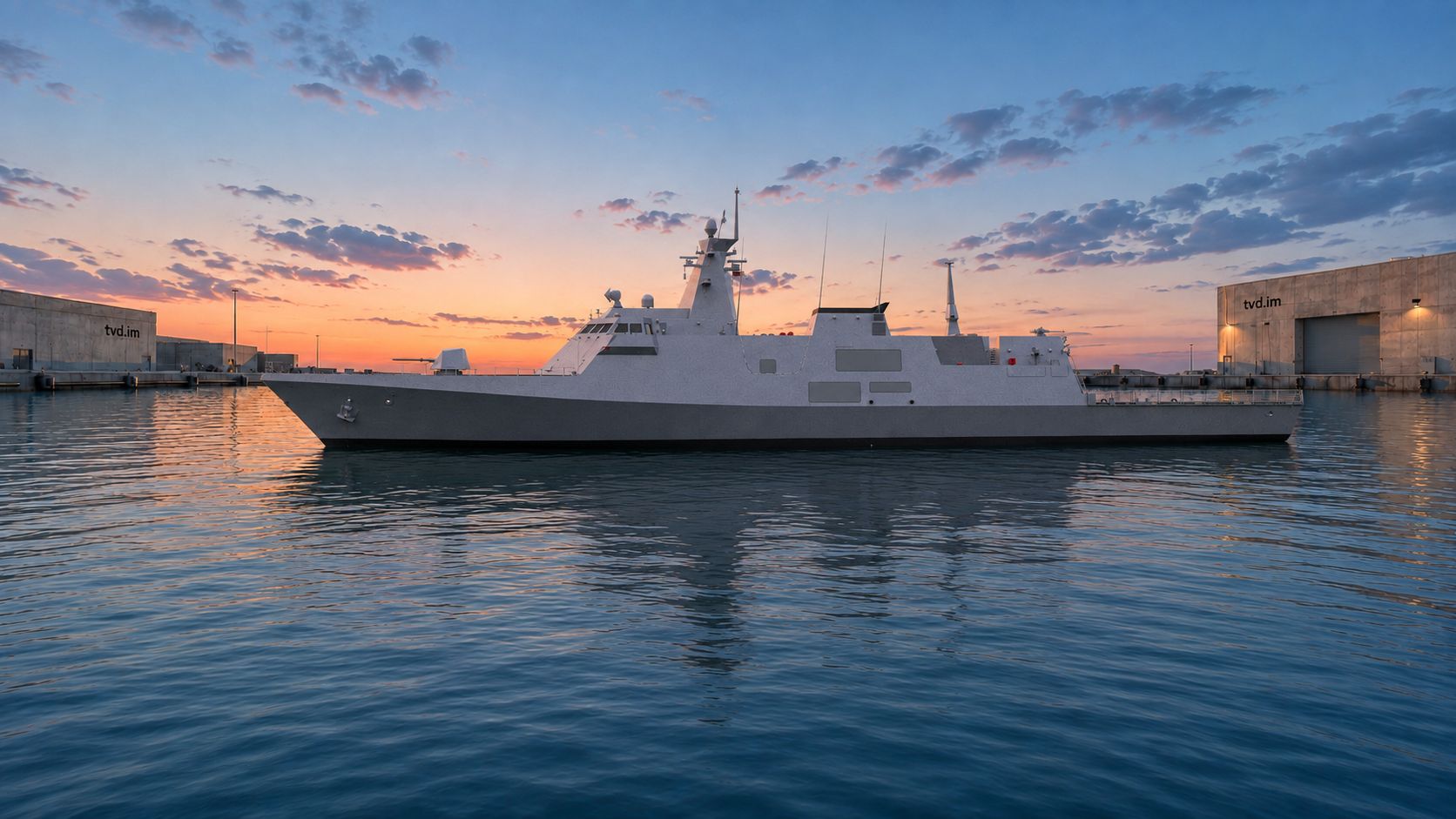
The STM Littoral Mission Ship Batch 2, also known as LMS Batch 2 or LMSB2, is a class of three corvettes being built in Türkiye for the Royal Malaysian Navy. The design is derived from the Turkish Navy's Ada-class corvette and has been adapted by STM to meet Malaysian operational requirements.
The class is intended for anti-surface warfare, air warfare, asymmetric warfare, and electronic warfare missions. The ships combine missile and gun armament with modern surveillance, fire-control, electronic-support, and command systems, while also providing a flight deck and hangar for a medium-size helicopter.
Malaysia and Türkiye formalized the program through a government-to-government arrangement in 2024. All three ships were launched in 2026 and are scheduled to undergo outfitting, systems integration, acceptance testing, and delivery to the Royal Malaysian Navy in 2027.
Development and construction
The government-to-government memorandum on defence procurement and the Letter of Acceptance for the LMS Batch 2 project were presented in Ankara on 10 June 2024. STM became the main contractor for the three-ship program, with responsibility for design, construction management, material and system procurement, integration, testing, documentation, and integrated logistics support.
Steel cutting for the class began at Istanbul Shipyard on 4 December 2024. Keel laying followed on 8 April 2025. The construction and outfitting program involves a broad group of Turkish defence companies supplying combat, sensor, electronic-warfare, and weapon systems.
The lead vessel, Tunku Laksamana Abdul Jalil, was launched on 24 May 2026. The second ship, Raja Laut, followed on 7 June 2026. The third and final vessel, Tunku Osman Jewa, was launched at Istanbul Shipyard on 9 August 2026, completing the launch phase for all three ships within approximately four months. Contemporary reporting and technical details are available from Naval News.
After launch, the three corvettes entered parallel outfitting and systems-integration work. This phase includes installation and integration of sensors, combat systems, and weapons, followed by harbour acceptance tests and sea acceptance trials. The Royal Malaysian Navy and STM have stated that all three vessels are scheduled for delivery by the end of 2027.
Design
The LMS Batch 2 design is based on the Ada-class corvette concept but has been tailored for Royal Malaysian Navy requirements. The ship has a low-observable external form and is designed around redundancy in major systems. STM describes the platform as suitable for both coastal and open-sea operations.
The hull is 99.56 m long, with a maximum beam of 14.42 m and a draught of 3.94 m. Displacement is approximately 2,500 tonnes. Accommodation is provided for 111 officers, crew members, and guests, and the stated endurance is 14 days.
Propulsion
Propulsion is provided by four diesel engines arranged in a combined diesel and diesel configuration. Power is transmitted through two reduction gears to two shafts with controllable-pitch propellers. The ships also have four diesel generators and a fin stabilizer.
The class has a maximum speed of more than 26 knots. Cruising speed is 14 knots, and stated range is more than 4,000 nautical miles at that speed.
Combat systems and sensors
The ships use an integrated combat management system supported by a 3D surveillance radar, an identification friend-or-foe system, a fire-control radar with electro-optical equipment, two target-designation sights, an electronic-support-measures system, a LINK-Y tactical data link, and an electronic plotting table. The gun fire-control function is integrated with the combat management architecture.
Turkish companies provide major elements of the combat system. HAVELSAN is associated with the combat management and gun fire-control systems. ASELSAN supplies systems including the 3D search radar, fire-control radar, identification friend-or-foe equipment, 30 mm gun, electronic-support equipment, chaff decoy system, and other electronic sensors. ROKETSAN supplies the ATMACA surface-to-surface missile system.
Armament and aviation facilities
The published LMS Batch 2 weapon fit includes one 76 mm main gun, eight surface-to-surface missiles in two four-round launcher groups, one 30 mm secondary gun, four surface-to-air missiles arranged as two twin launchers, and two decoy launcher systems.
A flight deck and enclosed hangar are provided for a medium-size helicopter. The aviation facilities also include helicopter refuelling capability.
Program status
As of August 2026, all three LMS Batch 2 corvettes have been launched but have not yet entered Royal Malaysian Navy service. Tunku Laksamana Abdul Jalil, Raja Laut, and Tunku Osman Jewa are progressing through outfitting, combat-system integration, harbour testing, and sea acceptance work in Türkiye.
The program schedule calls for delivery of all three ships to the Royal Malaysian Navy by the end of 2027. Launch therefore represents a construction milestone rather than operational entry into service.
Operators
- Royal Malaysian Navy: Three LMS Batch 2 corvettes are under construction and outfitting for Malaysia. All three were launched in 2026 and are scheduled for delivery by the end of 2027.
Specifications (LMS Batch 2)
General characteristics
- Type: Corvette / Littoral Mission Ship Batch 2
- Length: 99.56 m
- Maximum beam: 14.42 m
- Draught: 3.94 m
- Displacement: Approximately 2,500 tonnes
- Personnel: 111 officers, crew members, and guests
- Endurance: 14 days
- Propulsion: Four diesel engines in CODAD configuration, two reduction gears, two shafts, and two controllable-pitch propellers
- Electrical generation: Four diesel generators
- Stabilization: Fin stabilizer
Performance
- Maximum speed: More than 26 knots
- Cruising speed: 14 knots
- Range: More than 4,000 nautical miles at 14 knots
Armament
- Main gun: One 76 mm gun
- Surface-to-surface missiles: Eight missiles in two four-round launcher groups
- Secondary gun: One 30 mm gun
- Surface-to-air missiles: Four missiles in two twin launcher groups
- Countermeasures: Two decoy launcher systems
Sensors and combat systems
- Combat management: Combat management system with integrated gun fire control
- Surveillance radar: 3D surveillance radar
- Identification: IFF system integrated with the 3D radar
- Fire control: One fire-control radar with electro-optical suite
- Target designation: Two target-designation sights
- Electronic warfare: C-ESM system
- Data link: LINK-Y tactical data link
Aviation facilities
- Helicopter facilities: Flight deck and hangar for a medium-size helicopter with refuelling capability
Related equipment
- Ada-class corvette: Turkish corvette design from which the LMS Batch 2 platform was derived and adapted for Royal Malaysian Navy requirements.
 Argentina
 Armenia
 Australia
 Austria
 Austria-Hungary
 Belgium
 Brazil
 United Kingdom
 United States
 Brunei
 Bulgaria
 Canada
 Chile
Chile China
China Colonial America
 Colombia
 Confederate States
 Croatia
 Czech
Czech Denmark
 Egypt
Egypt Finland
 France
 Georgia
 Germany
 German Imperial
 Greece
 Holland
 Hungary
 India
India Indonesia
 Iran
Iran Iraq
Iraq Ireland
 Israel
 Italy
Italy Japan
Japan Japan (1940)
 Jordan
 Kingdom of Italy
 Malaysia
 Mexico
 Myanmar
 Nazi Germany
 Netherlands
 New Zealand
 North Korea
 Norway
 Pakistan
 Peru
Peru Philippines
 Poland
 Portugal
 Prussia
 Romania
 Russia
 Saudi Arabia
 Serbia
 Singapore
 Slovakia
 Slovenia
 South Africa
 South Korea
 Soviet Union
 Spain
Spain Sweden
 Switzerland
 Syria
Syria Taiwan
 Thailand
 UAE
UAE Ukraine
 Vietnam
 Yugoslavia