
History
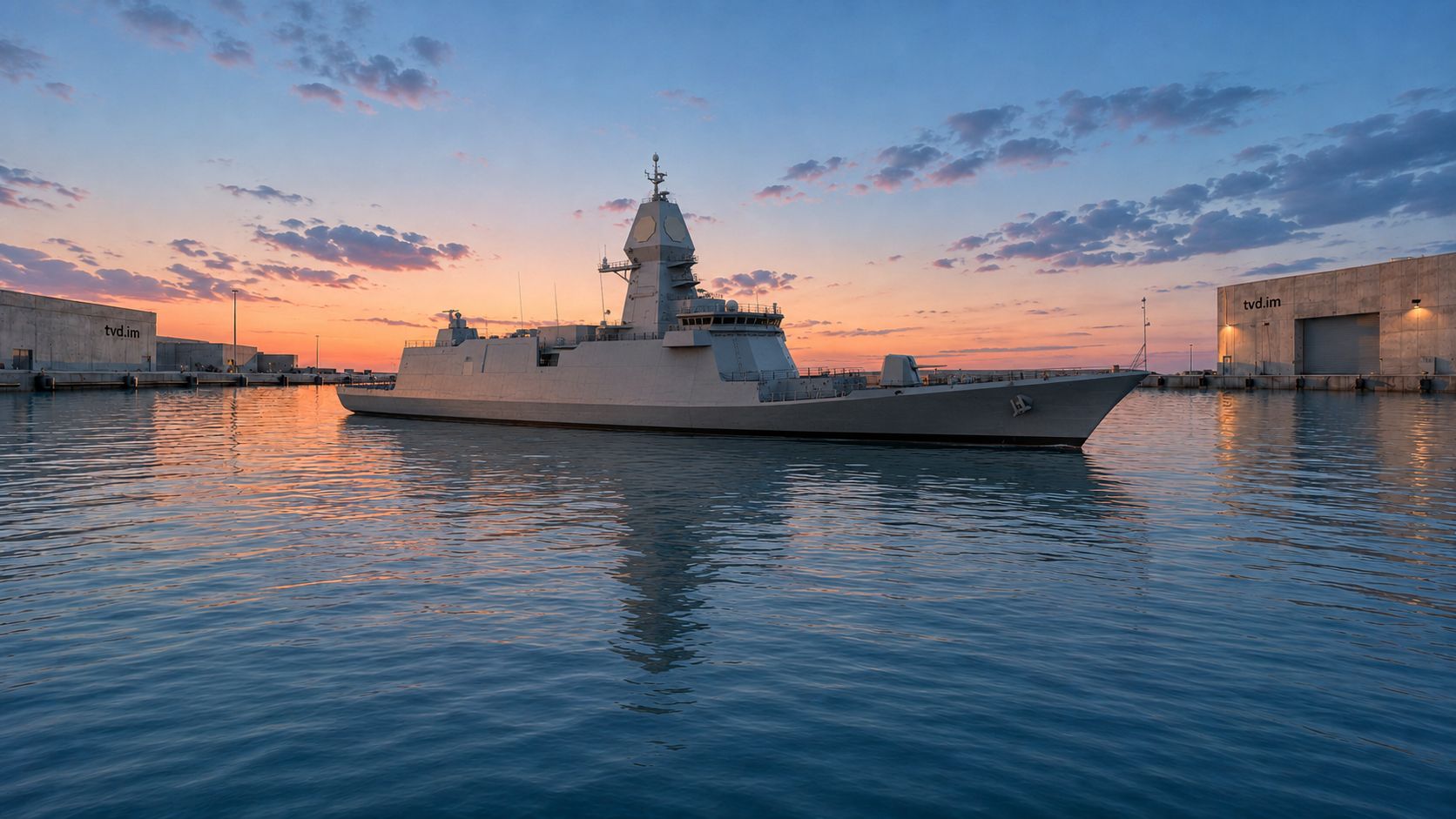
The FFX Batch III is a South Korean guided-missile frigate class developed for the Republic of Korea Navy. It is also known as the Chungnam class and Ulsan-class Batch III. The ships are intended to replace older frigates and corvettes while providing air-defense, anti-surface, land-attack, and anti-submarine capabilities.
The design evolved from the Incheon-class FFX Batch I and Daegu-class FFX Batch II frigates. Batch III retains combined diesel-electric or gas propulsion but introduces a fixed four-face active electronically scanned array radar within an integrated sensor mast.
The program covers six ships built by HD Hyundai Heavy Industries, SK Oceanplant, and Hanwha Ocean. The lead ship was launched in 2023 and commissioned in 2024. By July 2026, two ships were listed as active, two had been launched, and the final pair were under construction.
Development
South Korea began considering a replacement for its aging Ulsan-class frigates and Pohang-class corvettes in the late 1990s. The requirement re-emerged in the early 2000s as the Future Frigate eXperimental program. Batch I produced the Incheon class, while Batch II introduced the larger Daegu class with quieter CODLOG propulsion, a towed-array sonar, and the Korean Vertical Launching System.
FFX Batch III was planned as a six-ship program running from 2016 to 2028. It continued the development of the Daegu design and placed greater emphasis on integrated South Korean sensors, combat systems, and weapons. Its principal change was the adoption of a fixed multifunction AESA radar and integrated mast for continuous air and surface surveillance.
Construction
HD Hyundai Heavy Industries built the lead ship, ROKS Chungnam (FFG-828). The frigate was laid down on 25 April 2022 and launched on 10 April 2023. It was delivered on 18 December 2024 and commissioned on 24 December.
Construction of the second through fourth ships was assigned to SK Oceanplant. ROKS Gyeongbuk (FFG-829) was laid down in April 2024, launched in June 2025, and commissioned in June 2026. ROKS Jeonnam (FFG-831) was launched on 25 November 2025 and was scheduled for delivery in December 2026. The fourth ship, ROKS Jeju (FFG-832), was launched on 29 April 2026.
Hanwha Ocean received contracts for the fifth and sixth ships in 2023. The company laid the keel of hull H.7063, the final ship in the program, at Geoje on 23 July 2026. According to the construction report, its launch was scheduled for February 2027.
Design
Hull and aviation facilities
The frigate is approximately 129 m long and has a standard displacement reported between 3,500 and 3,600 tonnes. Full-load displacement is approximately 4,300 tonnes. The hull and superstructure use angled surfaces intended to reduce radar signature. A box-girder hull structure is intended to reduce drag and improve survivability following battle damage.
An enclosed hangar and flight deck accommodate one medium helicopter. Reported compatible types include the AW159 Wildcat and Westland Super Lynx, which can support anti-submarine, surveillance, and surface-warfare missions.
Propulsion
The FFX Batch III uses a combined diesel-electric or gas system driving two shafts. Four MTU 12V 4000 M43B diesel generator sets supply electrical power, while two Leonardo DRS permanent-magnet motors provide electric propulsion. A Rolls-Royce MT30 gas turbine is used when higher speed is required.
Diesel-electric operation reduces noise and vibration during routine patrols and anti-submarine operations. This supports the use of the ship's hull-mounted and towed-array sonars. The gas turbine permits a maximum speed of approximately 30 knots.
Sensors and combat systems
The integrated sensor mast contains a South Korean-developed S-band AESA radar with four fixed gallium-nitride antenna faces. This arrangement provides continuous 360-degree coverage without rotating the main array. The mast also incorporates infrared search-and-track and electro-optical tracking equipment.
Reported equipment includes the SAQ-560K electro-optical tracker and K/SPS-95K surface-search and navigation radar. A Hanwha Systems combat-management system combines information from the radar, optical equipment, sonar, and external networks into a shared tactical picture.
Underwater sensors include the SQS-240K hull-mounted active and passive sonar and the SQR-250K towed-array sonar. Reported defensive equipment includes the SLQ-200K Sonata electronic-warfare suite, SLQ-261 torpedo decoys, and MASS launchers for chaff and flares.
Armament
The principal gun is a 127 mm, 62-caliber Mk 45 Mod 4. A South Korean CIWS-II close-in weapon system provides short-range defense against aircraft and incoming missiles.
A 16-cell Korean Vertical Launching System can carry Haegung K-SAAM surface-to-air missiles, Haeryong land-attack missiles, and K-745 Red Shark anti-submarine rockets. K-SAAM can be packed four missiles to a cell. Eight SSM-700K Haeseong anti-ship missiles are carried in two quadruple canister launchers.
Two triple 324 mm torpedo-tube mountings can launch K745 Blue Shark lightweight torpedoes. Together with the embarked helicopter and sonar suite, these weapons give the class several options for detecting and engaging submarines.
Operational history
ROKS Chungnam entered Republic of Korea Navy service in December 2024 and was assigned to the Second Fleet. An open-source class listing updated in July 2026 recorded Chungnam and Gyeongbuk as active, Jeonnam and Jeju as launched, and the final two vessels as under construction.
ROKS Jeonnam was expected to complete outfitting, harbor trials, and sea trials before its planned delivery in December 2026. Its development and equipment were described in a detailed launch report. The remaining ships were planned to complete the Batch III program by 2028.
Variants
- FFX Batch III: Six-ship production class for the Republic of Korea Navy, also known as the Chungnam class or Ulsan-class Batch III.
- HDF-4000TH: Proposed export derivative offered by HD Hyundai Heavy Industries to the Royal Thai Navy with a different radar and missile configuration.
Operators
- South Korea: The Republic of Korea Navy is the sole confirmed operator. Six ships were ordered, of which two were listed as active by July 2026.
Specifications (FFX Batch III Chungnam class)
General characteristics
- Type: Guided-missile frigate
- Standard displacement: Approximately 3,500–3,600 tonnes
- Full-load displacement: Approximately 4,300 tonnes
- Length: 129 m
- Beam: 14.8–15 m
- Draft: Approximately 4.2 m
- Crew: Approximately 120–125
- Propulsion: CODLOG system with one Rolls-Royce MT30 gas turbine, four MTU 12V 4000 M43B diesel generator sets, and two electric motors
- Propellers: Two controllable-pitch propellers on two shafts
- Aviation facilities: Flight deck and enclosed hangar for one medium helicopter
Performance
- Maximum speed: Approximately 56 km/h (30 knots)
- Cruising speed: Approximately 28–33 km/h (15–18 knots)
- Reported range: Approximately 8,300 km (4,500 nautical miles)
Armament
- Naval gun: One 127 mm/L62 Mk 45 Mod 4
- Vertical launch system: 16 K-VLS cells for K-SAAM, Haeryong, or K-745 Red Shark weapons
- Anti-ship missiles: Eight SSM-700K Haeseong missiles
- Close-in defense: One CIWS-II system
- Torpedoes: Two triple 324 mm tubes for K745 Blue Shark lightweight torpedoes
Sensors
- Main radar: Four-face fixed S-band AESA radar in an integrated mast
- Electro-optical sensors: Infrared search-and-track and electro-optical tracking equipment
- Sonar: SQS-240K hull-mounted sonar and SQR-250K towed-array sonar
Related equipment
- Incheon class: FFX Batch I and the original frigate design in the development sequence.
- Daegu class: FFX Batch II and the direct predecessor of Batch III.
- FFX Batch IV: Planned follow-on class intended to introduce additional combat-system and machinery-control improvements.
 Argentina
 Armenia
 Australia
 Austria
 Austria-Hungary
 Belgium
 Brazil
 United Kingdom
 United States
 Brunei
 Bulgaria
 Canada
 Chile
Chile China
China Colonial America
 Colombia
 Confederate States
 Croatia
 Czech
Czech Denmark
 Egypt
Egypt Finland
 France
 Georgia
 Germany
 German Imperial
 Greece
 Holland
 Hungary
 India
India Indonesia
 Iran
Iran Iraq
Iraq Ireland
 Israel
 Italy
Italy Japan
Japan Japan (1940)
 Jordan
 Kingdom of Italy
 Malaysia
 Mexico
 Myanmar
 Nazi Germany
 Netherlands
 New Zealand
 North Korea
 Norway
 Pakistan
 Peru
Peru Philippines
 Poland
 Portugal
 Prussia
 Romania
 Russia
 Saudi Arabia
 Serbia
 Singapore
 Slovakia
 Slovenia
 South Africa
 Soviet Union
 Spain
Spain Sweden
 Switzerland
 Syria
Syria Taiwan
 Thailand
 Turkey
 UAE
UAE Ukraine
 Vietnam
 Yugoslavia