
History
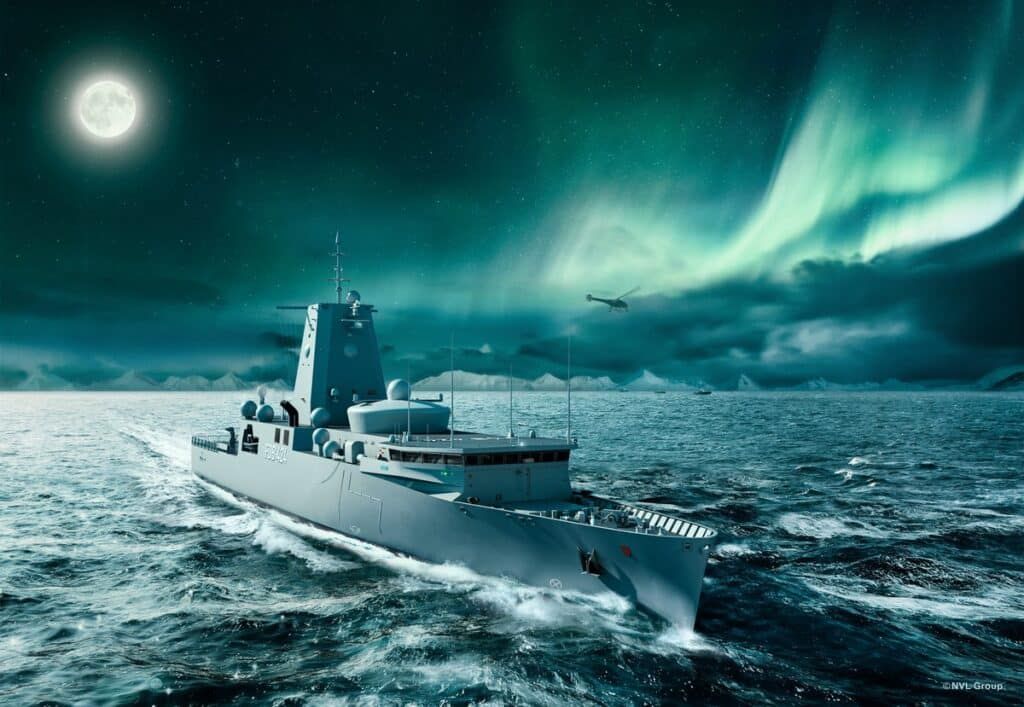
The Type 424 is a German intelligence-gathering ship class being developed to replace the German Navy's three Oste-class fleet service ships. The vessels are intended for maritime signals intelligence and other reconnaissance missions conducted jointly by the German Navy and the Cyber and Information Domain Service.
The original programme covers three ships and a shore-based Ausbildungs- und Referenzanlage Aufklärung training and reference facility. In September 2026, German Defence Minister Boris Pistorius announced plans to seek procurement of a fourth ship, although that additional vessel still required Bundestag approval and had no contracted price or construction schedule.
The approximately 132 m ships are designed to combine communications intelligence, electronic intelligence, hydroacoustic collection and electro-optical observation with onboard processing of collected information. They are significantly larger than the Oste-class vessels they are intended to replace.
Development and construction
The Bundestag authorized the original programme on 23 June 2021, and a contract for three ships and the ARAA training facility followed on 24 June. The initial programme value was approximately €2.1 billion. Parliamentary approval in July 2023 and a subsequent contract amendment increased the funding ceiling to approximately €3.26 billion. This total includes the ships, development, integration and the shore-based training facility, so it cannot be treated as a simple per-ship price.
Production of the first ship began with steel cutting on 21 November 2024, followed by keel laying on 25 February 2025. This 2024 production milestone is the earliest supported physical construction event for the class. The second ship reached keel laying on 19 November 2025. Steel cutting for the third vessel took place at Peene-Werft in Wolgast on 16 April 2026, earlier than originally planned, and its keel was laid on 14 September 2026. According to Naval News, all three originally contracted ships were therefore under construction by April 2026.
Published schedules have changed during the programme. A May 2025 report by Armada International described commissioning of the first ship from 2027 and completion of the three-ship class by 2029. Reporting in September 2026 instead stated that delivery of the first ship was scheduled for 2029 and that the three contracted vessels were planned for delivery by 2031. The later schedule therefore indicates a longer programme timeline.
The three contracted ships are planned to be named Oker, Isar and Saale. On 14 September 2026, during the third ship's keel-laying ceremony, Pistorius announced the intention to procure a fourth Type 424. The additional ship was presented as a way to increase maritime reconnaissance capacity and improve availability when individual vessels are undergoing maintenance, training or transit. As reported by Army Recognition, the fourth ship had not yet received parliamentary approval, a contract, a confirmed name or a construction date.
Design
The Type 424 is an approximately 132 m intelligence ship with a reported displacement of about 3,500 to 4,000 tonnes. Approximately 100 personnel are expected to embark, divided roughly between 50 personnel operating the ship and about 50 intelligence specialists. The class is considerably longer than the 83.5 m Oste-class vessels it will replace.
Detailed performance data remain undisclosed. Confirmed figures for beam, draft, propulsion output, maximum speed, range and endurance have not been published in the supplied sources. Requirements cited during the programme include self-protection, command-and-control capabilities and extremely low-noise propulsion.
Intelligence systems
The Type 424 is designed primarily as a maritime intelligence collection and processing platform. Its supported mission set includes communications intelligence and electronic intelligence, together with hydroacoustic and electro-optical collection. Electromagnetic sensors are intended to detect and analyze communications and radar emissions associated with land, air and maritime activity, while other sensors provide underwater and visual collection channels.
Communications intelligence allows intercepted communications signals to be analyzed, while electronic intelligence focuses on non-communications electromagnetic emitters such as radars. Direction finding and correlation between different sensors can support identification and geolocation of emitters. Hydroacoustic collection provides an additional underwater intelligence channel, but the available information does not establish that the ships possess the complete anti-submarine warfare sensor and weapon suite of a frigate or destroyer.
Armada International reported in 2025 that Rohde & Schwarz was integrating the mission system and that PLATH was believed to be supplying communications-intelligence equipment. The same report described planned processing of signals over a broad frequency range and support for NATO Common Electronic Support Measure Operations data. It also associated Rohde & Schwarz Kora electronic-support equipment, ADD-557 direction-finding antennas and Tawan intelligence-analysis software with the programme. However, later reporting did not establish these specific models as confirmed final production equipment, so they should be regarded as reported programme elements rather than definitive configuration data.
Processing and automation
The class is intended to process intelligence aboard ship rather than merely collect raw sensor data. Reporting on the programme describes machine-learning and artificial-intelligence functions supporting analysis of large sensor datasets, together with big-data processing for information exploitation and decision support. Automated ship-control functions are also intended to reduce routine workload by monitoring operating parameters and maintaining course without continuous manual intervention.
Despite this automation, the expected complement remains around 100 because approximately half of those aboard are mission specialists. The design therefore combines automation with a comparatively large intelligence staff responsible for exploiting electromagnetic, hydroacoustic and electro-optical information.
Self-protection and armament
The Type 424 is an intelligence ship rather than a conventional surface combatant. Germany's qNFMLG programme has included the class among intended recipients of a 30 × 173 mm automatic cannon intended to replace the 27 mm MLG 27 in German naval service. For the Type 424, this weapon is associated with local self-protection rather than offensive surface warfare.
No vertical-launch system, surface-to-air missile, anti-ship missile, torpedo armament or medium- or large-calibre naval gun has been confirmed for the class in the supplied material. Electronic-support and electronic-countermeasure capabilities have also been associated with the programme, but the division between strategic intelligence collection equipment and tactical self-protection systems has not been publicly defined.
Program status
Three Type 424 ships are under construction for Germany. The third vessel entered production with steel cutting in April 2026 and reached keel laying in September 2026. The first ship is scheduled for delivery in 2029 according to September 2026 reporting, with all three contracted ships planned by 2031.
The class is intended to replace the Oste, Oker and Alster, which entered service in 1988 and 1989. Those ships have supported German maritime intelligence operations in areas extending beyond the Baltic and North Sea, including the Mediterranean, Black Sea, Atlantic, Caribbean and Horn of Africa. The Type 424 is consequently intended for a broader maritime intelligence role that includes NATO's northern flank, the Baltic region and transatlantic reinforcement routes.
A fourth Type 424 was announced as a planned procurement in September 2026. Its purpose is to increase operational availability and permit more continuous intelligence coverage while individual ships are unavailable for maintenance, training or transit. The vessel remained a proposal pending parliamentary authorization at the time of the announcement.
Variants
- Type 424: Baseline German maritime intelligence ship class. Three vessels are contracted and under construction.
- Fourth Type 424: Additional proposed ship announced in September 2026. Procurement remained subject to Bundestag approval and no construction date or final name had been established.
Operators
- Germany: Three ships contracted for joint employment by the German Navy and the Cyber and Information Domain Service. A fourth ship is planned but was not yet contracted as of September 2026.
Specifications (Type 424 class)
General characteristics
- Type: Intelligence-gathering fleet service ship
- Length: approximately 132 m
- Displacement: approximately 3,500-4,000 tonnes
- Complement: approximately 100 personnel, including roughly 50 ship personnel and 50 intelligence specialists
- Propulsion: low-noise propulsion required; detailed configuration and output have not been disclosed
Mission systems
- Primary missions: communications intelligence, electronic intelligence, hydroacoustic intelligence and electro-optical reconnaissance
- Information processing: onboard processing of collected intelligence with reported machine-learning, artificial-intelligence and big-data functions
- Interoperability: NATO electronic-support data sharing, including reported support for Common Electronic Support Measure Operations
Armament
- Automatic cannon: planned 30 × 173 mm weapon under Germany's qNFMLG programme for local self-protection
Related equipment
- Oste class: Type 423 German intelligence ships being replaced by the Type 424 programme.
 Argentina
 Armenia
 Australia
 Austria
 Austria-Hungary
 Belgium
 Brazil
 United Kingdom
 United States
 Brunei
 Bulgaria
 Canada
 Chile
Chile China
China Colonial America
 Colombia
 Confederate States
 Croatia
 Czech
Czech Denmark
 Egypt
Egypt Finland
 France
 Georgia
 German Imperial
 Greece
 Holland
 Hungary
 India
India Indonesia
 Iran
Iran Iraq
Iraq Ireland
 Israel
 Italy
Italy Japan
Japan Japan (1940)
 Jordan
 Kingdom of Italy
 Malaysia
 Mexico
 Myanmar
 Nazi Germany
 Netherlands
 New Zealand
 North Korea
 Norway
 Pakistan
 Peru
Peru Philippines
 Poland
 Portugal
 Prussia
 Romania
 Russia
 Saudi Arabia
 Serbia
 Singapore
 Slovakia
 Slovenia
 South Africa
 South Korea
 Soviet Union
 Spain
Spain Sweden
 Switzerland
 Syria
Syria Taiwan
 Thailand
 Turkey
 UAE
UAE Ukraine
 Vietnam
 Yugoslavia