
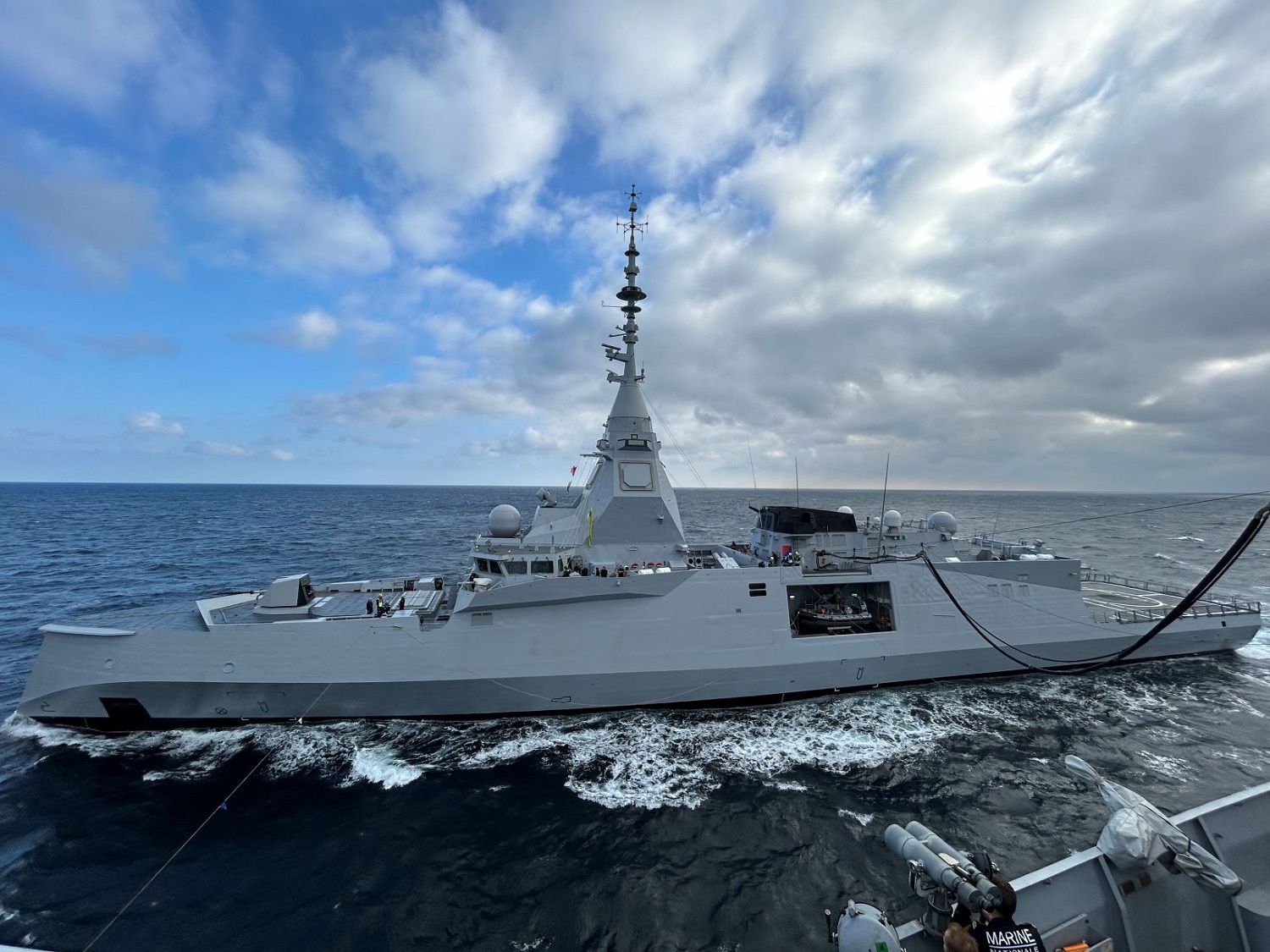
History
The Luleå class originated in January 2021 when the Swedish Defence Materiel Administration (FMV) awarded Saab Kockums a product-definition contract for Visby gen 2 corvettes. The evolving security situation following the 2022 Russian invasion of Ukraine and Sweden's subsequent NATO accession application led to the cancellation of that programme in favour of a new surface-combatant design not based on an existing Swedish hull. By 2023, requirements were revised toward a larger frigate with extended endurance and multi-domain capability, reducing the planned fleet from five to four vessels.
On 19 May 2026, the Swedish government announced the selection of Naval Group's Frégate de Défense et d'Intervention (FDI) for the Luleå class, citing delivery timeline, technical maturity, and cost-sharing with France and Greece as key factors. Competing proposals were also evaluated; available sources differ on the exact competitor designations, with one account citing the Arrowhead 140 and MEKO A-400 and another citing Babcock's Arrowhead 120 and Navantia's Alfa 4000. The formal contract for four frigates was signed on 31 August 2026 at a value of SEK 47 billion (USD 4.9 billion). On 1 October 2026, Naval Group cut steel on HMS Luleå at its Lorient shipyard, marking the start of production.
Design
At 122 m in length and 17.7 m in beam with a displacement of 4,460 t, the Luleå class will be the largest warships in the Royal Swedish Navy. The ships are based on the French FDI architecture, which features a distinctive inverted bow for improved seakeeping, and are configured primarily for air-defence and anti-submarine warfare missions. Propulsion comprises four MTU 16V 8000 M91L diesel engines producing a combined 43,000 hp, enabling a maximum speed of 27 knots. Endurance is 45 days and range is 5,000 nmi (9,300 km) at 15 knots. The complement is 125 officers and ratings plus 28 passengers.
The Swedish configuration replaces the Oto Melara 76 mm gun found on French and Greek FDIs with a Bofors 57 mm Mk3b gun and adds a Bofors 40 mm Mk4 gun, multiple Saab Trackfire remote weapon stations, and Saab Torped 47 torpedo tubes. Air-defence capability is provided by MBDA Aster 30 and CAMM-ER missiles, while the RBS 15 Mk4 serves as the anti-ship missile. Sensor and weapons systems include the Saab Giraffe 1X radar. The aviation facility includes a hangar accommodating one Hkp 14 helicopter and one Skeldar V-200 unmanned aerial system, along with a flight deck.
Program status
HMS Luleå is under construction at Naval Group's Lorient facility in France. Production began with the steel-cutting ceremony on 1 October 2026, one month after contract signature. Delivery is scheduled for 2030. The remaining three units—HMS Norrköping, HMS Trelleborg, and HMS Halmstad—are planned for delivery in 2032, 2033, and 2034 respectively. Naval Group has stated that the FDI production line is capable of delivering two vessels per year and that a structured, long-term industrial partnership with Swedish industry will involve the company's sites in both France and Sweden.
Specifications (HMS Luleå, Luleå class)
General characteristics
- Type: General-purpose frigate (air defence / anti-submarine warfare)
- Displacement: 4,460 t
- Length: 122 m
- Beam: 17.7 m
- Complement: 125 + 28 passengers
Performance
- Propulsion: 2 × 2 MTU 16V 8000 M91L diesel engines, 43,000 hp
- Maximum speed: 27 kn
- Range: 5,000 nmi (9,300 km) at 15 kn
- Endurance: 45 days
Armament
- Naval guns: 1 × Bofors 57 mm Mk3b; 1 × Bofors 40 mm Mk4; multiple Saab Trackfire RWS
- Anti-ship missiles: Saab RBS 15 Mk4
- Surface-to-air missiles: MBDA Aster 30; MBDA CAMM-ER
- Torpedoes: Saab Torped 47
Aviation
- Aircraft: 1 × Hkp 14 helicopter; 1 × Skeldar V-200 UAV
- Facilities: Hangar for one helicopter and one UAV; helicopter flight deck
 Argentina
 Armenia
 Australia
 Austria
 Austria-Hungary
 Belgium
 Brazil
 United Kingdom
 United States
 Brunei
 Bulgaria
 Canada
 Chile
Chile China
China Colonial America
 Colombia
 Confederate States
 Croatia
 Czech
Czech Denmark
 Egypt
Egypt Finland
 Georgia
 Germany
 German Imperial
 Greece
 Holland
 Hungary
 India
India Indonesia
 Iran
Iran Iraq
Iraq Ireland
 Israel
 Italy
Italy Japan
Japan Japan (1940)
 Jordan
 Kingdom of Italy
 Malaysia
 Mexico
 Myanmar
 Nazi Germany
 Netherlands
 New Zealand
 North Korea
 Norway
 Pakistan
 Peru
Peru Philippines
 Poland
 Portugal
 Prussia
 Romania
 Russia
 Saudi Arabia
 Serbia
 Singapore
 Slovakia
 Slovenia
 South Africa
 South Korea
 Soviet Union
 Spain
Spain Sweden
 Switzerland
 Syria
Syria Taiwan
 Thailand
 Turkey
 UAE
UAE Ukraine
 Vietnam
 Yugoslavia