
History
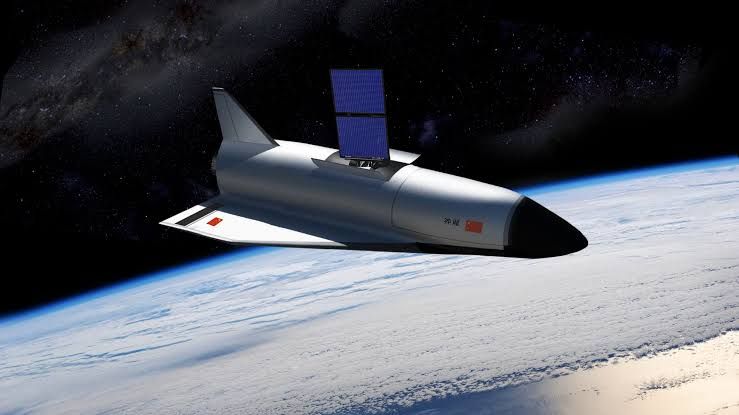
Shenlong is a Chinese reusable uncrewed orbital spaceplane used to test reusable spaceflight technologies and conduct experiments in low Earth orbit. It is launched vertically aboard a Long March 2F rocket and returns by runway landing.
The program has completed several increasingly long orbital missions since its first flight in 2020. Observed activities include deployment of small objects, extensive orbital manoeuvring, rendezvous and proximity operations, and apparent docking or capture of objects previously released by the spacecraft.
China describes the reusable experimental spacecraft program as a means of developing more convenient and affordable round-trip access for the peaceful use of space. The vehicle's ability to approach and apparently recover objects also gives its technologies potential dual-use applications, although the available evidence does not establish operations against non-Chinese spacecraft.
Early missions
The first Shenlong orbital mission began in September 2020 and lasted approximately two days. The spacecraft deployed a small satellite that demonstrated radio transmission capabilities.
A second mission began in May 2023 and lasted approximately 276 days. The satellite deployed during this mission is believed to have possessed independent propulsion. Tracking of the spacecraft and associated objects indicated repeated close approaches and capture or docking activity.
A third mission began in September 2024 and lasted approximately 266 days. The first three Shenlong missions each involved the deployment of at least one object in orbit. Ground-based telescope observations during the program have also shown structures interpreted as possible deployed solar arrays, antennas, or other external components.
Fourth mission
Shenlong began its fourth orbital mission on 6 February 2026, launching aboard a Long March 2F from the Jiuquan Satellite Launch Center. The mission's detailed objectives were not publicly disclosed.
On 22 June 2026, orbital tracking detected a previously uncatalogued object close to Shenlong. Subsequent observations assessed with high confidence that the object had been released from the spaceplane. Tracking data later indicated that Shenlong manoeuvred back toward the object and apparently retrieved it approximately three weeks after deployment.
The same object was released again in August 2026. Shenlong subsequently altered its orbit and approached it again, followed by another apparent capture in September. These repeated release, pursuit, and recovery sequences provide evidence that the spacecraft can perform controlled rendezvous and proximity operations with associated objects in low Earth orbit.
Design
Shenlong is a reusable orbital spaceplane launched by rocket rather than taking off under its own power. It returns through the atmosphere and lands on a runway. Available information indicates an uncrewed vehicle intended for repeated orbital missions, but detailed dimensions, mass, payload capacity, propulsion arrangements, and internal configuration have not been publicly established.
The spacecraft is carried to orbit by the Long March 2F launch vehicle from Jiuquan. Its missions have demonstrated the ability to change orbit, deploy objects, approach them after separation, and apparently dock with or capture them. These capabilities are characteristic of rendezvous and proximity operations, which require accurate relative navigation and controlled orbital manoeuvring.
Telescope imagery has shown components extending from the spacecraft that have been interpreted as possible solar arrays, antennas, or other deployable hardware. The observations support the presence of external deployed structures but do not establish their exact configuration.
Orbital operations
Shenlong's missions have included substantial time in low Earth orbit and repeated interaction with objects released from the spacecraft itself. Rendezvous and proximity operations can support activities such as spacecraft inspection, servicing, refuelling, hardware testing, satellite retrieval, and controlled deorbiting. The same fundamental technologies can also have military applications, making their purpose dependent on the mission and target.
Available observations have not established Shenlong approaching non-Chinese spacecraft. Assessments of the program therefore distinguish its demonstrated manoeuvring and capture capabilities from speculative claims about anti-satellite or space-to-ground weapon roles.
Program status
As of September 2026, Shenlong was conducting its fourth known orbital mission. The program had progressed from a two-day first mission to missions lasting many months, while repeatedly demonstrating satellite deployment, orbital manoeuvring, close approaches, and apparent capture or docking activity.
The 2026 mission provided particularly clear evidence of repeatable object-handling operations because the same object was released, approached, apparently retrieved, released again, and approached for another apparent capture. The sequence indicates that rendezvous and proximity operations are a recurring element of the spacecraft's experimental activity rather than an isolated event.
Specifications (Shenlong reusable spaceplane)
General characteristics
- Type: Reusable uncrewed orbital spaceplane
- Country of development: China
- Launch vehicle: Long March 2F
- Launch site: Jiuquan Satellite Launch Center
- Operating region: Low Earth orbit
- Recovery: Runway landing
Demonstrated capabilities
- Reusability: Multiple orbital missions by the reusable spacecraft program
- Object deployment: Deployment of small satellites or other objects during multiple missions
- Orbital manoeuvring: Repeated changes of orbit and controlled approaches to associated objects
- Rendezvous and proximity operations: Demonstrated close manoeuvres with objects released by the spacecraft
- Capture or docking: Tracking observations indicate repeated apparent capture or docking operations with deployed objects
 Argentina
 Armenia
 Australia
 Austria
 Austria-Hungary
 Belgium
 Brazil
 United Kingdom
 United States
 Brunei
 Bulgaria
 Canada
 Chile
Chile Colonial America
 Colombia
 Confederate States
 Croatia
 Czech
Czech Denmark
 Egypt
Egypt Finland
 France
 Georgia
 Germany
 German Imperial
 Greece
 Holland
 Hungary
 India
India Indonesia
 Iran
Iran Iraq
Iraq Ireland
 Israel
 Italy
Italy Japan
Japan Japan (1940)
 Jordan
 Kingdom of Italy
 Malaysia
 Mexico
 Myanmar
 Nazi Germany
 Netherlands
 New Zealand
 North Korea
 Norway
 Pakistan
 Peru
Peru Philippines
 Poland
 Portugal
 Prussia
 Romania
 Russia
 Saudi Arabia
 Serbia
 Singapore
 Slovakia
 Slovenia
 South Africa
 South Korea
 Soviet Union
 Spain
Spain Sweden
 Switzerland
 Syria
Syria Taiwan
 Thailand
 Turkey
 UAE
UAE Ukraine
 Vietnam
 Yugoslavia