
History
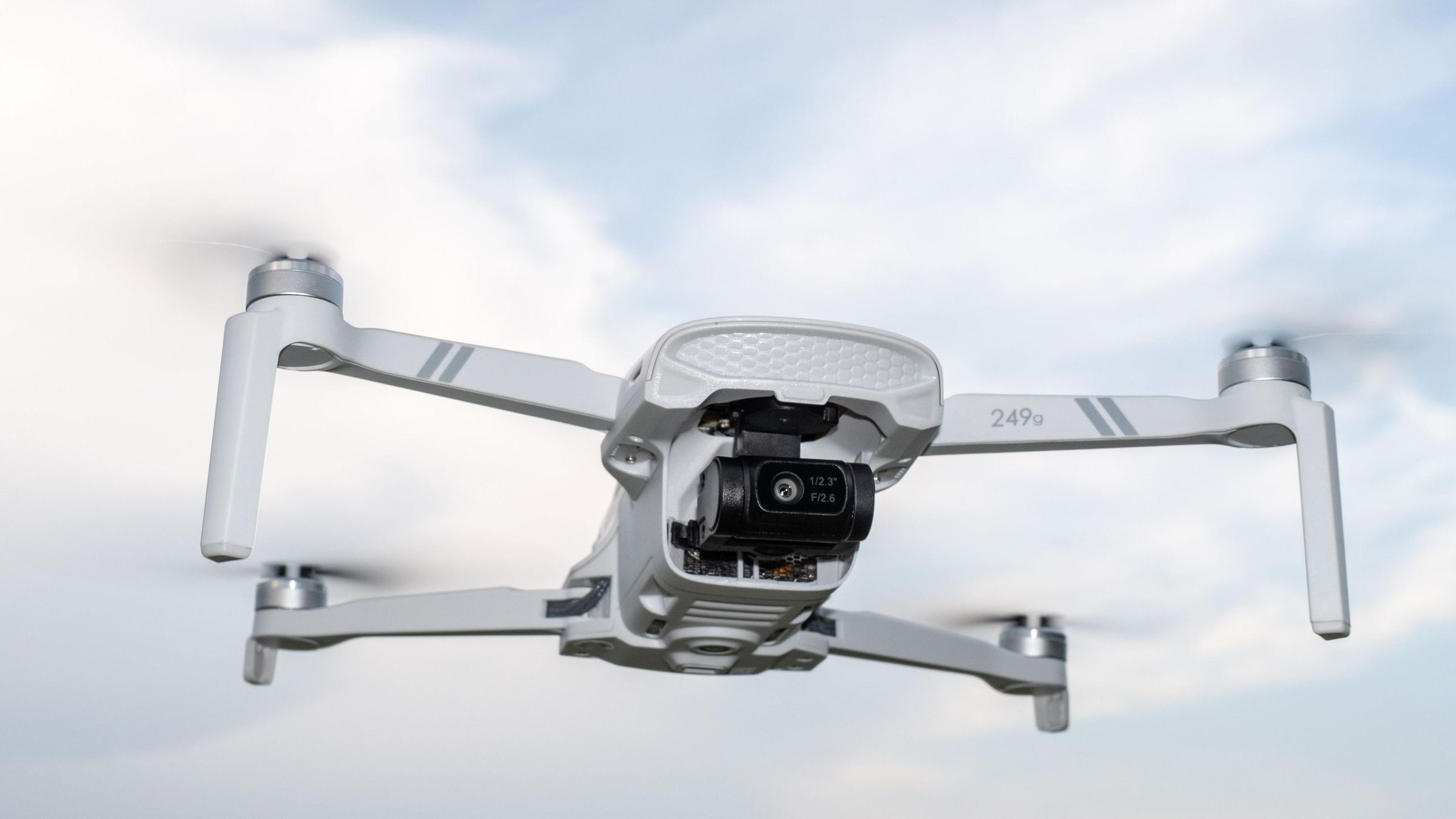
The Holy Stone HS900 Pro is a compact folding quadcopter developed for consumer aerial photography and recreational flying. It weighs 249 g, placing it in the sub-250 g class, and combines a 48 MP camera, 4K video recording, GPS-assisted flight, a three-axis gimbal and automated shooting functions.
By July 2026, the HS900 Pro was available as a physical production model for hands-on review. It followed the earlier HS900 and retained a closely related airframe, controller and camera concept, while adding more developed subject-tracking and automated flight functions. Contemporary testing described the Pro as an incremental update rather than a complete redesign.
The model entered a highly competitive lightweight-drone market. Reviews praised its stable flight, build quality and feature set, but also identified limitations including the absence of dedicated obstacle avoidance, poor RAW-image color rendering at launch and a vibration problem observed during AI Parallel tracking. These issues led reviewers to note that parts of the software would benefit from firmware refinement.
Development from the HS900
The HS900 Pro is closely related to the original HS900. The earlier model established the basic sub-250 g folding layout, GPS flight-control concept, three-axis stabilized camera and smart-flight features. In the Pro version, the most visible changes reported by reviewers were improved subject tracking and a broader set of automated flight patterns rather than major changes to the airframe or imaging hardware.
Holy Stone also promoted more advanced route-based shooting on the HS900 Pro. The manufacturer's HS900 Pro feature page describes an Advanced Tap Fly mode in which the pilot can place multiple waypoints and define parameters such as altitude, cruising speed, heading, gimbal angle, hover time, camera actions and the action at the end of the route.
Launch configuration and early evaluation
Independent testing in 2026 found that the aircraft generally flew smoothly and responded predictably to control inputs. The camera produced good JPEG results and usable 4K video for a small consumer drone. However, reviewers found severe color casts in DNG RAW files that could not be corrected satisfactorily with normal white-balance adjustments. The AI Following mode worked effectively, while the AI Parallel mode produced heavy vibration during one review test.
The HS900 Pro kit reviewed in 2026 included the aircraft, folding controller, two batteries, cables, spare propellers and a carry bag. The reviewed package was priced at about US$389.99 or £369.99. That price placed the drone against increasingly capable sub-250 g competitors, including models with stronger imaging systems or obstacle-sensing hardware.
Design
Airframe and layout
The HS900 Pro uses a conventional folding quadcopter layout with four brushless motors and folding arms. The airframe is made from lightweight plastic and is finished in light gray. Folded dimensions are 143 x 82.8 x 62 mm, while unfolded dimensions are 167.4 x 217.8 x 62 mm. Takeoff weight is 249 g.
The underside carries a downward vision camera and a time-of-flight ranging sensor. These systems assist height measurement and position holding, particularly where GPS reception is weak, but they are not a dedicated obstacle-avoidance system. The drone therefore requires the pilot to monitor its surroundings during manual and automated flight.
Flight-control and positioning systems
Outdoor navigation is based on GPS positioning, while optical-flow and downward TOF sensing support low-altitude positioning. The control system provides Stable, Normal and Sport flight modes. Return-to-Home functions include pilot-commanded RTH, low-battery RTH and signal-loss behavior. The return altitude can be set from 30 to 120 m.
The drone is rated for Level 5 wind resistance. Maximum horizontal speed is 5 m/s in Stable mode, 10 m/s in Normal mode and 14 m/s in Sport mode. The corresponding maximum ascent rates are 2, 3 and 4 m/s, while maximum descent rates are 1.5, 2.5 and 3.5 m/s. Holy Stone specifies a maximum takeoff altitude of 4,500 m.
Without usable GPS, the downward vision system can provide positioning over suitable textured, well-lit surfaces. Its stated visual hovering range is 0.25 to 10 m, while the TOF system has a precise measurement range of 0.25 to 5 m. The manual warns that visual positioning can be unreliable over water, reflective or transparent surfaces, repetitive patterns, featureless surfaces or poor lighting.
Controller and data link
The folding handheld controller measures 152.5 x 47 x 82 mm when folded and uses a 3.7 V, 3,900 mAh internal lithium-polymer battery. A smartphone is mounted between folding handles below the main controls and connects to the controller by cable. The controller includes two primary control sticks, a Return-to-Home button, speed selector, gimbal dial, customizable function button, secondary joystick and dedicated photo and video controls.
Holy Stone lists a 2.4 GHz control link and a maximum transmission or control distance of about 10 km under ideal conditions. Actual range depends on interference, obstacles and the operating environment.
Camera and gimbal
The camera uses a 1/2.3-inch CMOS sensor with 48 million effective pixels. The lens has an 83-degree field of view and a 4.49 mm focal length; the reviewed camera is described as having a fixed f/2.6 aperture. Still-image resolutions include 8192 x 4608 and 3840 x 2160 pixels. ISO sensitivity is 100-1600 and the electronic shutter range is 1/2 to 1/4000 second.
Video recording includes UHD 3840 x 2160 at 30 frames per second and Full HD 1920 x 1080 at up to 60 frames per second. Maximum video bitrate is reported as up to 100 Mbps. Images can be recorded as JPEG or RAW files and video as MP4. The aircraft supports microSD cards up to 128 GB.
The camera is mounted on a three-axis stabilized gimbal. The controllable pitch range is -90 to +30 degrees, although Sport mode limits the recommended or available upper portion of the tilt range during forward flight. Holy Stone specifies gimbal stabilization precision of ±0.01 degree static and ±0.02 degree dynamic.
Battery and endurance
The flight battery is a 7.7 V, 2,250 mAh two-cell lithium-polymer pack. Holy Stone claims a maximum flight time of 30 minutes when hovering in windless conditions from a fully charged battery to depletion. Independent testing typically produced about 23 minutes in normal wind conditions. The battery charges through the aircraft's USB-C port, with the manual listing a fastest charging time of about 80 minutes when a compatible QC3.0 charger is used.
Automated flight and imaging functions
The HS900 Pro provides automated functions including Follow Me, Point of Interest orbiting, Waypoint Flight, Gesture Control, Spiral Flight, Cruise Control, panorama, time-lapse and other one-tap shooting patterns. AI subject tracking includes AI Following, which keeps the drone behind a moving subject at a set distance and height, and AI Parallel, which flies beside the subject.
The manufacturer's Advanced Tap Fly implementation expands waypoint flight by allowing route points to control camera actions, altitude, speed, heading, gimbal angle, hover duration and end-of-route behavior. Cruise Control can maintain a constant flight direction and speed after the control sticks are released, reducing continuous pilot input during long video moves.
Use and reception
Reviews characterized the HS900 Pro as a capable beginner and enthusiast camera drone rather than a professional imaging platform. Stable GPS-assisted hovering, responsive controls and the three-axis gimbal were among its stronger characteristics. Its 249 g weight and folding form make it portable for travel and recreational aerial photography.
The main safety limitation is the lack of dedicated obstacle avoidance. GPS, optical flow and TOF ranging improve positioning but do not detect and avoid obstacles in the aircraft's flight path. This is particularly important when using tracking or waypoint modes near trees, buildings, poles or wires.
Image quality is strongest in good light. JPEG photographs were judged favorably in testing, while RAW DNG files showed severe color casts at launch. The camera also lacks features such as a histogram and automatic exposure bracketing. Reviewers therefore considered the HS900 Pro competitive in flight performance and convenience, but less complete in imaging refinement and safety features than some similarly priced rivals. The detailed 2026 evaluation is available from Space.com.
Variants
- HS900: Earlier closely related model that established the folding sub-250 g platform, three-axis stabilized camera and core GPS-assisted flight features.
- HS900 Pro: Updated model with improved subject tracking and expanded automated flight functions, including the manufacturer's Advanced Tap Fly waypoint-control concept.
Specifications (Holy Stone HS900 Pro)
General characteristics
- Type: Folding consumer camera quadcopter
- Takeoff weight: 249 g
- Dimensions folded: 143 x 82.8 x 62 mm
- Dimensions unfolded: 167.4 x 217.8 x 62 mm
- Motor layout: Four brushless motors
- Battery: 7.7 V, 2,250 mAh LiPo 2S
- Operating temperature: -10 to +45 °C
Performance
- Maximum horizontal speed: 14 m/s in Sport mode
- Maximum ascent speed: 4 m/s
- Maximum descent speed: 3.5 m/s
- Maximum flight time: 30 minutes claimed in windless hovering conditions
- Typical reviewed flight time: about 23 minutes in normal wind conditions
- Maximum takeoff altitude: 4,500 m
- Wind resistance: Level 5
- Maximum transmission/control distance: about 10 km under ideal conditions
Camera and imaging
- Sensor: 1/2.3-inch CMOS, 48 million effective pixels
- Lens: 4.49 mm, 83-degree field of view, fixed f/2.6 aperture
- ISO range: 100-1600
- Electronic shutter: 1/2 to 1/4000 second
- Maximum photo resolution: 8192 x 4608 pixels
- Video: 3840 x 2160 at 30 fps; 1920 x 1080 at up to 60 fps
- Maximum video bitrate: up to 100 Mbps
- Photo formats: JPEG and RAW
- Video format: MP4
- Storage: microSD card up to 128 GB
- Gimbal: Three-axis stabilization, pitch -90 to +30 degrees
Navigation and flight aids
- Satellite positioning: GPS
- Local positioning: Downward optical-flow vision and TOF ranging
- Visual hovering range: 0.25 to 10 m
- TOF precise measurement range: 0.25 to 5 m
- Return-to-Home: Manual, low-battery and signal-loss functions
- Obstacle avoidance: No dedicated obstacle-avoidance system
Related equipment
- Holy Stone HS900: Direct predecessor and closely related platform.
- DJI Mini 5 Pro: More advanced sub-250 g competitor cited in 2026 comparison coverage.
- DJI Lito 1: Beginner-oriented competitor cited for offering obstacle avoidance and higher-frame-rate 4K recording.
- Potensic Atom 2: Comparable lightweight camera drone cited for strong value, image quality and flight performance.
 Argentina
 Armenia
 Australia
 Austria
 Austria-Hungary
 Belgium
 Brazil
 United Kingdom
 United States
 Brunei
 Bulgaria
 Canada
 Chile
Chile Colonial America
 Colombia
 Confederate States
 Croatia
 Czech
Czech Denmark
 Egypt
Egypt Finland
 France
 Georgia
 Germany
 German Imperial
 Greece
 Holland
 Hungary
 India
India Indonesia
 Iran
Iran Iraq
Iraq Ireland
 Israel
 Italy
Italy Japan
Japan Japan (1940)
 Jordan
 Kingdom of Italy
 Malaysia
 Mexico
 Myanmar
 Nazi Germany
 Netherlands
 New Zealand
 North Korea
 Norway
 Pakistan
 Peru
Peru Philippines
 Poland
 Portugal
 Prussia
 Romania
 Russia
 Saudi Arabia
 Serbia
 Singapore
 Slovakia
 Slovenia
 South Africa
 South Korea
 Soviet Union
 Spain
Spain Sweden
 Switzerland
 Syria
Syria Taiwan
 Thailand
 Turkey
 UAE
UAE Ukraine
 Vietnam
 Yugoslavia