
History
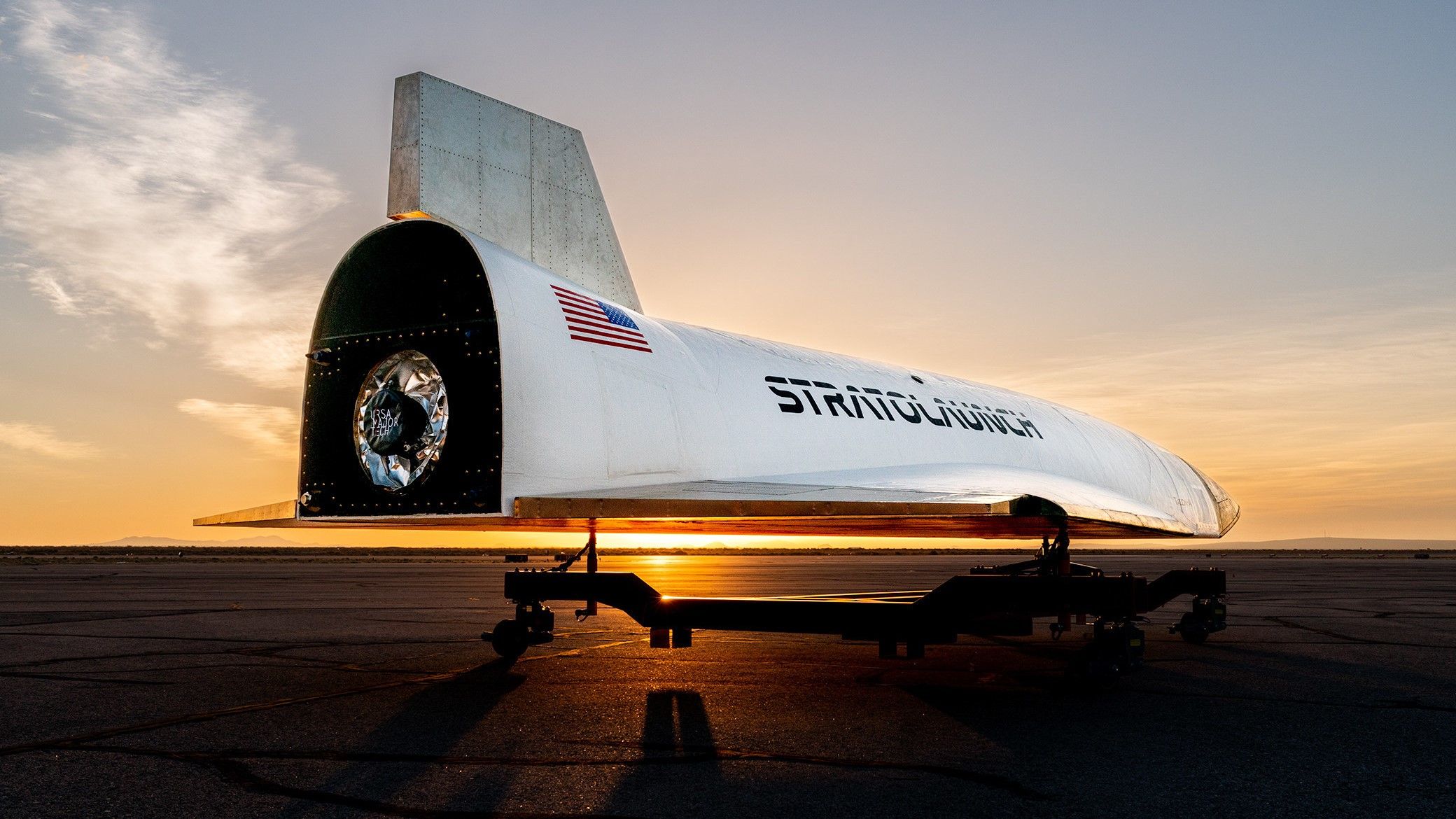
Stratolaunch Talon-A is a reusable, autonomous, air-launched hypersonic test aircraft developed in the United States. It was created to provide government and commercial customers with repeatable access to flight at speeds above Mach 5 for testing propulsion, materials, sensors, flight controls, and defensive technologies.
Development
Stratolaunch introduced Talon-A as part of a transition from its original launch-services concept to high-speed flight testing. Air launch allows the vehicle to begin a mission at altitude and at a selected location rather than relying on a fixed ground range. The aircraft is carried beneath a larger carrier and released before its rocket engine accelerates it through the test profile.
The program uses progressively capable vehicles to verify release, propulsion, autonomous control, thermal protection, landing, and reuse. An expendable test article supported early separation work, while later Talon-A vehicles were configured for powered hypersonic flight and runway recovery.
Flight testing
Talon-A2 exceeded Mach 5 during flights in December 2024 and March 2025. It was recovered after both missions, marking the return of reusable US hypersonic flight testing for the first time since the X-15 program ended in 1968. The flights were conducted in support of the US Department of Defense Multi-Service Advanced Capability Hypersonics Test Bed program.
By 2026, Stratolaunch reported completing more than ten hypersonic Talon-A flights. Multiple missions used the same vehicle, allowing engineers to inspect, refurbish, and relaunch it. Each mission collected information on aerodynamics, propulsion, thermal loads, materials, and autonomous flight control.
Test service
The aircraft is intended to make hypersonic experiments more frequent than traditional one-use test launches. Customers can use the flight environment to evaluate payloads, sensors, communication equipment, thermal-protection materials, and tracking systems. The platform can also serve as a representative target for development of hypersonic detection and defense equipment.
Design
Talon-A is an uncrewed lifting vehicle with a rocket propulsion system, aerodynamic control surfaces, landing gear, and autonomous guidance. Its shape is designed for powered acceleration and controlled flight through the severe aerodynamic and thermal environment encountered above Mach 5.
Air launch
The vehicle is carried to release altitude by either the Stratolaunch Roc or the modified Boeing 747-400 Spirit of Mojave. After separation, Talon-A establishes safe clearance from the carrier, ignites its propulsion system, and follows a programmed high-speed trajectory. A mobile air-launch platform allows missions to be positioned around weather, range availability, and test objectives.
Autonomous control
Talon-A operates without an onboard pilot. Guidance, navigation, and control software manage release, engine operation, the hypersonic test segment, deceleration, approach, and landing. Ground personnel supervise the mission, but published accounts describe the flight sequence from release to recovery as autonomous.
Recovery and reuse
Reusable Talon-A vehicles land on a conventional runway. Engineers inspect the airframe, propulsion system, thermal-protection surfaces, avionics, and landing gear before another flight. Reuse allows the program to compare measurements across missions and reduces the need to manufacture a complete new vehicle for every experiment.
Instrumentation
The platform carries extensive instrumentation to measure aerodynamic loads, temperatures, propulsion performance, vibration, and control response. Customer payload interfaces support experiments in the real hypersonic environment. Exact payload capacity and mission endurance depend on the vehicle and test profile and have not been fully published.
Operational history
Talon-A is operated as a research and test service rather than an operational weapon. Its flights have supported US government hypersonic research through the MACH-TB program and can also carry commercial experiments. The vehicle's military relevance comes from the data and test opportunities it provides, not from a publicly confirmed combat role.
Variants
- TA-0 — initial separation-test vehicle used to validate release from the carrier aircraft.
- Talon-A1 — powered test vehicle used during the transition to hypersonic flight.
- Talon-A2 — reusable autonomous vehicle that exceeded Mach 5 and completed runway recoveries.
- Later Talon-A vehicles — additional test aircraft intended to increase flight frequency and customer capacity.
Operators
- United States — Stratolaunch operates Talon-A as a hypersonic flight-test platform for government and commercial customers.
Specifications (Talon-A reusable test vehicle)
General characteristics
- Crew: none
- Type: reusable autonomous air-launched hypersonic test aircraft
- Launch platforms: Stratolaunch Roc and Boeing 747-400 Spirit of Mojave
- Recovery: conventional runway landing
- Propulsion: rocket engine
Performance
- Maximum demonstrated speed: above Mach 5
- Flight mode: autonomous from release through landing
Related equipment
- Stratolaunch Roc — large carrier aircraft developed to air-launch test vehicles.
- Spirit of Mojave — modified Boeing 747-400 used as another Talon-A carrier.
- North American X-15 — earlier US reusable air-launched hypersonic research aircraft.
 Argentina
 Armenia
 Australia
 Austria
 Austria-Hungary
 Belgium
 Brazil
 United Kingdom
 Brunei
 Bulgaria
 Canada
 Chile
Chile China
China Colonial America
 Colombia
 Confederate States
 Croatia
 Czech
Czech Denmark
 Egypt
Egypt Finland
 France
 Georgia
 Germany
 German Imperial
 Greece
 Holland
 Hungary
 India
India Indonesia
 Iran
Iran Iraq
Iraq Ireland
 Israel
 Italy
Italy Japan
Japan Japan (1940)
 Jordan
 Kingdom of Italy
 Malaysia
 Mexico
 Myanmar
 Nazi Germany
 Netherlands
 New Zealand
 North Korea
 Norway
 Pakistan
 Peru
Peru Philippines
 Poland
 Portugal
 Prussia
 Romania
 Russia
 Saudi Arabia
 Serbia
 Singapore
 Slovakia
 Slovenia
 South Africa
 South Korea
 Soviet Union
 Spain
Spain Sweden
 Switzerland
 Syria
Syria Taiwan
 Thailand
 Turkey
 UAE
UAE Ukraine
 Vietnam
 Yugoslavia