
History
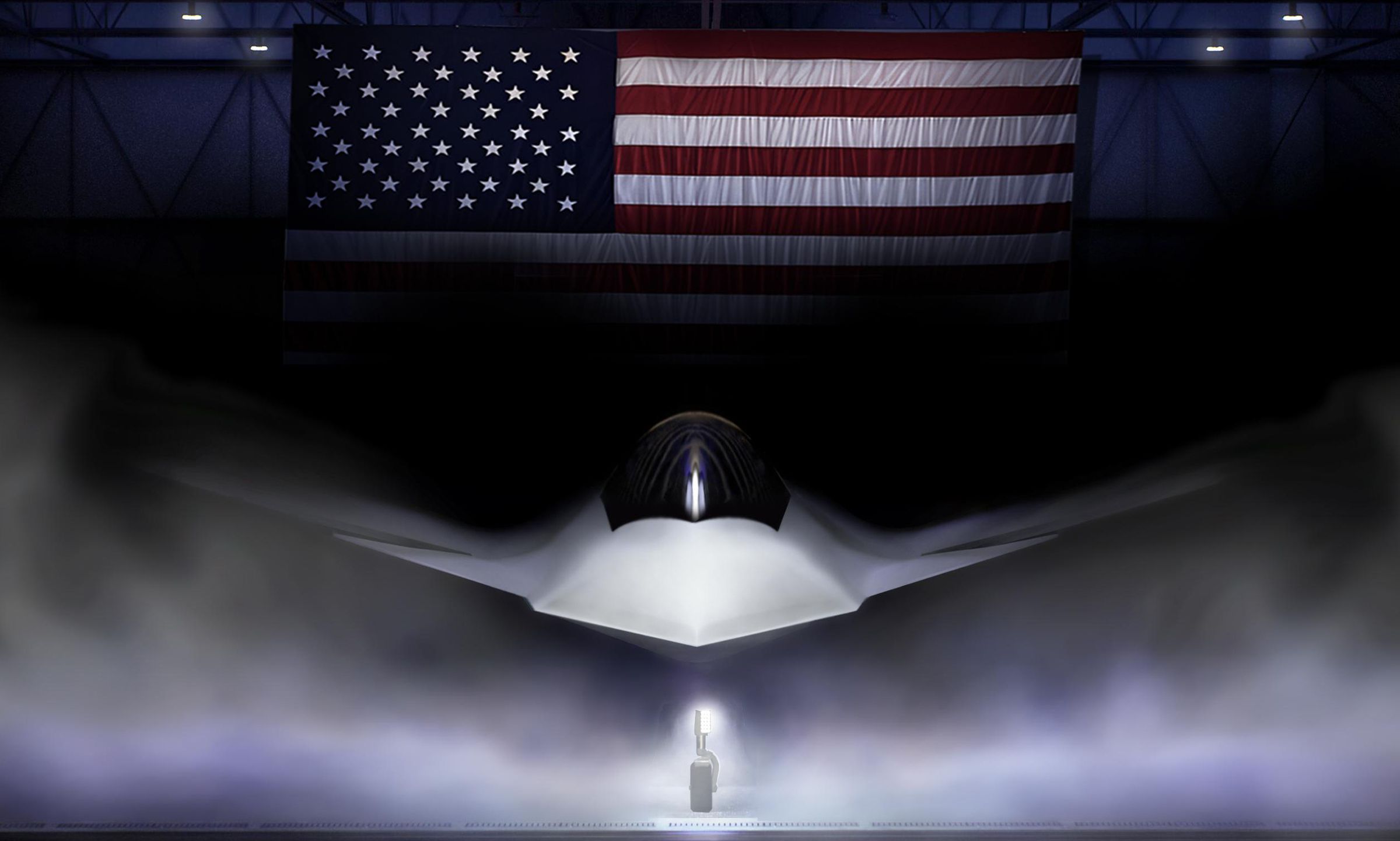
The Boeing F-47 is a planned United States Air Force air-superiority fighter being developed as the crewed centerpiece of the Next Generation Air Dominance program. The aircraft is intended to succeed the Lockheed Martin F-22 Raptor and operate as part of a broader family of systems that includes Collaborative Combat Aircraft.
Boeing received the engineering and manufacturing development contract for the F-47 in March 2025. By July 2026, the program had entered engineering and manufacturing development, with test aircraft being produced and the first flight officially targeted for 2028.
Most details of the aircraft remain classified. Publicly released information indicates that the Air Force intends the F-47 to combine long range, advanced stealth, high speed, improved supportability, and the ability to work with uncrewed aircraft.
Development
The F-47 emerged from the United States Air Force Next Generation Air Dominance initiative, which was created to develop a successor to the F-22 and associated technologies for future air superiority operations. Experimental NGAD-related aircraft had flown before Boeing was selected for the production-representative fighter program. Public accounts state that full-scale experimental testing began by 2020. A broader account of the program is available in the F-47 program overview.
The Air Force temporarily paused the NGAD fighter effort in 2024 while it reviewed the program's cost and its planned approach to future air dominance. In early 2025, Air Force officials said the review had concluded that a crewed NGAD fighter remained necessary. On 21 March 2025, the United States announced that Boeing had been selected to develop the aircraft, which received the designation F-47.
The engineering and manufacturing development award was reported as exceeding $20 billion. The development phase covers maturation, integration, and testing and includes production of a small number of test aircraft. It also includes priced options for low-rate initial production. Boeing began manufacturing the first F-47 article during 2025.
By July 2026, General Dale White stated that the F-47 had entered engineering and manufacturing development with what he described as unusually high program maturity. The Air Force continued to state that the first Boeing F-47 was scheduled to fly in 2028. A contemporary July 2026 program report also described test-aircraft production and the 2028 flight schedule. A separate 2026 F-47 overview likewise reported that the first representative aircraft was under construction.
Design
The detailed configuration of the F-47 has not been publicly disclosed. Official imagery released by the Air Force does not provide enough information to establish the production aircraft's exact aerodynamic layout, dimensions, internal arrangement, or weapon configuration.
Air Force statements describe the F-47 as a long-range, stealthy air-superiority aircraft intended to offer greater range, improved stealth, higher availability, and reduced support requirements compared with existing fifth-generation fighters. Public Air Force information released in 2025 stated a planned combat radius exceeding 1,000 nautical miles and a maximum speed greater than Mach 2.
The F-47 is part of an NGAD family of systems rather than a stand-alone fighter. Collaborative Combat Aircraft are intended to operate alongside the crewed fighter. A secondary program summary also describes the F-47 in the context of NGAD and its associated uncrewed aircraft.
Propulsion
The Air Force is developing next-generation propulsion for the F-47 through the Next Generation Adaptive Propulsion program. As of mid-2026, a final engine manufacturer had not been publicly selected. GE Aerospace was developing the XA102 and Pratt & Whitney was developing the XA103 as competing NGAP engine designs. The propulsion competition is intended to mature adaptive-cycle technology for the F-47. A detailed NGAP engine analysis describes the parallel development of the two engine candidates.
Systems architecture
The engineering and manufacturing development program includes integration and testing of the aircraft's major systems. Public reporting describes a modular design approach intended to accommodate emerging technology and support integration of long-range strike capabilities. However, specific sensors, avionics, weapons, electronic-warfare equipment, communications systems, and internal architecture have not been publicly detailed.
Program status
As of July 2026, the F-47 remained in engineering and manufacturing development. Test aircraft were being produced, but the Boeing F-47 had not yet completed its planned first flight. The Air Force continued to target 2028 for that milestone.
The United States Air Force has publicly indicated that it plans to acquire at least 185 F-47 aircraft, approximately matching the size of the F-22 fleet the new fighter is intended to replace. The program is expected to progress from developmental aircraft toward production and later operational fielding, but the publicly supported schedule remains subject to development and testing.
Specifications (Boeing F-47 planned configuration)
Performance
- Maximum speed: greater than Mach 2
- Combat radius: more than 1,000 nmi (approximately 1,900 km)
Related equipment
- Lockheed Martin F-22 Raptor: Air-superiority fighter that the F-47 is intended to replace.
- Collaborative Combat Aircraft: Uncrewed aircraft planned to operate with the F-47 as part of the Next Generation Air Dominance family of systems.
Current program information and the 2028 first-flight target are supported by the supplied F-47 source package.
 Argentina
 Armenia
 Australia
 Austria
 Austria-Hungary
 Belgium
 Brazil
 United Kingdom
 Brunei
 Bulgaria
 Canada
 Chile
Chile China
China Colonial America
 Colombia
 Confederate States
 Croatia
 Czech
Czech Denmark
 Egypt
Egypt Finland
 France
 Georgia
 Germany
 German Imperial
 Greece
 Holland
 Hungary
 India
India Indonesia
 Iran
Iran Iraq
Iraq Ireland
 Israel
 Italy
Italy Japan
Japan Japan (1940)
 Jordan
 Kingdom of Italy
 Malaysia
 Mexico
 Myanmar
 Nazi Germany
 Netherlands
 New Zealand
 North Korea
 Norway
 Pakistan
 Peru
Peru Philippines
 Poland
 Portugal
 Prussia
 Romania
 Russia
 Saudi Arabia
 Serbia
 Singapore
 Slovakia
 Slovenia
 South Africa
 South Korea
 Soviet Union
 Spain
Spain Sweden
 Switzerland
 Syria
Syria Taiwan
 Thailand
 Turkey
 UAE
UAE Ukraine
 Vietnam
 Yugoslavia