
History
The Raytheon AN/APQ-188 is an Active Electronically Scanned Array radar developed for the U.S. Air Force B-52 Stratofortress modernization program. It replaces the bomber's aging mechanically scanned AN/APQ-166 radar and is intended to improve all-weather navigation, mapping, target detection, and target tracking.
The radar is derived from technology used in the AN/APG-79 AESA family and is adapted for the B-52's long-range mission requirements. Raytheon developed the radar system, while Boeing is responsible for its integration into the bomber.
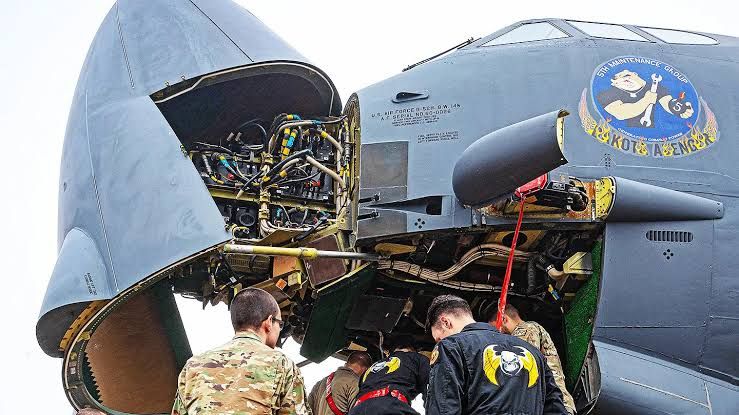
The first B-52 equipped with the new radar completed a test flight on December 8, 2025, beginning the flight-test phase of a modernization effort intended to support continued B-52 operations for decades.
Development
The AN/APQ-188 was selected to replace the B-52's obsolete analog AN/APQ-166. The modernization program uses an existing fighter-radar technology base rather than developing a completely new radar. In August 2025, U.S. Air Force officials described the system as largely derived from an F/A-18 radar with modifications for the B-52 mission. Contemporary details of this stage of the program were reported by Air & Space Forces Magazine.
The radar modernization program experienced cost growth during development. In May 2025, the Air Force confirmed a significant Nunn-McCurdy breach, indicating that projected program cost or schedule growth had crossed the statutory reporting threshold. Officials subsequently reviewed the scope of the radar program and prioritized capabilities considered necessary for the B-52 mission while retaining the possibility of adding further functions later.
Flight testing
On December 8, 2025, a B-52 carrying the modernized radar flew from Boeing's facility in San Antonio, Texas, to Edwards Air Force Base, California. The flight marked the beginning of a major test phase for the radar. Ground and flight testing was scheduled to continue during 2026, with a production decision planned later in the year. The first-flight milestone was documented by Air & Space Forces Magazine.
Reporting on the radar modernization also described the system as a major component of the future B-52J configuration. A separate contemporary overview from Aviation Gallery likewise identified the AN/APQ-188 as an AESA replacement for the AN/APQ-166 and noted the December 2025 arrival of the radar-equipped aircraft at Edwards for testing.
Production and sustainment contract
Raytheon received a $603 million ceiling indefinite-delivery/indefinite-quantity contract covering production and sustainment of the AN/APQ-188. The contract was awarded on August 21, 2026, and announced on August 25. An initial delivery order was supported by $46.008 million in Fiscal Year 2026 aircraft procurement funding.
Work under the agreement is scheduled in Forrest, Mississippi; El Segundo, California; McKinney, Texas; and Warner Robins, Georgia. Contract completion is expected by August 20, 2031. The Air Force Life Cycle Management Center at Wright-Patterson Air Force Base manages contract FA8628-26-D-B001. The contract and initial order were also summarized by The Military Channel.
Design
Radar architecture
The AN/APQ-188 uses Active Electronically Scanned Array technology. An AESA electronically steers its radar beam instead of continuously moving a mechanically scanned antenna. For the B-52, this architecture provides faster scanning and reduces dependence on mechanical components associated with the older radar.
The radar is described as a B-52-specific adaptation of the AN/APG-79 AESA technology family. The use of an existing radar technology base was intended to avoid the greater cost of designing an entirely new sensor for the bomber.
Navigation and mapping
The radar is intended to improve all-weather navigation and provide high-resolution ground mapping. These functions are particularly relevant to long-duration missions in poor weather or at night, when accurate radar-derived navigation and mapping can support the crew's understanding of terrain and target areas.
Target detection and tracking
The AN/APQ-188 provides improved target detection and tracking compared with the AN/APQ-166. Available program descriptions identify high-resolution ground mapping for more accurate target location and the ability to track moving surface and airborne targets. The radar therefore supports the B-52's conventional and nuclear long-range strike mission while improving situational awareness in higher-threat environments.
Software growth
The Air Force has identified software modification as a means of adding functions to the AESA radar over time. During the 2025 program review, officials also indicated that some capabilities originally associated with the radar could be deferred while the program concentrated on minimum requirements for the B-52 mission.
Program status
As of August 2026, the AN/APQ-188 had entered flight testing on a B-52 and was moving toward production and sustained fleet implementation. Testing at Edwards Air Force Base was planned throughout 2026, while the new production-and-sustainment contract extends through August 2031.
The radar is one element of the broader B-52 modernization effort associated with the future B-52J configuration. Other modernization activities described in the supplied sources include new engines, updated mission systems, communications improvements, cockpit changes, and continued weapons integration. The AN/APQ-188 specifically addresses the bomber's radar, navigation, mapping, and targeting requirements.
Specifications (AN/APQ-188)
General characteristics
- Type: Active Electronically Scanned Array airborne radar
- Manufacturer: Raytheon
- Integration contractor: Boeing
- Host aircraft: Boeing B-52 Stratofortress
- Replaces: AN/APQ-166 mechanically scanned analog radar
- Technology basis: Derived from the AN/APG-79 AESA radar family and adapted for the B-52 mission
Capabilities
- Navigation: Improved all-weather navigation
- Mapping: High-resolution ground mapping
- Targeting: Improved target detection and tracking
- Moving-target tracking: Tracking of moving surface and airborne targets
- Beam steering: Electronic beam steering without continuous mechanical antenna scanning
- Growth capability: Additional functions can be introduced through future software modifications
Related equipment
- AN/APQ-166: Mechanically scanned analog radar being replaced by the AN/APQ-188 on the B-52.
- AN/APG-79: AESA radar technology family from which the B-52 radar is described as being derived.
- Boeing B-52 Stratofortress: Strategic bomber platform for which the AN/APQ-188 is being integrated as part of the radar modernization program.
 Argentina
 Armenia
 Australia
 Austria
 Austria-Hungary
 Belgium
 Brazil
 United Kingdom
 Brunei
 Bulgaria
 Canada
 Chile
Chile China
China Colonial America
 Colombia
 Confederate States
 Croatia
 Czech
Czech Denmark
 Egypt
Egypt Finland
 France
 Georgia
 Germany
 German Imperial
 Greece
 Holland
 Hungary
 India
India Indonesia
 Iran
Iran Iraq
Iraq Ireland
 Israel
 Italy
Italy Japan
Japan Japan (1940)
 Jordan
 Kingdom of Italy
 Malaysia
 Mexico
 Myanmar
 Nazi Germany
 Netherlands
 New Zealand
 North Korea
 Norway
 Pakistan
 Peru
Peru Philippines
 Poland
 Portugal
 Prussia
 Romania
 Russia
 Saudi Arabia
 Serbia
 Singapore
 Slovakia
 Slovenia
 South Africa
 South Korea
 Soviet Union
 Spain
Spain Sweden
 Switzerland
 Syria
Syria Taiwan
 Thailand
 Turkey
 UAE
UAE Ukraine
 Vietnam
 Yugoslavia