
History
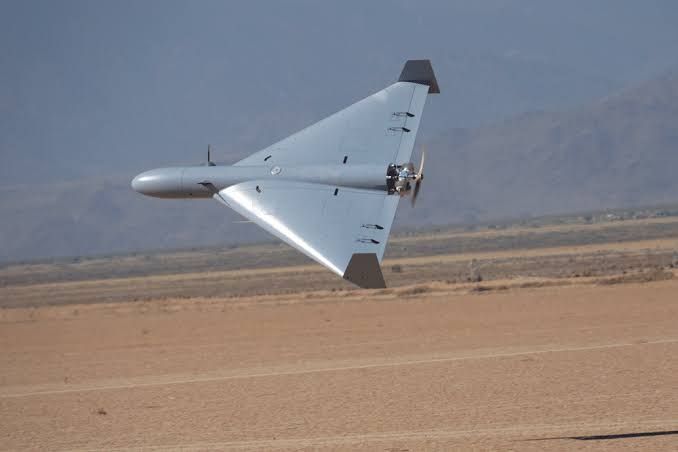
SpektreWorks LUCAS is a United States one-way attack unmanned aerial vehicle derived from the FLM 136, a delta-wing target aircraft developed to emulate the Iranian Shahed-136 threat. The weapon combines a relatively small propeller-driven airframe with an expendable strike role and was developed for rapid, comparatively low-cost production.
The LUCAS program converted an existing threat-emulation aircraft into an operational strike system rather than creating a completely new airframe. Initial LUCAS prototypes were publicly unveiled in July 2025, and the system moved from development into deployment within the same year.
LUCAS entered confirmed combat service in February 2026 with U.S. Central Command. The program remained in an early production phase during its first combat deployment, with inventories measured in dozens rather than in mass-produced quantities.
Development
SpektreWorks had already developed the FLM 136 as a counter-UAS target intended to reproduce the flight characteristics and general configuration of the Shahed-136. The target used a compact delta-wing layout, rear-mounted propeller propulsion, rail launch, and an expendable airframe suitable for training and threat-emulation work.
During 2025, this existing design became the basis for LUCAS. The approach shortened development because the underlying airframe, propulsion arrangement, launch method, and basic flight characteristics were already established. The U.S. government owns the LUCAS design, which was intended to support production by more than one manufacturer.
An initial production effort valued at about $30 million was associated with the Air Force APFIT pathway. The system was revealed in July 2025 and later tested at U.S. military ranges, including Yuma Proving Ground.
Deployment and testing
On December 3, 2025, U.S. Central Command established Task Force Scorpion Strike under U.S. Special Operations Command Central as a dedicated one-way attack drone unit in the Middle East. LUCAS became one of the principal systems associated with the unit.
On December 16, 2025, USS Santa Barbara conducted the first shipborne launch of a LUCAS in the Persian Gulf. The event demonstrated that the aircraft could be operated from a naval platform in addition to ground-based launch arrangements.
Testing continued after the system entered service. On September 17, 2026, a LUCAS UAS impacted the water during scheduled testing on the Eglin Air Force Base range in Florida. The approximately 3 m-long aircraft was found floating in the Gulf two days later by a fishing charter crew and was subsequently recovered and returned to U.S. government possession.
Design
LUCAS uses a compact delta-wing configuration derived from the FLM 136 target drone. The aircraft is propeller-driven and intended for one-way missions in which the airframe is expended against the target. Its size and mass are substantially lower than those of the Iranian Shahed-136 from which the general concept was derived.
Airframe
The FLM 136-derived airframe is approximately 3.0 m long with a wingspan of about 2.5 m. Maximum takeoff weight is approximately 82 kg. The aerodynamic arrangement uses a broad delta wing and a rear-mounted propulsion system.
The airframe was originally designed for threat emulation and counter-UAS training. This background made it suitable for conversion into an expendable strike aircraft because the original target already reproduced many of the flight and handling characteristics required of a Shahed-type one-way UAV.
Powerplant and launch
The current FLM 136 configuration uses a 215 cc carbureted internal-combustion engine driving a pusher propeller. Maximum fuel capacity is approximately 33 kg.
LUCAS can be launched from a rail and has also been demonstrated from a ship. The broader system concept supports mobile deployment and rapid field handling without the infrastructure required by conventional combat aircraft.
Guidance and autonomy
LUCAS is designed for autonomous flight beyond direct line of sight. The program has also explored networked and coordinated operation of multiple aircraft. Satellite communications and swarm-related capabilities have been associated with development configurations, but the precise communications architecture used during combat operations has not been publicly established.
In May 2026, Shield AI was selected to integrate its Hivemind autonomy software with LUCAS for coordinated multi-aircraft operation. A demonstration was planned for autumn 2026. This integration represented a planned expansion of the aircraft's autonomy and swarm capability rather than evidence that the same software had been used during earlier combat missions.
Payload
The FLM 136-derived airframe has a maximum payload allowance of approximately 18 kg. The exact warhead configurations used by operational LUCAS aircraft have not been fully disclosed. The modular architecture also allows the basic airframe concept to support payloads other than a strike warhead.
Operational history
LUCAS achieved its first officially confirmed combat use on February 28, 2026, during Operation Epic Fury against Iran. Task Force Scorpion Strike employed the drones alongside other U.S. strike systems, including Tomahawk cruise missiles and manned combat aircraft.
The system was fielded before reaching full-rate production. By March 17, 2026, the available LUCAS inventory was described as being in the dozens. The exact number produced, deployed, or expended was not disclosed.
U.S. military cost figures have placed deployed LUCAS aircraft at approximately $35,000 each, while another Pentagon figure described the broader LUCAS family as costing $55,000 or less per unit. The reason for the difference has not been publicly defined and may reflect configuration, accounting method, production quantity, or equipment differences.
The February 2026 combat deployment demonstrated that the system could move rapidly from an existing target-drone design into operational strike service. However, the small inventory available during the first campaign did not establish the mass-production scale envisioned for large one-way attack drone forces.
In August 2026, U.S. Central Command announced Task Force Falcon Strike, a multinational organization intended to coordinate one-way attack systems operating above, on, and below the sea. The announcement did not identify specific aircraft assigned to the new task force, so it does not by itself confirm a later LUCAS force structure or production quantity.
Operators
- United States Armed Forces: LUCAS was deployed by U.S. Central Command through Task Force Scorpion Strike and entered confirmed combat use in February 2026.
Specifications (FLM 136-derived LUCAS)
The published airframe data below describe the current FLM 136 configuration from which LUCAS is derived. The exact configuration of individual combat aircraft may differ.
General characteristics
- Length: approximately 3.0 m (9.8 ft)
- Wingspan: approximately 2.5 m (8.2 ft)
- Maximum takeoff weight: approximately 82 kg (180 lb)
- Maximum payload: approximately 18 kg (40 lb)
- Maximum fuel: approximately 33 kg (73 lb)
- Engine: 215 cc carbureted internal-combustion engine
- Propulsion: rear-mounted pusher propeller
- Launch method: rail launch; shipborne launch demonstrated
Performance
- Cruise speed: approximately 137 km/h (74 kt)
- Maximum dash speed: approximately 194 km/h (105 kt)
- Published range: approximately 822 km (444 nmi)
- Endurance: approximately 6 hours
- Ceiling: approximately 4,570 m (15,000 ft)
Earlier FLM 136 specifications listed lower performance figures, including a cruise speed of about 102 km/h, a maximum speed of about 185 km/h, and a range of about 648 km. Dimensions and maximum takeoff weight remained essentially unchanged, indicating a later performance revision or configuration change. It has not been established which published specification set corresponds exactly to the aircraft used during the February 2026 combat deployment.
Related equipment
- SpektreWorks FLM 136: The Shahed-inspired counter-UAS target airframe that formed the basis of LUCAS.
- HESA Shahed-136: Iranian one-way attack UAV whose configuration and operating concept influenced the FLM 136 and LUCAS design.
 Argentina
 Armenia
 Australia
 Austria
 Austria-Hungary
 Belgium
 Brazil
 United Kingdom
 Brunei
 Bulgaria
 Canada
 Chile
Chile China
China Colonial America
 Colombia
 Confederate States
 Croatia
 Czech
Czech Denmark
 Egypt
Egypt Finland
 France
 Georgia
 Germany
 German Imperial
 Greece
 Holland
 Hungary
 India
India Indonesia
 Iran
Iran Iraq
Iraq Ireland
 Israel
 Italy
Italy Japan
Japan Japan (1940)
 Jordan
 Kingdom of Italy
 Malaysia
 Mexico
 Myanmar
 Nazi Germany
 Netherlands
 New Zealand
 North Korea
 Norway
 Pakistan
 Peru
Peru Philippines
 Poland
 Portugal
 Prussia
 Romania
 Russia
 Saudi Arabia
 Serbia
 Singapore
 Slovakia
 Slovenia
 South Africa
 South Korea
 Soviet Union
 Spain
Spain Sweden
 Switzerland
 Syria
Syria Taiwan
 Thailand
 Turkey
 UAE
UAE Ukraine
 Vietnam
 Yugoslavia