
History
The Boeing F/A-XX is the U.S. Navy's planned sixth-generation carrier-based strike fighter. It is intended to replace the F/A-18E/F Super Hornet and operate alongside the F-35C as a central element of the Navy's future carrier air wing.
The program emphasizes greater operational reach, low observability, advanced mission systems and integration with crewed and uncrewed aircraft. Boeing was selected for full-scale development in September 2026, with the contract covering multiple test aircraft for ground, airworthiness, systems and weapons-integration testing.
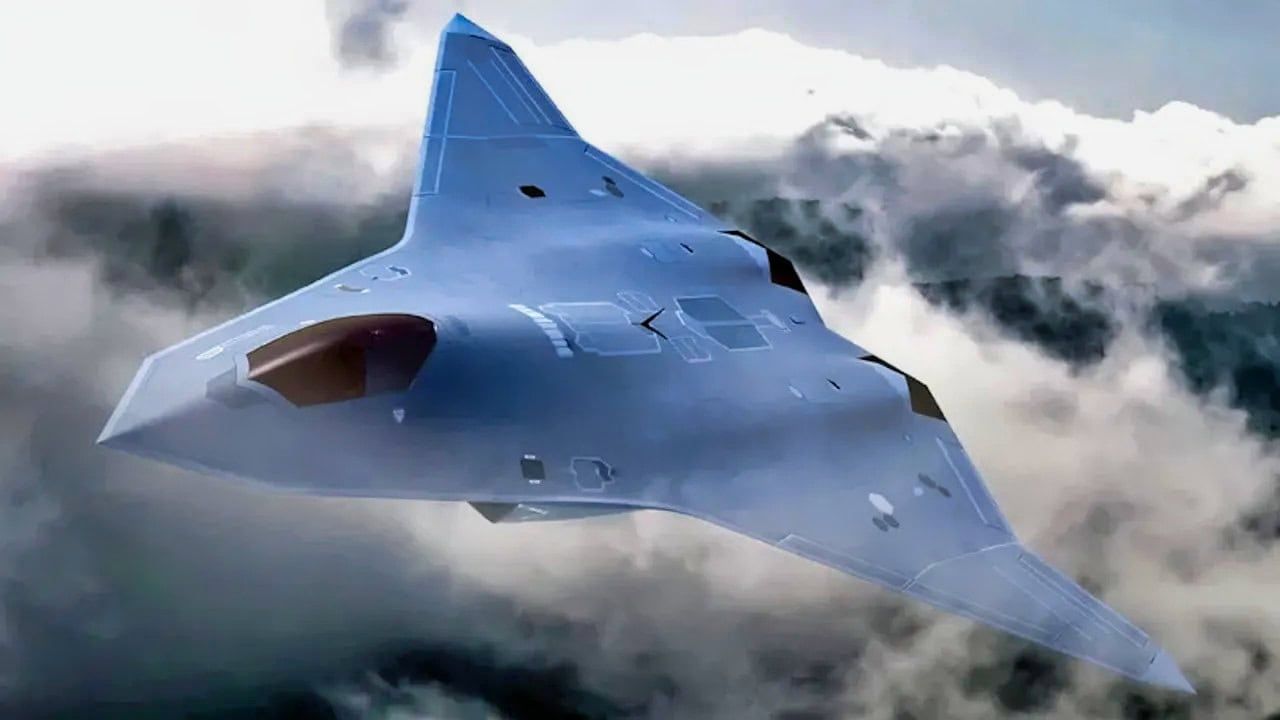
The selected design remains largely classified. Public material shows a broad aircraft with substantial wing area and internal volume intended to accommodate fuel, weapons and mission equipment while preserving low observability.
Early development
The U.S. Navy identified a requirement for a future F/A-18 replacement in 2008. Boeing publicly presented an early F/A-XX concept in 2009, showing a stealth-oriented, tailless fighter concept. The company displayed a revised concept in 2013 as work continued on possible configurations for the Navy's future combat aircraft requirement.
The Navy announced plans in 2014 to begin an analysis of alternatives in 2015. This work examined options for replacing existing carrier fighters and considered a broader family-of-systems approach involving new mission systems, avionics and weapons. The analysis was completed in June 2019, after which the program moved into concept development.
Competition and contract award
Budget pressures affected the program during the middle of the 2020s. The Navy proposed slowing F/A-XX development in its fiscal year 2025 planning while prioritizing nearer-term requirements. Lockheed Martin was eliminated from the competition in March 2025, leaving Boeing and Northrop Grumman as the principal remaining competitors.
Congress subsequently provided additional funding for the program and directed the Navy to proceed with a single engineering and manufacturing development contract. On 29 September 2026, the U.S. Navy selected Boeing for F/A-XX development. The full-scale development contract was valued at more than $20 billion and included multiple test aircraft for ground, airworthiness, systems and weapons-integration testing.
The award made F/A-XX Boeing's second contemporary sixth-generation fighter development program after its selection for the U.S. Air Force F-47 program in 2025. Boeing stated that it had invested in facilities, technology and personnel to support simultaneous development of multiple advanced combat-aircraft programs.
Design
The Boeing F/A-XX is being developed as a carrier-based sixth-generation fighter with increased operational reach and capacity. Detailed technical characteristics remain classified, including dimensions, weights, propulsion, performance and weapons capacity.
Airframe and low observability
A rendering released after Boeing's selection shows an aircraft with a very broad fuselage and large wing area. The configuration appears intended to provide substantial internal volume. The Navy's requirement calls for the aircraft to carry fuel, weapons and mission equipment while maintaining low observability, making internal accommodation of major mission loads an important part of the design approach.
Mission systems
F/A-XX is planned around an open mission systems architecture and advanced mission systems. The open architecture is intended to support integration and modernization of mission equipment as the aircraft develops through its service life.
The fighter is also intended to operate within a wider network of crewed and uncrewed platforms. Boeing has identified interoperability with Collaborative Combat Aircraft as part of the planned capability, allowing F/A-XX to function within a distributed future air-combat system rather than solely as an independent fighter.
Program status
F/A-XX entered full-scale development following Boeing's selection in September 2026. The contract includes construction of multiple test aircraft for ground testing, airworthiness evaluation, systems testing and weapons-integration work.
The aircraft is intended to begin replacing F/A-18E/F Super Hornets during the 2030s while operating alongside the F-35C. Its detailed development schedule, planned first flight and production timetable have not been publicly disclosed. The earliest publicly defined operational period is the beginning of the 2030s.
Specifications (Boeing F/A-XX)
General characteristics
- Type: Sixth-generation carrier-based strike fighter
- Developer: Boeing
- Intended service: U.S. Navy
- Primary role: Future carrier-based air combat and strike aircraft
- Observability: Designed for low-observable operation while carrying fuel, weapons and mission equipment
- Mission architecture: Open mission systems architecture with advanced mission systems
- Network integration: Intended to interoperate with crewed and uncrewed platforms, including Collaborative Combat Aircraft
Related equipment
- F/A-18E/F Super Hornet: Existing U.S. Navy carrier fighter that F/A-XX is intended to replace progressively during the 2030s.
- F-35C: Carrier-based fighter planned to operate alongside F/A-XX in the future Navy air wing.
- Boeing F-47: Boeing's separate sixth-generation fighter development program for the U.S. Air Force.
 Argentina
 Armenia
 Australia
 Austria
 Austria-Hungary
 Belgium
 Brazil
 United Kingdom
 Brunei
 Bulgaria
 Canada
 Chile
Chile China
China Colonial America
 Colombia
 Confederate States
 Croatia
 Czech
Czech Denmark
 Egypt
Egypt Finland
 France
 Georgia
 Germany
 German Imperial
 Greece
 Holland
 Hungary
 India
India Indonesia
 Iran
Iran Iraq
Iraq Ireland
 Israel
 Italy
Italy Japan
Japan Japan (1940)
 Jordan
 Kingdom of Italy
 Malaysia
 Mexico
 Myanmar
 Nazi Germany
 Netherlands
 New Zealand
 North Korea
 Norway
 Pakistan
 Peru
Peru Philippines
 Poland
 Portugal
 Prussia
 Romania
 Russia
 Saudi Arabia
 Serbia
 Singapore
 Slovakia
 Slovenia
 South Africa
 South Korea
 Soviet Union
 Spain
Spain Sweden
 Switzerland
 Syria
Syria Taiwan
 Thailand
 Turkey
 UAE
UAE Ukraine
 Vietnam
 Yugoslavia