
History
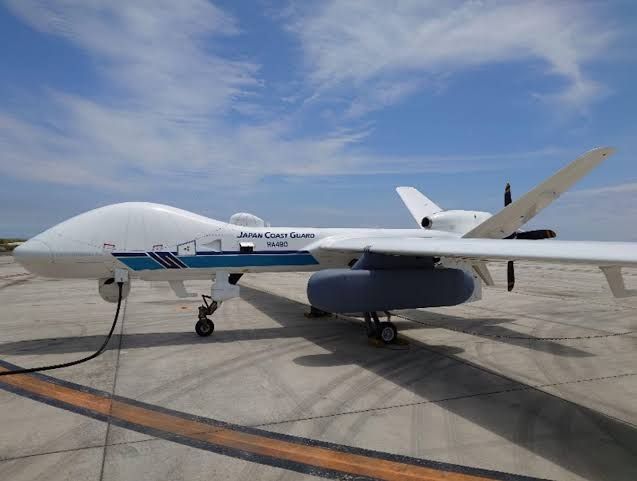
SoftBank developed the Disaster Relief Unit (DRU) Pod to provide mobile communications from the air when terrestrial networks are disrupted during large-scale disasters such as earthquakes and typhoons. The project was selected in 2023 under the Beyond 5G (6G) Fund Program promoted by the Ministry of Internal Affairs and Communications (MIC) through the National Institute of Information and Communications Technology (NICT), as part of a commissioned research project titled Development of Aerial Mobile Network Systems for Rapid Coverage Restoration in Disaster-Affected Areas. In March 2026, SoftBank conducted a preliminary verification trial by mounting the DRU Pod on a helicopter in Kuroshio Town, Hata District, Kochi Prefecture. On July 27, 2026, General Atomics Aeronautical Systems (GA-ASI) flight-tested the DRU Pod on an MQ-9B SeaGuardian large remotely piloted aircraft owned by the Japan Coast Guard (JCG), conducted through inter-ministerial cooperation between MIC and the JCG. This marked the first time in Japan that mobile communications were successfully provided from the air using a DRU Pod designed and manufactured in Japan for a large remotely piloted aircraft system.
Design
The DRU Pod is a communications payload that houses communication equipment and antennas. It is designed and manufactured in Japan based on GA-ASI design data and quality requirements. The pod is mounted on the host aircraft and employs gimbal technology that compensates for aircraft motion in real time, enabling the antennas to continuously track the ground gateway and service area regardless of changes in aircraft attitude or turbulence.
Network architecture
The system uses a two-link architecture. On the ground, a gateway consisting of an LTE base station and a frequency conversion repeater is established. For the feeder link, radio waves in the 2.1 GHz band from the ground base station are converted to the 3.3 GHz band by the repeater and transmitted to the airborne DRU Pod. The communication relay equipment inside the DRU Pod converts the signals back to the 2.1 GHz band to provide communication services to mobile terminals on the ground via the service link.
Integration and certification
For flight deployment, SoftBank completed conformity verification covering raw materials, manufacturing processes, functionality, and configuration management. Aircraft integration required evaluations of thermal environments and electromagnetic compatibility. Following ground functional checks and preliminary safety reviews, safety confirmation tests verified that the DRU Pod effects on aircraft stability, maneuverability, vibration characteristics, and existing aircraft systems remained within safe operational limits. Airworthiness approval was then obtained for the aircraft configuration equipped with the DRU Pod.
Program status
As of late 2026, the DRU Pod remains in the verification and development phase. SoftBank plans to use data from the MQ-9B trial to enhance the pod and related technologies and study operational methods, with the goal of deploying emergency coverage solutions for use during disasters. The companies have identified disaster-relief and recovery operations, including areas affected by floods and other natural disasters, as the primary target application.
Specifications (MQ-9B SeaGuardian verification configuration)
General characteristics
- Function: Airborne mobile-network relay for disaster relief communications
- Host platform: GA-ASI MQ-9B SeaGuardian, Japan Coast Guard
- Operating altitude: 3,000 m
Communications
- Service link frequency: 2.1 GHz
- Feeder link frequency: 3.3 GHz
- Bandwidth: 5 MHz
- Maximum downlink speed: 20 Mbps
- Maximum uplink speed: 5 Mbps
- Ground coverage diameter: exceeding 5 km
 Argentina
 Armenia
 Australia
 Austria
 Austria-Hungary
 Belgium
 Brazil
 United Kingdom
 United States
 Brunei
 Bulgaria
 Canada
 Chile
Chile China
China Colonial America
 Colombia
 Confederate States
 Croatia
 Czech
Czech Denmark
 Egypt
Egypt Finland
 France
 Georgia
 Germany
 German Imperial
 Greece
 Holland
 Hungary
 India
India Indonesia
 Iran
Iran Iraq
Iraq Ireland
 Israel
 Italy
Italy Japan (1940)
 Jordan
 Kingdom of Italy
 Malaysia
 Mexico
 Myanmar
 Nazi Germany
 Netherlands
 New Zealand
 North Korea
 Norway
 Pakistan
 Peru
Peru Philippines
 Poland
 Portugal
 Prussia
 Romania
 Russia
 Saudi Arabia
 Serbia
 Singapore
 Slovakia
 Slovenia
 South Africa
 South Korea
 Soviet Union
 Spain
Spain Sweden
 Switzerland
 Syria
Syria Taiwan
 Thailand
 Turkey
 UAE
UAE Ukraine
 Vietnam
 Yugoslavia