
History
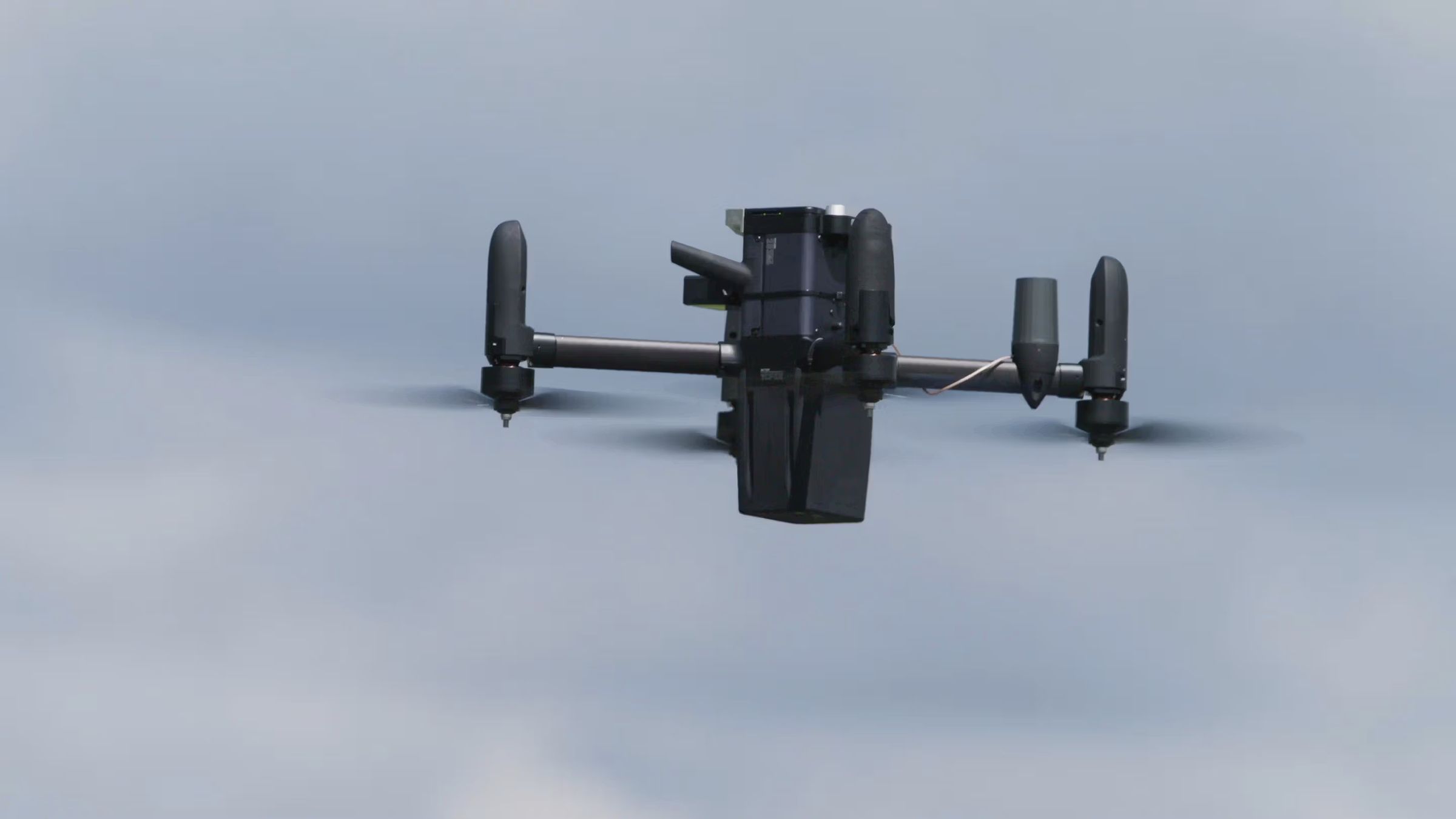
The Anduril Counter-Drone System is a mobile counter-unmanned aircraft system developed in the United States. It combines optical and radio-frequency sensors with Lattice command-and-control software to detect, identify, track and coordinate responses to small unmanned aircraft.
The system is intended for homeland defense, military installation protection, critical infrastructure security and support to civil authorities. Its modular architecture allows operators to combine several sensors and add compatible surveillance or response equipment according to the mission.
The Washington National Guard fielded a configuration of the system in 2026. This deployment provides a documented physical and operational milestone for the configuration described here.
Development background
Anduril Industries developed its counter-UAS architecture around networked sensors, autonomous software and optional effectors. The company designed Lattice as the common software environment connecting surveillance towers, cameras, radio-frequency sensors and other equipment. A broader Anduril product overview describes this software-led approach across the company’s counter-UAS and autonomous systems.
The architecture addresses small drones that may be difficult to identify with conventional air-surveillance systems. Instead of depending on one sensor, it correlates optical imagery, radio-frequency emissions and geospatial data. The resulting operational picture helps personnel assess possible threats and coordinate an authorized response.
Anduril also developed kinetic interceptors for broader counter-UAS configurations. Anvil is an autonomous interceptor that receives targeting information through Lattice and physically strikes a hostile drone after engagement is authorized. The manufacturer announced the related Anvil-M development through its Anvil-M launch information. A separate Anvil system profile identifies its principal functions as detection, tracking and interception within a Lattice-integrated architecture.
Washington National Guard fielding
On 29 July 2026, the Washington National Guard announced that its Counterdrug Program and 10th Civil Support Team had received a mobile Anduril counter-UAS system. Soldiers completed a week of new-equipment training at Camp Murray, Washington. The training covered field deployment, sensor calibration and integration of the equipment into a unified command-and-control environment.
The fielded configuration combined a Long Range Camera Tower, WISP detection equipment, a Pulsar radio-frequency sensor and Lattice software. Training also examined transportation, logistics, personnel requirements, sustained operation and communications with other agencies. The after-action review identified a need for additional training, personnel, equipment refinements and closer federal coordination.
The 10th Civil Support Team traditionally responds to chemical, biological, radiological, nuclear and explosive hazards. The counter-drone capability extends this mission because an unmanned aircraft can potentially carry or deliver a hazardous payload. The system also supports protection of public events and critical infrastructure.
International procurement
In June 2026, the United States approved a possible foreign military sale of an Anduril counter-UAS package to Kuwait. The proposed package included Roadrunner-Munition and Anvil-Kinetic interceptors, launch boxes, Lattice command and control, several Sentry tower configurations, Pulsar electronic-warfare equipment, Menace tactical operations centers, generators, training and logistical support. The estimated ceiling was approximately US$1.98 billion, but approval did not establish final quantities or confirm delivery. Details were reported in the Kuwait sale report.
Design
System architecture
The Washington configuration is a distributed sensor and command network rather than a single vehicle or interceptor. Its components can be transported and positioned to observe a protected area. Multiple sensor feeds are connected through Lattice, which presents detections and tracks in a common operational picture.
The modular design permits adaptation for military bases, airports, ports, energy facilities and major public events. Lattice can also accept information from additional radar, acoustic, electronic-support and government or commercial surveillance systems when compatible integrations are available.
Long Range Camera Tower
The Long Range Camera Tower supplies persistent electro-optical surveillance. It allows operators to observe and visually track airborne objects across a protected area. The tower can work with other sensors that provide initial detections or indications of suspicious activity.
WISP detection system
WISP provides wide-area surveillance intended to detect low-flying, slow and small aircraft. The supplied description identifies electro-optical imaging, passive radio-frequency sensing and software analytics among its detection methods. Processing software assists with classification and continuous tracking while reducing false alarms caused by birds or environmental clutter. Anduril presents WISP and related equipment within its ground and air deterrence systems.
Pulsar radio-frequency sensor
Pulsar passively monitors the electromagnetic spectrum for communications between drones and their controllers. Because it does not depend on transmitting radar energy, it can detect relevant radio-frequency activity without operating as an active radar. Networked Pulsar sensors can support geolocation of an emitting aircraft and its operator.
Passive radio-frequency detection depends on the target producing detectable emissions. A drone using autonomous navigation or operating without an active control link may therefore require detection by optical or other available sensors.
Lattice command and control
Lattice combines observations from the system’s sensors into a real-time operational picture. Its software correlates detections, classifies possible objects, maintains tracks, prioritizes potential threats according to configured criteria and alerts operators.
Lattice supports decision-making and coordination but does not by itself authorize an engagement. Domestic counter-UAS operations remain subject to legal authorities, airspace rules and coordination between military and civilian agencies. The Washington deployment was intended to improve information sharing with federal, state and local organizations during homeland-security missions.
Optional response elements
The documented Washington configuration emphasizes detection, identification, tracking and response coordination. The available evidence does not confirm that it included a kinetic interceptor.
Broader Anduril counter-UAS packages can incorporate electronic and kinetic defeat equipment. Anvil-Kinetic is designed to collide with small unmanned aircraft, while Roadrunner-M is a reusable vertical-takeoff-and-landing interceptor configuration intended for more demanding aerial threats. The exact combination depends on the customer, protected site and applicable engagement authority.
Operational history
During the 2026 Camp Murray training, Washington National Guard personnel deployed and calibrated the mobile sensors and connected them through Lattice. The activity evaluated the system’s ability to detect, identify and track unauthorized drones in support of homeland defense and critical infrastructure protection.
The fielding built on National Guard experience supporting National Special Security Events, Super Bowl security and preparations for the FIFA World Cup. These missions demonstrated a requirement for persistent monitoring around large gatherings and sensitive facilities.
The Washington National Guard planned to use the fielding experience to define personnel, logistics and training requirements for possible counter-UAS deployments by other Civil Support Teams. Counter-drone activity was expected to continue beyond the FIFA World Cup and the America 250 events, although the available evidence does not identify additional fielded units or quantities.
Operators
- United States: The Washington National Guard Counterdrug Program and 10th Civil Support Team received a mobile system and conducted new-equipment training in 2026.
Specifications (Washington National Guard configuration)
General characteristics
- Type: Mobile, networked counter-unmanned aircraft system.
- Manufacturer: Anduril Industries.
- Primary mission: Detection, identification and tracking of unauthorized small unmanned aircraft, with coordination of an authorized response.
- Confirmed components: Long Range Camera Tower, WISP detection system, Pulsar radio-frequency sensor and Lattice command-and-control software.
- Detection methods: Electro-optical observation, passive radio-frequency monitoring and software-assisted multi-sensor correlation.
- Command environment: Lattice common operational picture.
- Deployment format: Transportable components configured as a mobile sensor network.
Functions
- Surveillance: Persistent observation of protected airspace.
- Detection and classification: Software-assisted recognition of low, slow and small airborne objects.
- Tracking: Continuous correlation of sensor reports and geospatial information.
- Radio-frequency analysis: Detection of drone control links and possible geolocation when suitable emissions are present.
- Interoperability: Support for additional compatible sensors and surveillance assets through an open, scalable software architecture.
- Engagement capability: No kinetic effector is confirmed for the Washington configuration; other Anduril packages can include electronic or kinetic response equipment.
 Argentina
 Armenia
 Australia
 Austria
 Austria-Hungary
 Belgium
 Brazil
 United Kingdom
 Brunei
 Bulgaria
 Canada
 Chile
Chile China
China Colonial America
 Colombia
 Confederate States
 Croatia
 Czech
Czech Denmark
 Egypt
Egypt Finland
 France
 Georgia
 Germany
 German Imperial
 Greece
 Holland
 Hungary
 India
India Indonesia
 Iran
Iran Iraq
Iraq Ireland
 Israel
 Italy
Italy Japan
Japan Japan (1940)
 Jordan
 Kingdom of Italy
 Malaysia
 Mexico
 Myanmar
 Nazi Germany
 Netherlands
 New Zealand
 North Korea
 Norway
 Pakistan
 Peru
Peru Philippines
 Poland
 Portugal
 Prussia
 Romania
 Russia
 Saudi Arabia
 Serbia
 Singapore
 Slovakia
 Slovenia
 South Africa
 South Korea
 Soviet Union
 Spain
Spain Sweden
 Switzerland
 Syria
Syria Taiwan
 Thailand
 Turkey
 UAE
UAE Ukraine
 Vietnam
 Yugoslavia