
History
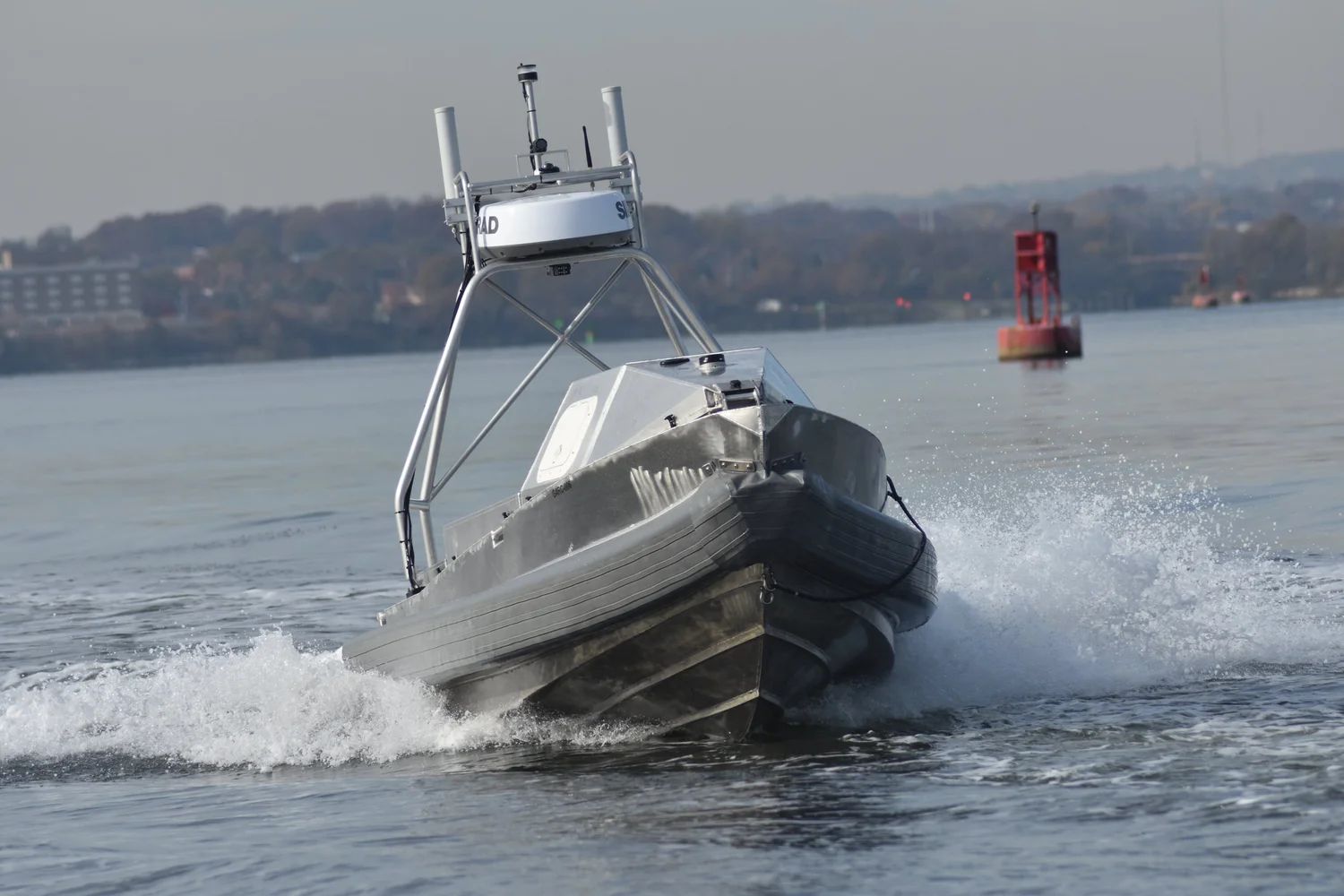
The BlackSea Technologies Global Autonomous Reconnaissance Craft (GARC) is a small modular unmanned surface vessel developed in the United States for U.S. Navy reconnaissance, patrol, training, and experimental strike missions. It can navigate autonomously or under remote control and carry interchangeable mission payloads.
GARC has been used as a networked sensor platform, a counter-USV training target, and a one-way attack craft. The U.S. Navy recorded its first GARC live-fire event during RIMPAC 2026, when an explosive-equipped craft struck the decommissioned amphibious assault ship ex-USS Peleliu.
Public reporting identified GARC in U.S. Navy service by September 2025, when it participated in the multinational UNITAS exercise in the Atlantic Ocean. The exercise examined how unmanned and remotely operated systems could extend sensors carried by crewed platforms across a multinational force.
In early 2026, the Navy established Unmanned Surface Vessel Division 32 within Unmanned Surface Vessel Squadron 3. GARC became the division's principal platform. The unit included Robotics Warfare Specialists trained to operate and maintain unmanned vessels.
During BALTOPS 2026 in June, Division 32 operated GARC craft with the command ship USS Mount Whitney. The activity included realistic counter-USV training for NATO participants and taught crews to recognize the appearance and behavior of an approaching unmanned craft.
On 17 July 2026, Division 32 deployed two GARCs during a sinking exercise north of Kauai as part of RIMPAC 2026. One craft conducted an end-to-end one-way attack against ex-USS Peleliu after other U.S. and allied weapons had already damaged the ship. The attack GARC carried a reported 454 kg (1,000 lb) payload and used Anduril's Lattice autonomy software. The available reporting does not establish how much of the payload mass was explosive. The second GARC remained intact and recorded close-range imagery of damage around the ship's waterline. This event was the Navy's first acknowledged GARC live-fire exercise. Details are available in reports by The War Zone and Marine Insight.
Design
GARC is an uncrewed aluminum-hulled surface craft about 4.8 m (15.7 ft) long and 1.75 m (5.7 ft) wide. A removable center panel permits mission equipment to be exchanged without redesigning the hull. One published description identifies a single 149 kW (200 hp) diesel engine and a fuel capacity of 617 liters (163 US gallons).
The craft uses the MAPC2 control system for mission planning, autonomous navigation, and remote operation. Its open architecture supports third-party software and government-furnished equipment, while a line-of-sight emergency-stop function provides local intervention. A GARC can also deploy a reduced-size TALONS tethered aerostat to raise sensors or communications payloads above the surface.
The RIMPAC attack configuration used Anduril Lattice as its autonomy package, demonstrating that the craft can accept a different software and mission-payload combination. The removable payload area allows GARC to serve as a modular element in command-and-control, intelligence, surveillance, reconnaissance, and communications networks.
Operational history
Published accounts credit the platform with more than 5,000 operating hours. Reported missions include reconnaissance, persistent patrol, multinational experimentation, counter-USV training, and live-fire strike testing. In 2026, GARC craft were also reported conducting persistent patrol missions with the U.S. Fifth Fleet in the Strait of Hormuz area.
The RIMPAC event showed a destructive configuration rather than a permanently armed standard model. One GARC was expended, while a second craft inspected and documented the target. The test evaluated how a small autonomous surface vessel could join a coordinated attack after conventional weapons had degraded a target.
Operators
- United States Navy: Operated by Unmanned Surface Vessel Squadron 3, including Division 32, and reported in service with Unmanned Surface Vessel Squadron 7.
Specifications (GARC)
General characteristics
- Crew: None
- Length: Approximately 4.8 m (15.7 ft)
- Width: 1.75 m (5.7 ft)
- Full-load displacement: Approximately 2,177 kg (4,800 lb)
- Hull material: Aluminum
- Propulsion: One 149 kW (200 hp) diesel engine, according to one published specification set
- Fuel capacity: 617 liters (163 US gallons), according to one published specification set
Performance
- Maximum speed: One source reports 40 knots (74 km/h)
- Range: Published figures differ. One account gives 680 km (367 nautical miles), while another reports 700 nautical miles (1,296 km) at 22 knots.
Mission equipment
- Payload arrangement: Interchangeable mission area beneath a removable center panel
- Control: MAPC2 mission planning, autonomous navigation, and remote control; open architecture; line-of-sight emergency stop
- Optional equipment: Reduced-size TALONS tethered aerostat
- RIMPAC 2026 attack payload: Reported total payload of 454 kg (1,000 lb); explosive mass not disclosed
- RIMPAC 2026 autonomy package: Anduril Lattice
Related equipment
- MASC: A substantially larger BlackSea Technologies unmanned surface vessel family described as GARC-derived. Its published dimensions and payload figures apply to MASC and are not GARC specifications. See the MASC specification summary.
 Argentina
 Armenia
 Australia
 Austria
 Austria-Hungary
 Belgium
 Brazil
 United Kingdom
 Brunei
 Bulgaria
 Canada
 Chile
Chile China
China Colonial America
 Colombia
 Confederate States
 Croatia
 Czech
Czech Denmark
 Egypt
Egypt Finland
 France
 Georgia
 Germany
 German Imperial
 Greece
 Holland
 Hungary
 India
India Indonesia
 Iran
Iran Iraq
Iraq Ireland
 Israel
 Italy
Italy Japan
Japan Japan (1940)
 Jordan
 Kingdom of Italy
 Malaysia
 Mexico
 Myanmar
 Nazi Germany
 Netherlands
 New Zealand
 North Korea
 Norway
 Pakistan
 Peru
Peru Philippines
 Poland
 Portugal
 Prussia
 Romania
 Russia
 Saudi Arabia
 Serbia
 Singapore
 Slovakia
 Slovenia
 South Africa
 South Korea
 Soviet Union
 Spain
Spain Sweden
 Switzerland
 Syria
Syria Taiwan
 Thailand
 Turkey
 UAE
UAE Ukraine
 Vietnam
 Yugoslavia