
History
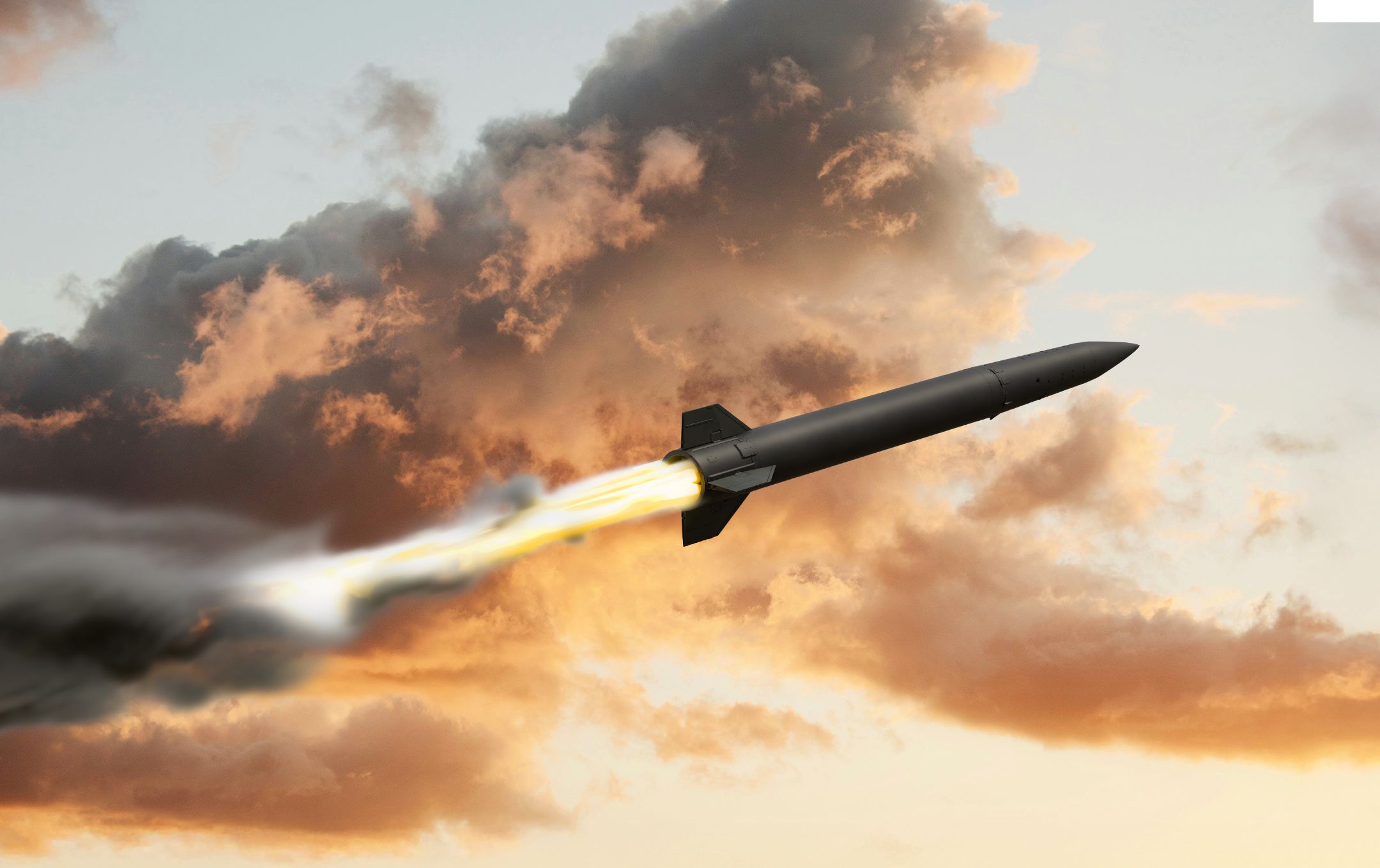
The Fire Point FP-7.x is a Ukrainian surface-to-air interceptor under development for the Freya air and missile-defense project. It is intended primarily to counter ballistic threats while providing Ukraine with a lower-cost complement to scarce Western interceptors such as the Patriot PAC-3 family.
The missile has completed controlled flight testing, but available sources do not confirm a successful operational interception of a representative ballistic target. Its development therefore remains at the test and integration stage rather than operational service.
Fire Point is pursuing the FP-7.x as part of a wider European-linked architecture that is expected to combine the interceptor with external radars, command-and-control equipment, and NATO-standard communications. The missile is not intended to reproduce the complete Patriot system by itself.
Development
Fire Point publicly disclosed its FP-7 and FP-9 ballistic missile work in September 2025. The FP-7.x interceptor subsequently emerged as a derivative associated with the Freya ballistic-missile-defense project. The underlying FP-7 uses a configuration reported to draw on the Soviet 48N6 missile family, while the interceptor adapts the concept for defensive engagements.
During 2026, Fire Point released evidence of FP-7.x flight testing and presented the missile as the central interceptor for Freya. The company joined a European anti-ballistic missile initiative and proposed integrating the interceptor with European sensor and command systems through NATO Link 16.
Development schedules have changed as the program has progressed. In May 2026, Fire Point representatives suggested that a first ballistic interception might be possible by the end of 2026 if partner support moved quickly. By July, information reported by Defense Express placed the first direct interception test against a ballistic target by July 2027. This later schedule indicates that ballistic interception remained a planned milestone rather than a demonstrated capability.
Production plans
Fire Point co-founder Denys Shtilerman stated in June 2026 that production could potentially begin in August 2026 if required seeker technology became available. According to The New Voice of Ukraine, the company expected that it could manufacture about three missiles per day and store incomplete rounds until terminal seekers were fitted. These statements described a conditional production plan and do not by themselves confirm that serial production began.
The company has promoted lower cost and higher production volume as major advantages. Shtilerman cited an estimated FP-7.x price of about US$700,000 per missile, compared with several million dollars for a Patriot PAC-3 interceptor. Final procurement prices have not been established.
Design
The FP-7.x is a ground-launched surface-to-air interceptor intended for use within a networked missile-defense system. Fire Point has emphasized the use of commercially available or European-sourced components to shorten development time and reduce dependence on a single foreign supply chain.
The missile is reported to be derived from the FP-7 ballistic missile architecture. The FP-7 itself has been described as using an aerodynamic arrangement related to the Soviet 48N6 surface-to-air missile family, although the FP-7.x is being adapted for an interceptor mission rather than ground attack.
Guidance and sensors
The planned guidance arrangement combines external radar support with terminal homing. Fire Point has stated that the FP-7.x is expected to receive radar-based guidance during the engagement and switch to an infrared seeker during the final phase. The company has sought European seeker technology, including cooperation associated with Germany's Diehl Defence.
Freya is expected to depend on external sensors and command systems rather than carrying out the complete detection and engagement process through the missile alone. Companies and systems discussed in connection with the project have included Hensoldt and Thales radars, Leonardo tracking radars, and Kongsberg command-and-control technology. Public reporting describes discussions and proposed integration, not a confirmed final production configuration.
Warhead and interception method
The current FP-7.x concept uses a high-explosive fragmentation warhead as its primary means of destroying a target. Fire Point has also described plans to develop a kinetic hit-to-kill capability in which the interceptor directly collides with the incoming missile. That feature has not been demonstrated and should be regarded as a planned development.
The fragmentation approach makes the current concept different from the Patriot PAC-3 MSE, which uses hit-to-kill technology. Fire Point has nevertheless designed the FP-7.x for high-speed engagements against ballistic threats and intends future development to improve terminal interception performance.
Performance
Fire Point has reported a maximum FP-7.x speed of approximately 2,200 m/s. Published estimates place the intended interception altitude at about 20 to 25 km. Earlier reporting also discussed engagement ranges of up to about 80 km, but the final validated operational envelope has not been established.
Program status
As of August 2026, the FP-7.x remained a developmental interceptor. Controlled flight tests had been conducted, but available reporting did not establish repeated successful interceptions of representative ballistic targets.
The planned first direct ballistic-target interception is a critical program milestone because maneuvering flight alone does not prove that the missile can detect, track, approach, and destroy a high-speed ballistic target under realistic conditions. The later 2027 test schedule therefore remains central to evaluating whether the FP-7.x can meet its intended mission.
Fire Point presents the FP-7.x as a complement to Patriot rather than a complete replacement. Ukraine could potentially use a less expensive interceptor against selected threats while reserving scarce PAC-3 missiles for the most demanding ballistic targets. The practical value of this approach will depend on demonstrated interception performance, integration with sensors and command systems, and the ability to manufacture missiles at the proposed rate.
Specifications (FP-7.x)
General characteristics
- Type: Surface-to-air interceptor missile
- Developer: Fire Point
- Country of origin: Ukraine
- Program: Freya air and missile-defense project
- Primary role: Interception of ballistic and other selected aerial threats
Performance
- Maximum reported speed: 2,200 m/s
- Planned interception altitude: approximately 20 to 25 km
- Reported engagement range: up to approximately 80 km
Guidance and warhead
- Guidance: Planned radar-supported guidance with infrared terminal homing
- Warhead: High-explosive fragmentation
- Planned future interception method: Kinetic hit-to-kill capability
Related equipment
- Fire Point FP-7: Ukrainian ballistic missile whose architecture is reported to form the basis for the FP-7.x interceptor.
- Patriot PAC-3 MSE: U.S. hit-to-kill interceptor used against advanced ballistic threats and a principal performance and cost reference for the FP-7.x program.
- Aster 30: European interceptor used with the SAMP/T air-defense system and another contemporary ballistic-missile-defense reference point.
 Argentina
 Armenia
 Australia
 Austria
 Austria-Hungary
 Belgium
 Brazil
 United Kingdom
 United States
 Brunei
 Bulgaria
 Canada
 Chile
Chile China
China Colonial America
 Colombia
 Confederate States
 Croatia
 Czech
Czech Denmark
 Egypt
Egypt Finland
 France
 Georgia
 Germany
 German Imperial
 Greece
 Holland
 Hungary
 India
India Indonesia
 Iran
Iran Iraq
Iraq Ireland
 Israel
 Italy
Italy Japan
Japan Japan (1940)
 Jordan
 Kingdom of Italy
 Malaysia
 Mexico
 Myanmar
 Nazi Germany
 Netherlands
 New Zealand
 North Korea
 Norway
 Pakistan
 Peru
Peru Philippines
 Poland
 Portugal
 Prussia
 Romania
 Russia
 Saudi Arabia
 Serbia
 Singapore
 Slovakia
 Slovenia
 South Africa
 South Korea
 Soviet Union
 Spain
Spain Sweden
 Switzerland
 Syria
Syria Taiwan
 Thailand
 Turkey
 UAE
UAE Vietnam
 Yugoslavia