

History
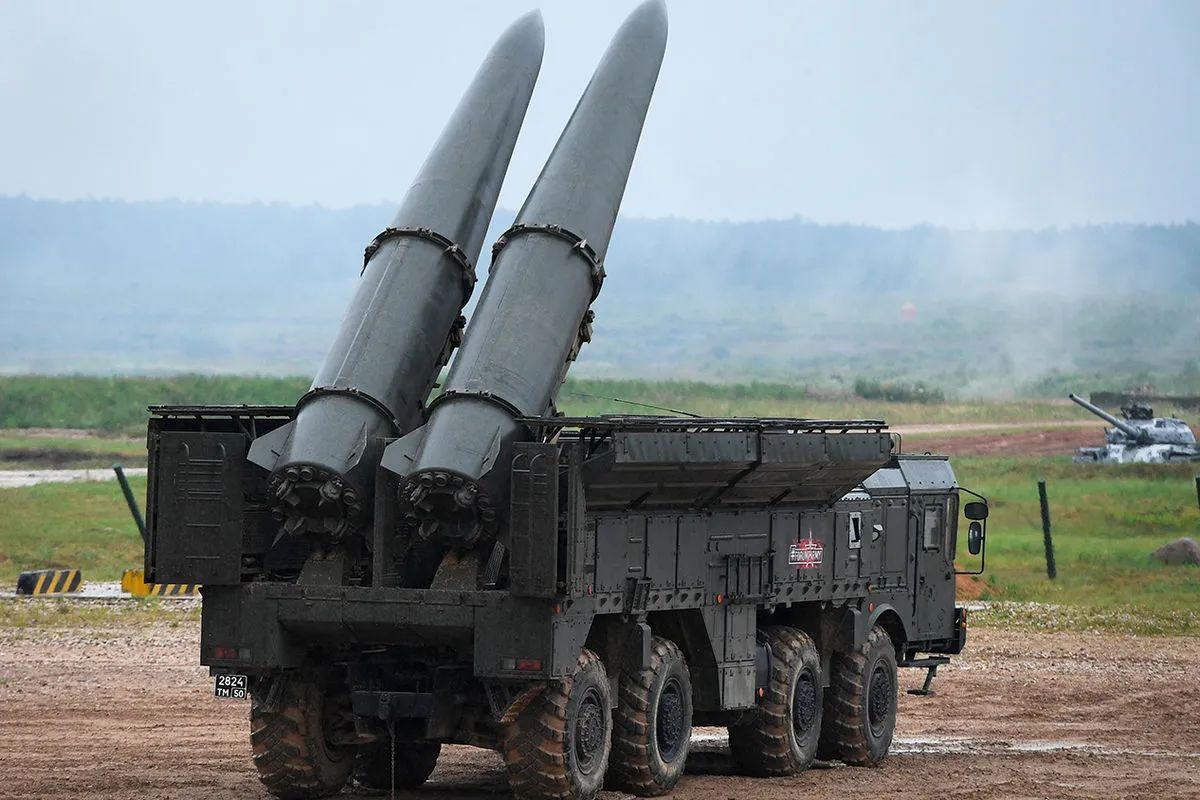
The 9M723-2, also known by the code name "Iskander-1000", is a modernized variant of the Russian 9M723 ballistic missile used in the Iskander-M tactical missile system. According to the Defense Intelligence of Ukraine (DIU), this upgraded variant was first deployed in combat during a combined missile strike on Kyiv in the summer of 2026.
While the name "Iskander-1000" is associated with broader Russian development programs aiming for a 1,000 km range, intelligence assessments confirm that the currently deployed 9M723-2 variant has an operational range of up to 550 km. This represents a significant increase over the baseline 9M723-1 variant, which has an estimated range of 390 km.
The extended range of the 9M723-2 is achieved through a larger, more powerful solid-fuel rocket engine. Consequently, the missile requires a modernized, larger launch system, identified as part of the "Bora-M" complex. Despite the propulsion upgrades, the remainder of the missile's components reportedly remain identical to those of the 9M723-1. Further details on the missile's production and components have been documented by Ukrainian intelligence (Defense Intelligence of Ukraine report).
Design
The 9M723-2 builds upon the established design of the 9M723 family. The baseline 9M723-1 measures 7.2 meters in length, has a body diameter of 920 mm, and a launch weight of approximately 3.8 metric tons. It is equipped with a 450-kilogram warhead, which can be configured as cluster, high-explosive fragmentation, high-explosive, or penetrator.
The missile flies along a quasi-ballistic trajectory to complicate interception. Its guidance system utilizes a combination of inertial navigation and satellite navigation (GLONASS/GPS), with reported capabilities for terminal correction. The system is designed to perform abrupt evasive maneuvers of up to 25 to 30 g during the terminal phase and can deploy decoys to penetrate air defense systems.
Program status
The 9M723-2 has transitioned from development to operational use, with its first confirmed combat deployment occurring in 2026. Russian production of the Iskander missile family continues to expand, with intelligence reports indicating the involvement of 35 enterprises and the integration of both domestic and foreign-sourced components in the manufacturing process.
Variants
- 9M723-1: Baseline variant of the Iskander-M ballistic missile, with an estimated range of 390 km.
- 9M723-2 (Iskander-1000): Modernized variant featuring a larger rocket engine and increased range of up to 550 km, requiring the upgraded Bora-M launch system.
Operators
- Russia: Primary operator and developer. The missile is integrated into the Iskander-M tactical missile system brigades.
Specifications (9M723-2 Iskander-1000)
General characteristics
- Designation: 9M723-2
- NATO reporting name: SS-26 Stone (family)
- Length: ~7.2 m
- Diameter: 920 mm
- Launch weight: ~3,800 kg
- Warhead weight: 450 kg
- Warhead types: Cluster, high-explosive fragmentation, high-explosive, or penetrator
Performance
- Maximum range: 550 km
- Flight trajectory: Quasi-ballistic
- Guidance system: Inertial navigation, satellite navigation (GLONASS/GPS), with terminal correction
- Propulsion: Solid-fuel rocket engine (enlarged compared to 9M723-1)
 Argentina
 Armenia
 Australia
 Austria
 Austria-Hungary
 Belgium
 Brazil
 United Kingdom
 United States
 Brunei
 Bulgaria
 Canada
 Chile
Chile China
China Colonial America
 Colombia
 Confederate States
 Croatia
 Czech
Czech Denmark
 Egypt
Egypt Finland
 France
 Georgia
 Germany
 German Imperial
 Greece
 Holland
 Hungary
 India
India Indonesia
 Iran
Iran Iraq
Iraq Ireland
 Israel
 Italy
Italy Japan
Japan Japan (1940)
 Jordan
 Kingdom of Italy
 Malaysia
 Mexico
 Myanmar
 Nazi Germany
 Netherlands
 New Zealand
 North Korea
 Norway
 Pakistan
 Peru
Peru Philippines
 Poland
 Portugal
 Prussia
 Romania
 Saudi Arabia
 Serbia
 Singapore
 Slovakia
 Slovenia
 South Africa
 South Korea
 Soviet Union
 Spain
Spain Sweden
 Switzerland
 Syria
Syria Taiwan
 Thailand
 Turkey
 UAE
UAE Ukraine
 Vietnam
 Yugoslavia