
History
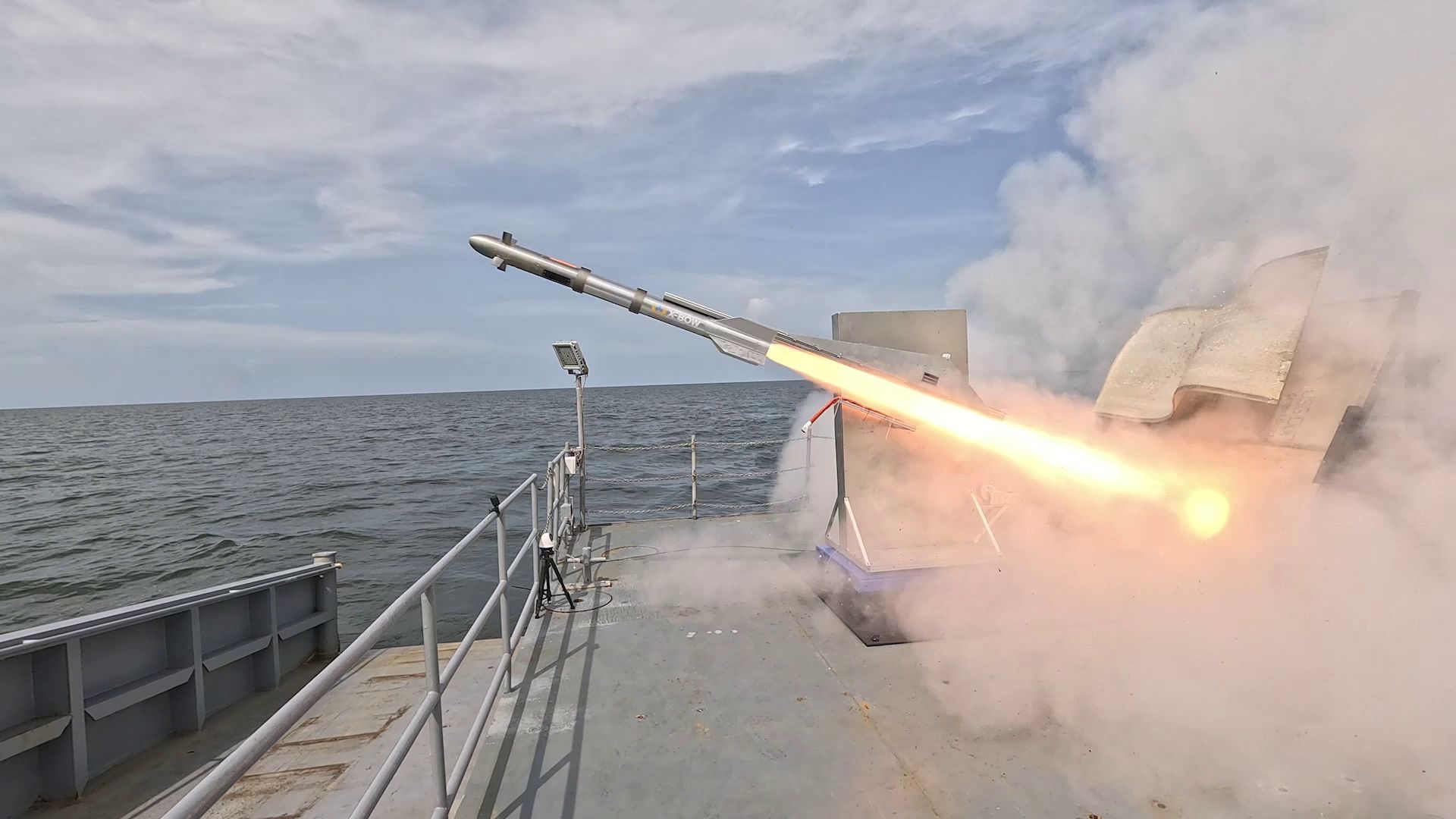
The X-Bow Low-Cost Interceptor (LCI) is a United States missile-defense interceptor under development by X-Bow Systems for the U.S. Missile Defense Agency. It is intended to provide a more affordable means of engaging advanced missile threats, including ballistic and hypersonic weapons.
The program emphasizes lower unit cost, increased production capacity, and a broader domestic supplier base. The Missile Defense Agency has set a target price below $750,000 per interceptor while accepting some reduction in performance compared with more expensive missile-defense weapons.
X-Bow received a $10.98 million firm-fixed-price contract to develop and flight-test the interceptor. The company plans to combine missile development with internally produced solid rocket propulsion as part of an effort to reduce cost and manufacturing constraints.
Development
The Missile Defense Agency selected X-Bow for the Low-Cost Interceptor effort under a follow-on Phase II Small Business Innovation Research contract associated with the agency's Rapid Response Small Launcher Technology program. X-Bow announced the award on August 18, 2026. The contract value was $10,981,581. The award was reported by X-Bow Systems and independently described by Defence Industry Europe.
The broader MDA Low-Cost Interceptor initiative was defined around affordability and rapid development. Program requirements cited in reporting call for a missile costing less than $750,000 per round. The architecture is expected to incorporate the principal functions of a modern interceptor, including propulsion, flight control, communications, interfaces with fire-control systems, terminal sensing, and a kill mechanism. Compatibility with existing missile-defense systems is also part of the program requirements.
X-Bow is developing the interceptor together with its own solid rocket motor. Before the Phase II award was announced, the company had conducted a static test of a sub-scale solid rocket motor design associated with the interceptor program. X-Bow also uses its Advanced Manufacturing of Solid Propellant process and Rocket Factory in a Box manufacturing concept for solid rocket motor production.
Prototype and flight-test program
The current contract covers development and demonstration rather than production of an operational missile. According to DefenseScoop, the two-year Phase II effort is intended to culminate in development and flight testing of a prototype, with a demonstration planned for late 2027. After this phase, program documentation cited by the publication calls for delivery of four to ten systems for Missile Defense Agency intercept testing.
The planned 2027 prototype and flight-test milestone is therefore the earliest supported year in which the X-Bow Low-Cost Interceptor is expected to become a complete flight vehicle. The available sources do not indicate that an operational interceptor has yet been produced or fielded.
Design
Detailed dimensions, mass, speed, range, seeker type, guidance method, warhead or kill-vehicle configuration, and launcher arrangement have not been disclosed in the supplied material. The confirmed design information is centered on the program's functional architecture, propulsion approach, and cost objectives.
Propulsion
The interceptor is planned to use a solid rocket motor produced by X-Bow. The company designs and manufactures solid rocket motors and intends to apply its own propulsion manufacturing capability directly to the LCI program. This vertical integration is intended to reduce dependence on external rocket-motor suppliers and address a recognized production bottleneck in the U.S. missile industrial base.
X-Bow states that its Advanced Manufacturing of Solid Propellant process has been certified by the U.S. Air Force Research Laboratory. The company also promotes a Rocket Factory in a Box concept intended to support fixed or deployable solid rocket motor production. The Phase II award gives X-Bow the opportunity to demonstrate whether these manufacturing methods can support the interceptor's cost and production objectives.
Interceptor architecture
The MDA Low-Cost Interceptor concept includes propulsion, flight control, communications, fire-control interfaces, terminal sensing, and a kill mechanism. These elements are intended to form a complete interceptor compatible with an existing missile-defense architecture. The supplied sources do not identify the specific sensor, datalink, flight-control hardware, or interception method selected for the X-Bow design.
Cost objective
Affordability is a central requirement of the program. MDA documentation cited by DefenseScoop specifies a target unit price below $750,000 in exchange for a slightly reduced performance level. The objective is not simply to replace higher-performance interceptors, but to make larger inventories economically practical and increase the number of defensive engagements available during sustained or massed missile attacks.
Program status
As of August 2026, the X-Bow Low-Cost Interceptor remains under development. The Phase II contract funds development and flight testing rather than operational production. A prototype demonstration is planned for late 2027, after which MDA is expected to receive several systems for intercept testing if the program proceeds according to the cited solicitation.
The program forms part of a wider U.S. effort to expand missile-defense production and diversify the industrial base for interceptors and solid rocket motors. Recent high expenditure of air- and missile-defense munitions has increased interest in systems that can be produced in greater quantities at lower cost.
The X-Bow LCI should not be confused with the company's Buckler interceptor. Buckler was unveiled in July 2026 as a separate, flight-tested, sub-$100,000 surface-to-air interceptor primarily intended to defeat Group 3 unmanned aerial systems. X-Bow describes Buckler's airframe, motor, and propellant as internally produced. Its role and cost objective are different from those of the MDA LCI, which is being developed against more demanding ballistic and hypersonic missile threats. Details of Buckler were published by Axios and in an X-Bow announcement.
Specifications (X-Bow Low-Cost Interceptor)
General characteristics
- Type: Low-cost missile-defense interceptor under development.
- Developer: X-Bow Systems.
- Customer: U.S. Missile Defense Agency.
- Development program: Phase II Small Business Innovation Research contract under the Rapid Response Small Launcher Technology effort.
- Contract value: $10,981,581.
- Target unit cost: Less than $750,000 per interceptor.
- Planned prototype demonstration: Late 2027.
- Planned post-Phase II test quantity: Four to ten systems for MDA intercept testing, according to program documentation cited by DefenseScoop.
Propulsion
- Propulsion type: Solid rocket motor.
- Motor supplier: X-Bow Systems.
- Development status: A sub-scale motor design associated with the program has undergone static testing.
Intended mission
- Role: Interception of advanced missile threats.
- Threat set: Ballistic and hypersonic weapons.
- System interfaces: The program architecture includes communications and fire-control interfaces for integration with missile-defense systems.
 Argentina
 Armenia
 Australia
 Austria
 Austria-Hungary
 Belgium
 Brazil
 United Kingdom
 Brunei
 Bulgaria
 Canada
 Chile
Chile China
China Colonial America
 Colombia
 Confederate States
 Croatia
 Czech
Czech Denmark
 Egypt
Egypt Finland
 France
 Georgia
 Germany
 German Imperial
 Greece
 Holland
 Hungary
 India
India Indonesia
 Iran
Iran Iraq
Iraq Ireland
 Israel
 Italy
Italy Japan
Japan Japan (1940)
 Jordan
 Kingdom of Italy
 Malaysia
 Mexico
 Myanmar
 Nazi Germany
 Netherlands
 New Zealand
 North Korea
 Norway
 Pakistan
 Peru
Peru Philippines
 Poland
 Portugal
 Prussia
 Romania
 Russia
 Saudi Arabia
 Serbia
 Singapore
 Slovakia
 Slovenia
 South Africa
 South Korea
 Soviet Union
 Spain
Spain Sweden
 Switzerland
 Syria
Syria Taiwan
 Thailand
 Turkey
 UAE
UAE Ukraine
 Vietnam
 Yugoslavia